Despite pressure from some of his aides, President Buhari remained unconvinced that Nigeria should pay USD 200, to Leno Adesanya and his Sunrise company regarding the Mambilla project.
There are good reasons why Leno Adesanya and his company, Sunrise Power Transition Company, lost their case at the International Chamber of Commerce (ICC), an outcome that sparked widespread nationwide celebrations across Nigeria.
As a news person -perhaps the only one- in the Nigerian team present at the January 15 2025, sitting of the tribunal in Paris, one was privileged to witness the universe of corruption, falsehood, deceit and lies by Sunrise and its owners melt on the floor of the Ritz Carlton Hotel’s meeting rooms.
At the hearing, Presidents Olusegun Obasanjo and Muhammadu Buhari featured as strong pillars of the country’s defence against this flagship scheme, similar to the P & ID in using international arbitration to steal billions of dollars from the country using fraud, deceit and lies, and as did some others, including Buhari Ministers, Sulaiman Adamu and Babatunde Raji Fashola.
It was, however, clear from day one that Leno and company would lose this case after all the witnesses they invited failed to show up, including, of course, a beautiful lady from Senegal, allegedly providing comfort to one of their government contacts. (Senegalese beauties were allegedly on offer in addition to cash.
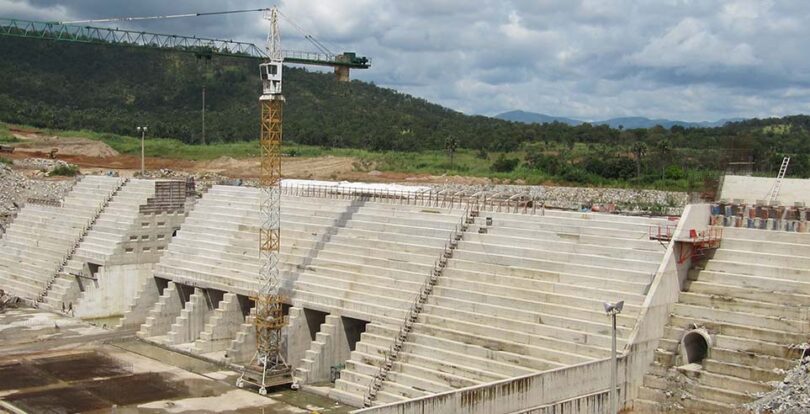
At stake in Paris was the extraction of USD 660 million, and a second one to follow for USD 2.7 billion from the country’s treasury through bogus claims of failed contracts concerning the Mambilla power project.
The two past Presidents, alongside other key witnesses, were prevailed upon by President Bola Ahmed Tinubu to rise to the occasion of defending the nation against fraudsters whose stock-in-trade was to bribe and secure government contracts, only for them to use such projects to obtain huge sums of money as costs of settlement through arbitration.
The year before, the English Supreme Court saved Nigeria from the theft of USD 11 billion through similar schemes, and President Tinubu vowed, “Not again.”
The team to Paris was led by the Minister of Justice and Attorney General of the Federation, Lateef Fagbemi, SAN.
At its meeting of 21 May 2003, the Federal Executive Council (FEC), chaired by the then President of Federal Republic of Nigeria, Olusegun Obasanjo, considered a memo for the issuance of Mambila contract to Leno Adesanya and his company, and refused to give its approval, asking that the memo be withdrawn while noting that the establishment of new power plants must be done through a competitive process.
Despite the above backgroud, on 22 May 2003 – the next day and seven days before the end of President Obasanjo’s first term – the Minister of Power and Steel at that time, Olu Agunloye, sent Mr. Adesanya of Sunrise a letter purporting to indicate a preliminary ‘approval’ for Sunrise to have a role in the construction of the Mambilla Hydroelectric Power Station with a value of USD 6 billion.
As far as credibility and reputation are concerned, Sunrise got the so-called “award” without any prior expertise on such projects or any real assets.
Documents placed before the tribunal by Nigeria included statements filed with the Corporate Affairs Commission (CAC) by Sunrise, stating that the company had no turnover in 2017, 2018, or 2019 and had total net declared assets of only N1,000,000 (one million Naira).
At the time they received the “award,” the company’s financial position was N318,685 on 3rd December, 2004 and N270,370 as of 31st December, 2005.
A new Minister wrote to Leno Adesanya of Sunrise to confirm that the FEC had not approved it on 3 September 2003 and therefore that it had no contract whatsoever with the government.
A new tender process was initiated for the Mambilla project, and the contract was awarded to two Chinese companies, CGGC and CGC.
At a later meeting between President Muhammadu Buhari and the Chinese leader, Xi Jinping, the Nigerian president requested funding from ChinaExim Bank for the Mambila project and asked President Xi to nominate credible companies to execute the contract.
President Xi made an immediate commitment from the Chinese government to advancing the project’s implementation.
The Sunrise wahala started after the company demanded payment of (1) GBP 33 million, it claimed to have incurred “on preparation for the execution of the project”; and (2) USD 1.2 billion, which allegedly represented 20% of the USD 6 billion estimated cost of the Project “as projected profit of our client [Sunrise] on the project.”
Sunrise sought to prevent the Project from moving forward by taking the following steps: One, filing a claim at the Federal High Court against Nigeria’s Minister of Power, the Attorney-General of the Federation, CGGC, and CGC and two, they sought an order preventing any development of the Project except through Sunrise and, in the alternative, claimed the sum of USD 960 million in alleged damages.
As a result of the Sunrise litigation, the project was held up for all these years. ChinaExim withheld funds – as would any lender – pending the resolution of the legal tussle.
To move the Mambilla Project forward, Nigeria entered into settlement discussions with Sunrise, CGGC, and CGC. The Buhari administration inherited the settlement discussions.
In the discussions in 2012, the Federal Ministry of Power entered a ‘General Project Execution Agreement (GPEA) with Sunrise and Sinohydro (another Chinese contractor that Sunrise had involved), an initial agreement related to the Mambilla Project.
On the 14th January, 2015, a letter was signed by the Federal Ministry of Power, purportedly approving Sunrise to serve as the local content partner for the Project.
On 9 November 2019, a meeting was held in London between, on the one hand, Sunrise, represented by Mr Adesanya, and, on the other, Nigeria’s Attorney-General and Minister of Justice, and the Minister of Water Resources.
At that meeting, it was made clear to Mr Adesanya/Sunrise that any negotiated settlement would, of course, depend on the president’s approval.
At this meeting, Mr Adesanya offered to accept USD 500 million. The Minister of Justice and the Minister of Water Resources – no doubt under pressure to settle the dispute so that the Project could proceed – made a counter-proposal of USD 100 million (based on claims that they had incurred expenses between USD 70 and 80 million).
After a series of meetings, the Attorney General and Minister of Justice and the Ministers of Power, Finance and Water Resources agreed to propose the sum of USD 200 million as a full and final settlement of Sunrise’s claims, subject, understandably, to approval of the President. Sunrise accepted this proposal.
On 25 March 2020, a second document, entitled ‘Addendum to the Term[s] of Settlement’, was signed by Sunrise and a representative of Nigeria. Again, the document provides for a potential doubling of Nigeria’s liability by an additional USD 200 million in the event of delayed payment.
On 31 March 2020, the ‘Terms of Settlement’ and ‘Addendum to the Terms of Settlement’ were presented to President Buhari for the first time for his approval. Upon reviewing the documents, the President decided not to approve. In a handwritten and signed note dated 20 April 2020, the President withheld his approval for entry into these documents, on the basis that “FG [the Federal Government] hasn’t got USD 200m to pay [Sunrise]”.
Despite pressure from some of his aides, President Buhari remained unconvinced that Nigeria should pay USD 200, or more, to someone who did nothing but present an unauthorised contract.