“Settlement discussions, therefore, did not arise in a vacuum. They formed part of a broader governmental effort to resolve a longstanding dispute and remove what was regarded at the time as a legal obstacle to financing and implementation of a major national power project,” he said.
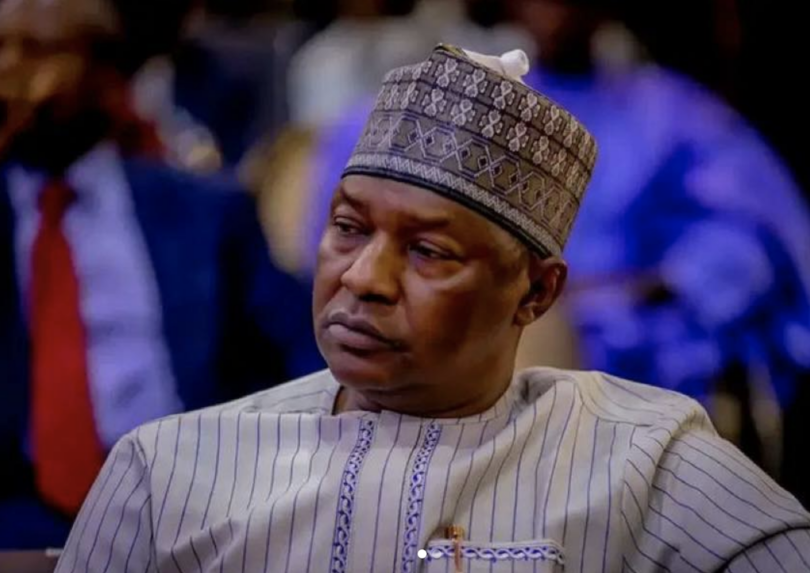
Former Attorney-General of the Federation and Minister of Justice, Abubakar Malami, has rejected the finding of an International Chamber of Commerce (ICC) arbitration tribunal that he reached a corrupt deal with Leno Adesanya, promoter of Sunrise Power and Transmission Company Limited, over the Mambilla Hydroelectric Power Project.
He, however, welcomed Nigeria’s victory in the arbitration, in which the tribunal rejected Sunrise’s claims against the Federal Government and ordered the company and Mr Adesanya to reimburse Nigeria for legal costs.
“The protection of Nigeria from substantial financial exposure is an outcome every patriotic Nigerian should welcome, irrespective of political affiliation,” the former AGF said.
The ICC tribunal, in its final award delivered in Paris on 16 September, found that a “corrupt deal” was reached between Mr Malami and Mr Adesanya regarding a settlement agreement and an addendum that could have exposed Nigeria to up to $400 million in damages.
The dispute arose from a Settlement Agreement signed on 2 January 2020, under which Nigeria was to pay Sunrise $200 million.
An addendum signed on 25 March 2020 subsequently introduced an additional $200 million default sanction, potentially increasing Nigeria’s exposure to $400 million.
The tribunal found that the agreements were not binding on the Federal Government because they lacked the required presidential approval.
Mr Adesanya testified that Mr Malami and then-Power Minister Saleh Mamman demanded that he pay 50 per cent of the settlement as bribes.
He said they told him Nigeria would pay the first half and release the second after he had done “what is needed”.
Mr Adesanya told the tribunal that he rejected the demand and claimed to possess audio and video recordings of the conversations, but did not provide them.
The tribunal held that the agreements were products of corruption and unenforceable under Nigerian public policy.
In his response, Mr Malami said the Mambilla dispute predated his tenure as Attorney-General by more than a decade and had passed through successive administrations and government officials.
He said the controversy originated in 2003, while attempts to resolve the dispute continued under his predecessors, including former Attorney-General Michael Aondoakaa.
According to him, the Federal Government had also entered into a General Project Execution Agreement involving Sunrise and Sinohydro in November 2012, years before he assumed office.
“The Mambilla contractual controversy did not originate during Malami’s tenure as Attorney-General.
“The relevance of this history is straightforward: Malami did not create the Sunrise dispute, introduce Sunrise to the Mambilla project, or originate the Federal Government’s attempts to settle the controversy.
“He inherited a longstanding dispute that had traversed previous administrations, Attorneys-General, ministries and contractual arrangements,” the statement read.
Mr Malami said his involvement followed a presidential directive issued in April 2016 concerning the resolution of disputes surrounding the project.
He said, as the country’s chief law officer, his role was to advise the Federal Government on its legal exposure and options for resolving the dispute.
He also said the unresolved Sunrise arbitration had become an impediment to financing discussions for the Mambilla project, including discussions involving China Exim Bank.
According to him, a September 2019 meeting involving former President Muhammadu Buhari and Yang Jiechi, then Special Representative of Chinese President Xi Jinping, also included discussions on resolving the arbitration.
“The records available to the former Attorney-General’s office indicate that the unresolved arbitration was regarded as an impediment to financing discussions involving China Exim Bank.
“The documentary record further refers to discussions on 5 September 2019 involving President Muhammadu Buhari and Yang Jiechi, Special Representative of President Xi Jinping, concerning the resolution of the arbitration.
“Settlement discussions, therefore, did not arise in a vacuum. They formed part of a broader governmental effort to resolve a longstanding dispute and remove what was regarded at the time as a legal obstacle to the implementation of a major national power project,” he said.
Mr Malami defended the consideration of the $200 million settlement, saying the government was attempting to resolve claims running into billions of dollars while removing a legal obstacle to the financing and implementation of the Mambilla project.
He said Sunrise initially demanded $500 million as a full and final settlement during negotiations in London in November 2019, while Federal Government representatives offered $100 million before a figure of $200 million emerged.
“The governmental calculation was whether an asserted multibillion-dollar exposure, continuing litigation, financing difficulties and delays to the Mambilla project could be brought to an end through a substantially smaller negotiated settlement.
“Whether every term ultimately advances that objective is a separate question and must be examined on its own evidence,” he said.
This newspaper reported that Mr Malami, on some occasions, failed to convince the late Mr Buhari to approve the renegotiated agreement.