Bob Ibeneme
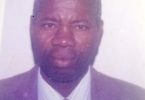
His wings were fitted at Ngwa High School Aba, Abia State, Nigeria, but Dr. Godwin Marizu Agbara flew across the ocean and became a renowned global technocrat. His story is one of discipline, intellectual excellence, patriotism and distinguished public service. From his formative years at Ngwa High School Aba, Agbara became one of the most respected Nigerian-born technocrats in the United States Government.
He achieved this feat through sound education, professional competence and personal integrity.
His remarkable journey demonstrates what is possible when talent is combined with hard work, humility and an enduring commitment to public service.
For the people of Nigeria, and particularly Abia State, Agbara’s career represents a source of pride and an inspiring example for younger generations.
A distinguished career in the United States Government
Agbara retired meritoriously after approximately 37 years of service. He worked with the United States Government Accountability Office in Washington, D.C. The Government Accountability Office is a highly respected independent institution that supports the United States Congress through policy analysis, investigations, audits and evaluations of government programmes and expenditure.
All through his career, Agbara worked at the intersection of energy, international trade, natural resources, economic policy and global affairs. His professional responsibilities covered complex issues involving oil and gas, renewable energy, critical minerals, international markets and United States foreign policy.
He served in several important positions, including Assistant Director for International Affairs and Trade, Assistant Director for Natural Resources and Environment, Senior
Energy Analyst and Evaluator/Analyst. These were positions of enormous responsibilities, requiring sound judgment, technical competence, leadership and the ability to provide objective recommendations on matters of national and international importance.
His rise within the United States public service was not merely the result of longevity. It reflected his depth of knowledge, professional credibility and capacity to lead teams working on some of the most complex policy issues.
Influencing major policy decisions
Agbara led teams and studies that influenced major policy decisions, producing numerous reports and testimonies for the United States Congress. His work informed lawmakers and senior government officials well informed on energy markets, petroleum industry competition, critical minerals, international investment, foreign affairs, and trade.
Among the subjects examined under his team leadership were the impact of mergers in the global petroleum industry, market concentration, gasoline prices and the sale of a federally owned oilfield in California. He also contributed to extensive research on
critical minerals in the Democratic Republic of Congo and neighboring African countries,
United States investment in Africa and government actions aimed at resolving conflicts overseas, including issues relating to Nigeria.
His work extended beyond the preparation of technical reports. The recommendations resulting from his analysis had practical implications for public finance, energy security, national policy and international relations. One of the most notable examples of his impact involved his recommendation concerning a government-owned oilfield in California.
According to the citation accompanying one of his major awards, the United States Government reportedly saved at least $1.5 billion after acting on the recommendation to privatise and sell the oilfield.
This achievement illustrates the significance of Agbara’s work. His expertise was not confined to academic discussion; it influenced government decisions, protected public resources and contributed directly to improved policy outcomes.
A recognised authority in energy and economic policy
Agbara became widely respected for his command of global energy issues. He was described in an official award citation as a leading authority on energy and oil matters, whose analysis supported policy decisions by the United States Congress.
His expertise covered petroleum markets, energy pricing, government incentives, fuel diversity, mineral resources and the broader relationship between energy policy and economic development.
His career took him to numerous countries around the world, meeting with key leaders in government, private sectors and non-profit organisations.
He hosted ExxonMobil Corporation’s annual briefing on the global energy and economic outlook for four consecutive years. He also presented research on federal energy tax incentives and subsidies at the Baker Institute for Public Policy at Rice University and delivered a paper on fuel diversity at an energy and power workshop hosted at the Aspen Institute.
These engagements point to the respect he commanded among policymakers, researchers, industry professionals and international development experts.
His published work included research on the impact of mergers in the United States petroleum industry on wholesale gasoline prices. This publication further established his reputation as a serious researcher and policy thinker whose work
contributed to national debates on energy markets and competition.
Excellence recognised through various awards
Agbara’s distinguished service and excellence have earned him several important honors within the United States public sector. These include the prestigious Arthur S. Flemming Award, a government-wide recognition presented to outstanding public servants who demonstrate exemplary leadership and commitment to excellence.
Recipients of the award are sometimes described as “SuperFeds” because of the exceptional quality and national importance of their contributions.
He also received the Distinguished Service Award for exemplary leadership across international issues, financial accomplishments and the mentoring of emerging leaders. Other recognitions included Meritorious Service Awards, Client Service Awards, Managing Director Awards and the John Henry Luke Award for agency-wide mentoring.
These honours reflect not only his technical competence but also his leadership qualities, integrity and willingness to develop others. His career, therefore, represents both professional excellence and a lasting commitment to institution-building.
An impressive academic foundation
Agbara’s professional accomplishments were anchored on an impressive academic foundation laid at prestigious institutions of higher learning. He pursued doctoral studies in Energy Management and Policy at the University of Pennsylvania, with research focused on the effects of petroleum mergers on market concentration and gasoline prices in the United States.
He earned two postgraduate degrees, a Master of Science degree in Energy Management and Policy from the University of Pennsylvania and another Master of Science degree in Industrial Relations and Labour Management from Rutgers University.
He obtained his bachelor’s degree, with highest honors, from Alabama Agricultural and Mechanical University. He also completed specialised programmes in mining at the Colorado School of Mines, Petroleum Geology at the University of Tulsa, and leadership at the University of Maryland University College.
This broad educational foundation enabled Agbara to understand energy and mineral resources not only as technical subjects, but also from the perspectives of economics, labour, governance, public policy and international relations.
A global professional with deep African relevance
Although Agbara spent much of his career serving the United States Government, many of the issues he worked on have direct relevance to Africa and Nigeria.
His experience in energy markets, international trade, critical minerals, foreign investment and policy development can contribute significantly to the economic transformation of Nigeria.
Abia State, where his root sprouted, is currently pursuing opportunities in industrial development, electricity, renewable
energy, trade, investment attraction, infrastructure and international partnerships.
Agbara’s knowledge could be particularly valuable in shaping energy policy, evaluating investment proposals, strengthening institutional frameworks and connecting Abia State with international organisations, investors and development agencies.
His experience examining United States investment in Africa, critical mineral resources in the Democratic Republic of Congo and global energy markets gives him a rare understanding of how African states can position themselves within international
economic systems.
He can also provide strategic guidance on how Abia can develop sound policies that attract credible investors while protecting the long-term interests of the state and its people.
A worthy ambassador of Abia State
Agbara’s career is a reminder that Abia State has produced men and women capable of competing and excelling at the highest levels of global public service.
His achievements bring honor to his family, community, Ngwa land, Abia State and Nigeria. His story deserves to be documented, celebrated and presented to young people as evidence that excellence has no geographical limitation.
From the classrooms of Ngwa High School to the policy corridors of Washington, D.C., Agbara remained committed to knowledge, professionalism and service. He reached the highest levels of responsibility through competence rather than publicity, and through substance rather than self-promotion.
At a time when public institutions across Africa are seeking experienced professionals who can combine international exposure with local commitment, individuals such as Agbara represent an invaluable resource.
Celebrating service, knowledge and integrity
As Agbara visits Umuahia, it is appropriate that the Abia State Diaspora Commission and the people of Abia State recognise and celebrate his distinguished career.
Abia State values excellence, honors public service and remains proud of its sons and daughters who have distinguished themselves in various fields of endeavours around the world.
Nigeria and Abia state have the opportunity to draw from Agbara’s experience. Retirement from public service should not mean the end of contribution to national development.
Rather, it can mark the beginning of a new phase in which decades of knowledge, networks and institutional experience are redirected toward the development of one’s homeland.
Agbara’s expertise in foreign trade, energy, critical minerals, economic policy, international affairs and institutional leadership can become a major asset to Abia State and Nigeria.
His career stands as a powerful testimony to the strength of education, the dignity of public service and the global potential of the Abia person.
From Ngwa High School to the United States Government, Agbara
has demonstrated that an Abia son, grounded in discipline and guided by excellence, can rise to the highest levels of international public service and make contributions that influence policy, strengthen institutions and save governments billions of dollars.
His story is not only worthy of celebration. It is worthy of emulation.