
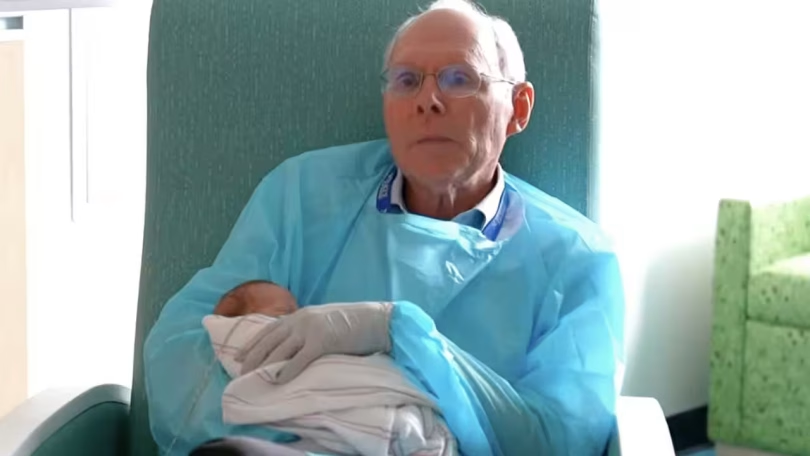
Every week, 73-year-old Dave Whitlow walks into the Neonatal Intensive Care Unit (NICU) at the Children’s Hospital of Richmond at VCU in Virginia, where some of the hospital’s smallest and most vulnerable patients are fighting for their lives. For the past eight years, he has volunteered as a “baby cuddler”, gently holding premature and critically ill newborns when their parents cannot always be by their side. Before placing each baby back into the crib, Whitlow quietly whispers the same six words: “Grow strong, grow smart, grow kind.” It is a simple ritual that reflects his hopes for every child and has become a touching symbol of compassion after his story recently captured hearts online.
Who is Dave Whitlow, the 73-year-old baby cuddler from Virginia?
Dave Whitlow is a retired local government manager who found a new purpose after retiring in 2017. Looking for a meaningful way to give back, he joined the volunteer programme at the Children’s Hospital of Richmond at VCU and eventually became one of its dedicated NICU baby cuddlers. Over the past eight years, he has comforted more than 500 premature and critically ill babies, earning the affection of hospital staff, who often call him the unit’s “baby whisperer”.Whitlow describes volunteering in the NICU as “the best gig I’ve ever had.” During a typical shift, he may spend time with five to eight babies, soothing them with gentle cuddles, soft conversation or simply being a calm presence beside them.
Why does he whisper the same six words to every baby?
Before leaving every infant, Whitlow quietly says, “Grow strong, grow smart, grow kind.” The six-word blessing has become his personal tradition and reflects the future he hopes each child will have.His words are not part of any medical procedure, but a heartfelt goodbye that expresses his wish for every premature baby to recover, grow into a healthy adult and live with compassion. The simple ritual has become one of the most memorable aspects of his story.
What does a NICU baby cuddler do?
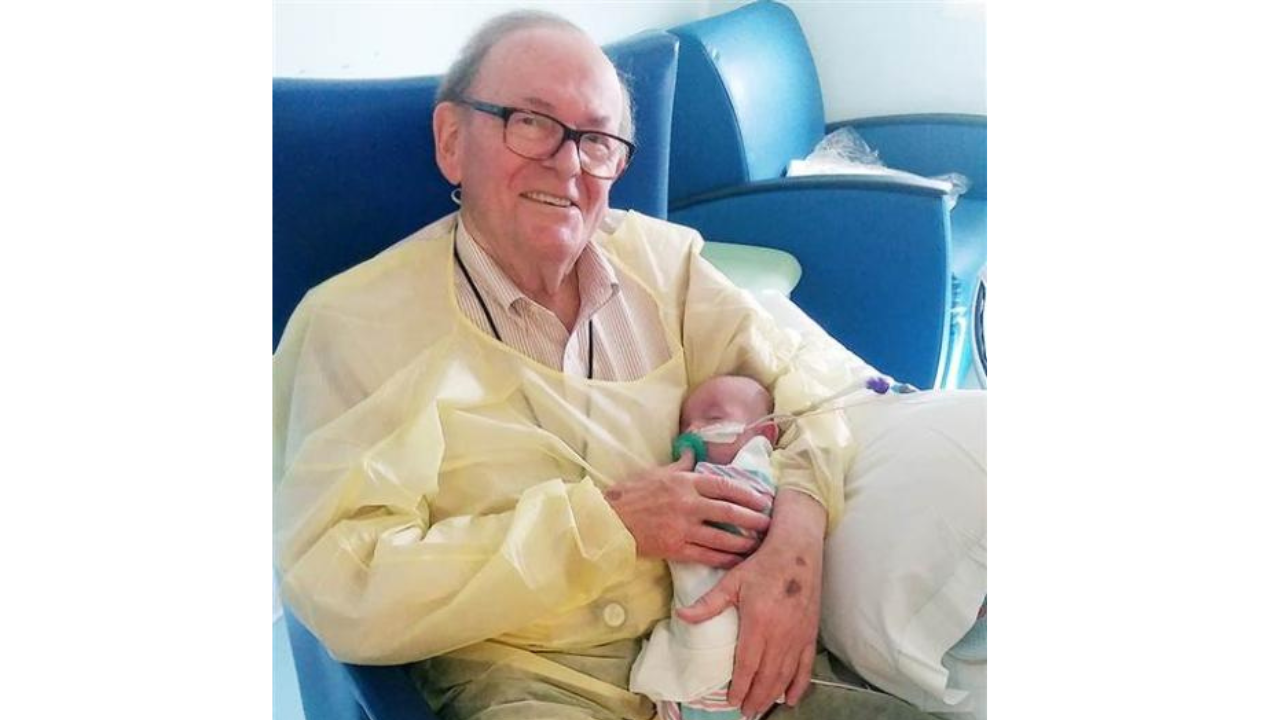
A baby cuddler is a trained hospital volunteer who provides comfort to newborns receiving intensive medical care. While doctors and nurses focus on treatment, volunteers help calm babies through gentle holding, soothing voices and reassuring touch whenever it is safe to do so.If an infant cannot be lifted because of medical equipment, Whitlow gently holds a tiny hand, strokes a forehead or quietly speaks to the baby. His presence offers comfort to the infants while allowing nurses to carry out essential medical procedures.
Why can cuddling help premature babies?
Premature babies often spend weeks or even months in the NICU connected to breathing machines, monitors and feeding tubes. As a result, they may receive less physical contact than healthy newborns.Research suggests that supervised volunteer cuddling programmes can help stabilise heart rate, improve oxygen levels, reduce stress and support healthy brain development. Some studies have also linked developmental care with shorter hospital stays, although experts say parental skin-to-skin contact remains the most beneficial form of touch whenever possible.
Volunteers undergo strict training
Becoming a NICU baby cuddler requires extensive preparation. Volunteers complete health screenings, background checks and infection-control training before entering the neonatal unit.They follow strict hygiene protocols, wear protective gowns and gloves, and only interact with babies when approved by the medical team. Every cuddle takes place under clinical supervision to ensure the infants remain safe throughout their care.
A quiet act of kindness making a lasting difference
Over the years, Whitlow has reunited with some of the children he once held as fragile newborns, now growing into happy and healthy youngsters. Moments like these remind him why he keeps returning to the NICU week after week.His story is a powerful example of how compassion can make a difference, even in the most challenging circumstances. While medicine helps premature babies survive, Whitlow’s gentle presence and six simple words offer something equally meaningful: comfort, hope and the promise of a brighter future.