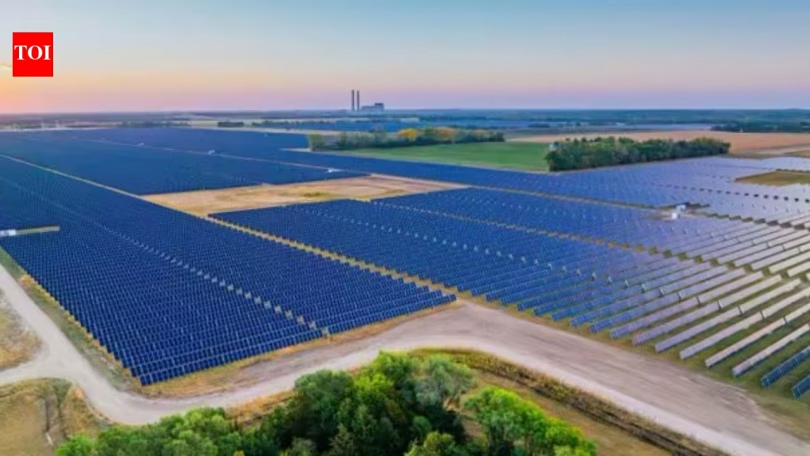
America is retiring coal plants slowly and steadily. The boilers are cut up for scrap, the smokestacks get dropped on camera and the land tends to sit in permitting limbo for a decade. But in Becker, Minnesota, the state’s biggest coal plant is being used, not for all this hardware but for a plug.On July 21, Xcel Energy announced it had completed the third phase of Sherco Solar, pushing the site to 710 megawatts generated by 1.7 million panels. This makes it the largest solar facility in Minnesota and one of the biggest in the Upper Midwest, by the utility’s own careful scoping. But this is not the most interesting part.What is making headlines is the fact that Sherco Solar feeds the grid through the transmission infrastructure and interconnection rights of the Sherburne County Generating Station, the coal giant next door that has been pushing power into the same wires since 1976. The solar plant borrowed that connection to let 710 megawatts of solar go through.
The plug that matters
Any new power plant that wants onto the US transmission grid has to join an interconnection queue, where grid operators study what upgrades the system needs before anything gets energised. According to Lawrence Berkeley National Laboratory’s latest count, published July 1, some 2,061 gigawatts of proposed generation and storage are sitting in those queues. That is more capacity than every power plant currently operating in the country, combined.But Sherco Solar almost sidestepped this entire process. The Midcontinent Independent System Operator, which runs the grid across the middle of the country, gives the owner of a retiring plant three years to reuse its interconnection rights for a replacement resource. Those rights cannot be sold to anyone else, so they are strictly use it or lose it.Xcel used it. The nonprofit RMI estimates this generator replacement route can cut connection time from the five-year average to under one year. Rob Gramlich, CEO of the consulting firm Grid Strategies, put it more bluntly when CNN visited the site in 2024, saying “somebody just has this Disney pass to skip the line.”Transmission is a scarce asset underneath all this. There is seldom a spare line sitting around anywhere on a modern grid, which is why Tasmania is currently rebuilding 287 towers on a corridor it is not allowed to switch off. A live connection with real capacity behind it is close to priceless, and a retiring coal plant has exactly that.
1.7 million panels
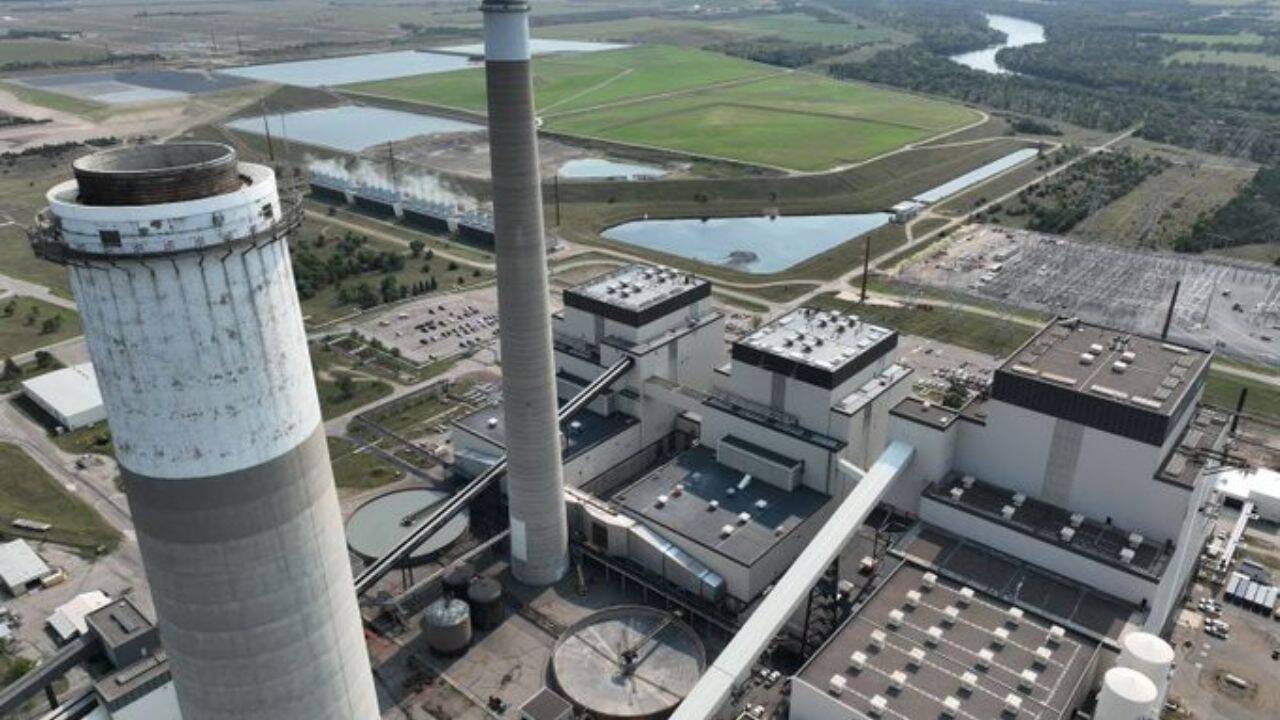
Sherco Solar feeds the grid through the transmission infrastructure and interconnection rights of the Sherburne County Generating Station
The build of the plant also moved quickly. First power flowed in late October 2024 at more than 220 megawatts, a second phase followed through 2025, and the 250-megawatt third phase wrapped this month.All done, the site now spreads across thousands of acres of farm country around Becker and Clear Lake, and it produces enough electricity for roughly 150,000 homes on Xcel’s Upper Midwest system.The company is playing even smarter. Xcel is handling groundskeeping with the help of sheep, which gaze beneath the arrays so no one has to mow 1.7 million panels’ worth of grass. There is a Great Pyrenees named Ozzy on the payroll to guard them. Every module is also on a 25-to-30 year clock, which is its own looming industrial story.
A coal plant that lives on
While all of this has happened, the Sherburne County Generating Station kept burning coal, since it is not done yet. Units 1 and 2 came online in 1976 and 1977 as a matched pair designed to run together, Unit 3 followed in 1987, and together they gave the plant a nameplate capacity of 2,238 megawatts. In its prime, it burned about 30,000 tons of coal a day, delivered three trainloads at a time and was emptied by a rotary dumper that flips a full rail car upside down every three minutes. Each boiler stands more than 200 feet tall, higher than the dome of the Minnesota State Capitol.The 680-megawatt Unit 2 shut down for good on New Year’s Eve 2023. Unit 1 is scheduled to follow before the end of this year, and the final unit runs until 2030. So for the next few years, the same substation will be moving coal power and solar power at once.But retirement does not mean the coal plant dies completely. One of the retiring units is being converted into a synchronous condenser, a spinning mass that steadies grid voltage without burning anything. Part of the coal plant will keep clocking in to smooth out the solar farm that replaced it.Moreover, the site is also getting a battery. Form Energy is building an iron-air system there rated at 10 megawatts and 1,000 megawatt hours, which works out to 100 hours of storage against the four hours a typical lithium-ion battery manages.
A solar-powered future
Xcel has more plans. A proposed fourth phase would add 200 megawatts by 2029, lifting the site to 910 megawatts, enough for more than 190,000 homes. The company pegs the expansion at roughly 300 union construction jobs and $90 million in local economic benefits. Large battery installations are also planned around the site as they would ride on the same existing grid connections.But none of this is confirmed yet, since phase 4 needs a green light from Minnesota regulators.