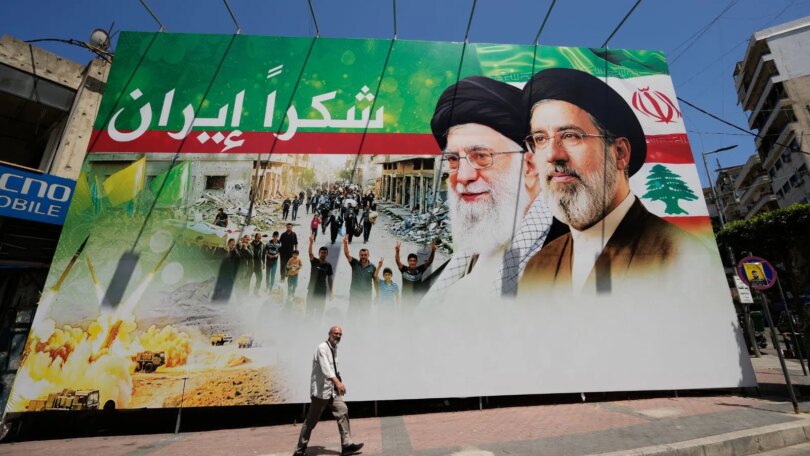
Iranian Supreme Leader Ayatollah Mojtaba Khamenei on Thursday endorsed direct negotiations with the United States, in a statement delivered via text message read on Iran’s state broadcaster IRIB, marking his first public reaction to the memorandum of understanding (MoU) signed a day earlier by President Donald Trump and Iranian President Masoud Pezeshkian to end the war between the two countries.
Khamenei confirmed he had authorised the agreement despite holding a different view on the deal, saying Trump had “out of desperation, resorted to various forms of pressure and leverage to bring about this outcome.”
The full text of the message of Imam Sayyid Mojtaba Khamenei, the Leader of the Islamic Revolution, addressing the Iranian nation regarding the Memorandum of Understanding between the presidents of Iran and America, June 18, 2026 pic.twitter.com/9nSD2NfkVe
— Ayatollah Mojtaba Khamenei (@MKhamenei_ir) June 18, 2026
He said he authorised the agreement in light of a commitment given to him by President Pezeshkian, in his capacity as head of the Supreme National Security Council, to safeguard the rights of the Iranian nation and the “Resistance Front,” and given his “explicit acceptance of responsibility for doing so.”
Iran would now, Khamenei continued, “await the fulfilment of the conditions that have been stated” in the agreement.
Khamenei later posted an English-language version of his statement on his official X account.
He also explicitly stated that if the American side seeks to make excessive demands, they will not submit to them. From this moment on, we—that is, you, the proud nation, and this humble servant—will await the realization of the aforementioned conditions.
— Ayatollah Mojtaba Khamenei (@MKhamenei_ir) June 18, 2026
‘Not accepting the enemy’s position’
Khamenei’s endorsement came with a pointed caveat. He said that any future face-to-face negotiations with Washington would “not mean accepting the enemy’s opinion,” in what analysts described as a shift in Iran’s posture.
However, it’s self-evident that the in-person negotiations in the future will not mean acceptance of the enemy’s position. We hope the blessed prayers of our Master (may God hasten his noble reappearance) will bring all kinds of victories & triumphs to honorable Iranian nation.
— Ayatollah Mojtaba Khamenei (@MKhamenei_ir) June 18, 2026
The framing was significant. As recently as February 2025, Khamenei had dismissed direct negotiations with Washington as neither “intelligent, wise, nor honourable,” and had declared that engaging the United States would not resolve Iran’s problems. Thursday’s statement represented a marked departure from that position, even if the rhetoric retained its characteristic wariness.
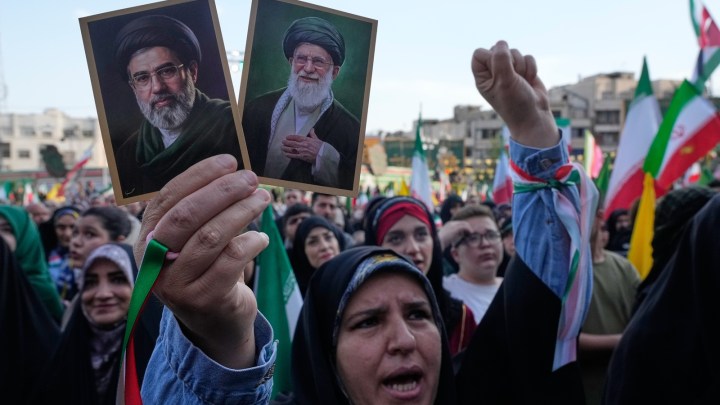
Meanwhile, France 24 reported that Vali Nasr, professor of Middle East studies at Johns Hopkins University and a former adviser to the US State Department, said the war was “ending in Iran’s favour” and that “the outcome is definitely not favourable to Israel.”
Story continues below this ad
Hormuz reopens as blockade lifts
Vice President JD Vance said on Thursday that the US Navy had, as part of the agreement, lifted its blockade on Iranian ports by allowing more than a dozen ships to pass through. Vance told reporters that more than 12.5 million barrels of oil passed through the Strait of Hormuz overnight the highest volume recorded since the war began in late February.
A Trump administration envoy also told US lawmakers in a private briefing that Iran would invite the United Nations’ nuclear watchdog, the International Atomic Energy Agency (IAEA), to inspect its nuclear sites, though this commitment was not reflected in the published text of the MoU.
Vance separately announced he may postpone a trip to Switzerland planned for Friday, which had been intended to include a ceremonial signing of the MoU and to initiate the next round of negotiations between the two sides.