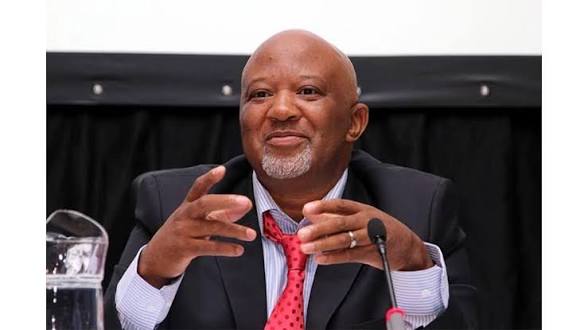
Chairman of MTN Group, Mcebisi Jonas, has condemned rising xenophobia in South Africa, blaming the country’s socio-economic challenges on state failure rather than the presence of foreign nationals….
Chairman of MTN Group, Mcebisi Jonas, has condemned rising xenophobia in South Africa, blaming the country’s socio-economic challenges on state failure rather than the presence of foreign nationals.
Jonas made the remarks while delivering a tribute at the funeral of Zimbabwean-born activist and public servant, Thokozani Damasane, where he urged South Africans to reject ethnic politics and embrace a renewed sense of national and continental solidarity.
According to a statement on his remarks, Jonas described anti-foreigner sentiment as a distraction from the real problems confronting the country, arguing that politicians were exploiting public frustration for political gain instead of offering lasting solutions.
READ ALSO: Xenophobia: S’Africa Moves to Repatriate Over 15,000 Malawians Ahead Anti-immigration Marches
Reflecting on Damasane’s life, Jonas said the late activist embodied the values of humanity and selfless service despite being born outside South Africa.
“I was thinking, what is home to Damasane? Because I understand, and I understood very early in life, that home is where humanity is. Home is about humanness. It is about the good of humanity and striving for the good of humanity,” he said.
Jonas noted that Damasane arrived in South Africa “as an outcast” during the country’s democratic transition but chose to dedicate his life to advancing the welfare of South Africans.
“He immersed himself deeply into the struggles, into the pains of South Africans, and he became one of us,” Jonas said. “In Damasane’s strength, our strength as South Africa and South Africans are reflected. And in his weaknesses, our own weaknesses are reflected.”
Addressing the country’s growing hostility towards migrants, the former Deputy Finance Minister argued that expelling foreigners would not resolve South Africa’s deep-rooted economic and governance problems.
“Foreigners can leave tomorrow — inequality will be with us. Foreigners will leave tomorrow — unemployment will be with us. Foreigners will leave tomorrow — our police will remain corrupt. Foreigners will leave tomorrow — our politicians will still be concerned with one thing: being elected and re-elected,” he said.
Jonas maintained that the country’s real challenge was institutional failure.
“The problem is the failure of the state. The state doesn’t manage immigration. It doesn’t manage its borders. It doesn’t enforce law enforcement. It doesn’t manage education. What are you expecting?” he asked.
He warned that such failures had created fertile ground for politicians to exploit public anger.
“When people feel the burn, they become vulnerable to politicians whose sole purpose is to be elected and re-elected. Some of them have no credibility whatsoever. But they lead marches and tell our people that the problem is not us — it is foreigners.”
Jonas also criticised identity politics and ethnic divisions, describing tribalism as a legacy of colonial rule rather than an authentic African value.
“The tribe is a product of colonial powers,” he said, arguing that colonial administrations deliberately promoted ethnic divisions through indirect rule.
He warned that those divisions had evolved into modern-day xenophobia.
“You would see in the streets, it’s no longer about whether you are from South Africa or not from South Africa. It’s about the tribe, it’s about who you are, you are not like us, and you are different, and therefore we have to persecute you. Something fundamental has been lost in our country. Something fundamental has been lost in our nations.”
Jonas further criticised liberation movements for perpetuating ethnic politics.
“Liberation movements still sustain this thing of tribes — Zulu and Xhosa — and we sustain this thing as if it is real. It is in our heads. We’re creating it because it makes us feel big. Identity politics — we must banish them in our country. Ethno-nationalism is something that in this country we must banish.”
Recalling a conversation involving the late Damasane and a young South African questioning the presence of foreigners, Jonas said the activist had offered a warning that now appears prophetic.
“Damasane said to this guy: just wait fifteen or twenty years. You will also be wanting to leave your country.”
Jonas said those words had become increasingly relevant in light of South Africa’s worsening inequality, corruption and exclusion.
“As I stand up today, I look at South Africa. The level of oppression and inequality, the level of exclusion of our people, the level of corruption, the betrayal of the dream of liberation — those words of Damasane ring very loud in my ears.”
Calling for a return to what he described as “national consciousness,” Jonas stressed that South Africa’s future was inseparable from that of the African continent.
“We are a nation embedded in Africa. And without Africa, our growth as a country — economically — our fortune is intertwined with the growth of Africa. South Africa is nothing without Africa. And Africa is nothing without South Africa.”
He also urged South Africans to reject discrimination based on nationality.
“We cannot judge people by their origin,” Jonas said. “We cannot determine the legal status of people by their origin.”
Quoting anti-colonial thinker Frantz Fanon in his closing remarks, Jonas said Damasane lived a life of purpose and service.
“Each generation must, out of relative obscurity, discover its mission, fulfil it, or betray it,” he quoted, adding: “Damasane understood the mission. And he did not betray it.”