
Jonathan Ishaku’s lengthy critique of Governor Caleb Mutfwang’s apology to the Igbo community is intellectually engaging, but it rests on a fundamental misconception: that an apology necessarily amounts to an admission of legal guilt or a repudiation of history. It does not.
The governor’s remarks should instead be understood as a moral and political act of reconciliation, consistent with the responsibilities of a leader seeking to heal old wounds rather than reopen them.
The commentary seeks to justify the absence of an apology after the Civil War by relying heavily on legal arguments surrounding secession and the Federal Government’s constitutional obligation to preserve Nigeria’s territorial integrity. That argument, however, misses the point entirely.
Governor Mutfwang was not speaking as General Yakubu Gowon or on behalf of the Federal Government of 1970. He was speaking as the elected governor of Plateau State in 2026, a leader addressing fellow Nigerians who continue to share the same land and destiny.
Leadership often requires acknowledging historical pain even where there is no personal culpability. Across the world, political leaders have apologised for historical injustices they neither committed nor authorised because reconciliation demands empathy as much as legality. Such gestures do not rewrite history; they help societies move beyond it.
Ironically, the commentary itself recounts the massacres of Igbo civilians following the 1966 coup. It also acknowledges that many innocent people suffered, irrespective of the legal arguments surrounding Biafra’s secession. If innocent civilians experienced unspeakable pain, what is objectionable about expressing regret for that suffering? Compassion should never be mistaken for an admission of criminal liability.
The author further argues that Plateau had already demonstrated friendship through the policies of Governors Joseph Gomwalk and Solomon Lar. That argument actually strengthens Governor Mutfwang’s position. His apology did not erase those noble legacies; it built upon them. Acts of reconciliation are not exhausted by history. Every generation has the opportunity—and sometimes the obligation—to reaffirm bonds of unity in language that resonates with its own time.
The criticism that the governor failed to consult widely before apologising also misunderstands the nature of executive leadership.
Governors routinely make statements of sympathy, condolence and reconciliation without first obtaining legislative resolutions. Their moral authority derives from the office they occupy and the people they represent.
More importantly, the suggestion that the apology was politically motivated because someone in the audience promised Igbo votes is speculative. The reaction of one listener cannot determine the intent of the speaker. Statesmanship should be judged by the substance of an act, not by the opportunism of those who respond to it.
Governor Mutfwang demonstrated emotional intelligence by recognising that historical memory survives long after legal disputes have ended. Nigeria’s unity cannot be sustained merely by constitutional arguments or military victories. It also depends on trust, empathy and the willingness of leaders to acknowledge the hurts that still linger in the national consciousness.
History remembers leaders not only for the wars they fought but also for the peace they nurtured. Gowon’s famous declaration of “No Victor, No Vanquished” succeeded because it prioritised healing over vengeance. Governor Mutfwang’s apology belongs to that same tradition. It neither diminishes Plateau’s proud history nor questions the patriotism of those who fought to keep Nigeria one. Rather, it reminds Nigerians that reconciliation is not a single event completed in 1970 but a continuing national responsibility.
Far from being a red herring, Governor Mutfwang’s apology was an act of courage, humility and inclusive leadership. In choosing empathy over triumphalism, he demonstrated the qualities of a true statesman—one who understands that the strongest societies are built not only on justice, but also on the grace to heal.
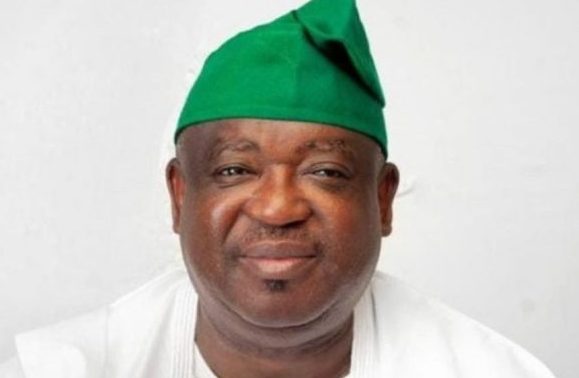
. Bitrus is the Coordinator of Plateau Alliance for Peace and Unity.