
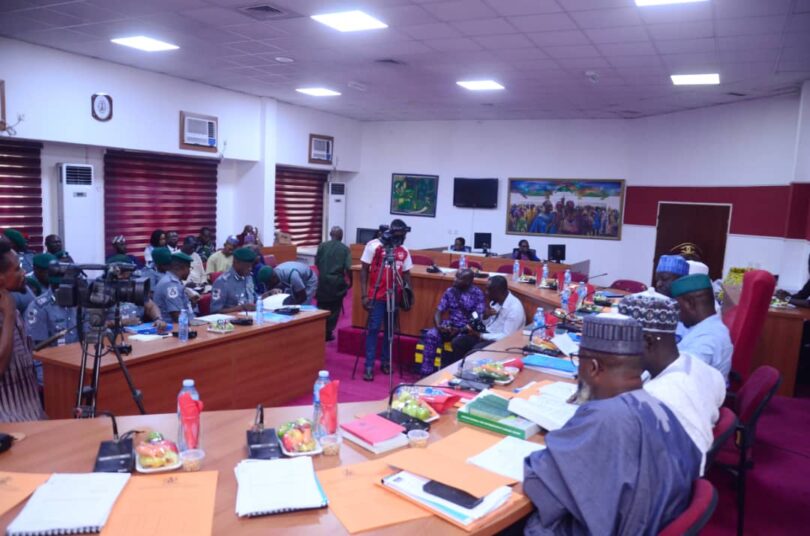
The Nigeria Customs Service (NCS) has announced that they have been cleared of allegations of a ₦62.2 billion under-remittance, by the Senate Public Accounts Committee (SPAC), following a detailed investigation into queries raised in the 2019 audit report by the Office of the Auditor-General of the Federation….
The Nigeria Customs Service (NCS) has announced that they have been cleared of allegations of a ₦62.2 billion under-remittance, by the Senate Public Accounts Committee (SPAC), following a detailed investigation into queries raised in the 2019 audit report by the Office of the Auditor-General of the Federation.
According to a statement on the official X handle of the Nigeria Customs, the committee’s decision was reached during an investigative session held on Tuesday, June 16, 2026, where the Comptroller-General of Customs, Adewale Adeniyi, defended the financial records of the Service and dismissed the allegation as a result of revenue misclassification.
The query, as presented before the committee and read under the supervision of SPAC Chairman, Senator Ibrahim Dankwambo, had alleged that out of ₦691.242 billion generated by Customs in 2017, only ₦629.23 billion was remitted to the Federation Account, leaving an unexplained balance of ₦62.2 billion.
However, Adeniyi told the committee that the figures had been wrongly interpreted due to classification errors involving different categories of levies.
“The under-remittance of N62.2 billion levelled against Customs in the 2019 audit report was wrongly arrived at through misclassification of levies collected,” he said.
“While most of the levies are to be collected and remitted into the federation account, others like the ones on local production of wheat, textiles and wines, etc do not go into the federation account, the totality of which accounted for the alleged unremitted ₦62.2 billion.”
Following the explanation, the committee accepted the clarification and ruled out any financial discrepancy against the Service, effectively clearing the Customs of wrongdoing in the matter.
During the session, a member of the committee, Senator Babangida Hussaini, questioned why the issue had lingered for years despite its technical nature, suggesting that it could have been resolved at the audit stage.
He noted that, as a former civil servant, such discrepancies should ordinarily have been addressed during preliminary audit reviews rather than escalating to a full Senate probe.