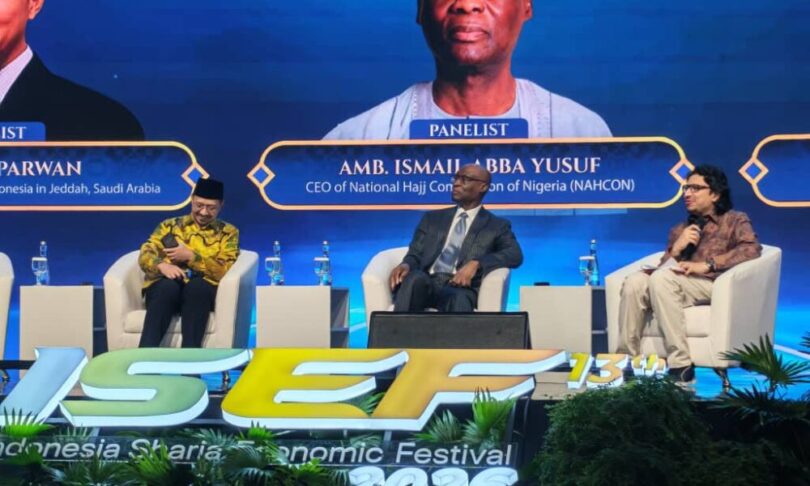
NAHCON emphasised the importance of coordination among relevant agencies, stronger institutional partnerships, and robust digital systems to protect Hajj operations from global financial volatility.
The Chairman of the National Hajj Commission of Nigeria (NAHCON), Ismail Yusuf, has called for strategic investments and digital transformation to strengthen Hajj fund management, reduce pilgrimage costs and safeguard financial benefits for future generations of pilgrims.
The global forum, hosted by Indonesia’s Hajj Financial Management Agency (Badan Pengelola Keuangan Haji – BPKH), brought together policymakers, Sharia finance experts and institutional leaders to explore sustainable approaches to managing Hajj funds amid rising economic uncertainties.
The forum, held under the theme “Sustainable Hajj Fund Management Through Strategic Synergy and Digital Transformation,” examined the growing macroeconomic challenges affecting pilgrimage operations, rising costs and the need to preserve the long-term financial benefits of Hajj funds.
According to a statement issued on Thursday by NAHCON’s Head of Information and Publications, Shafii Mohammed, Mr Yusuf shared Nigeria’s experience and perspectives during a high-level panel discussion alongside BPKH Executive Board Chief Fadlul Imansyah and other international dignitaries.
He emphasised the importance of coordination among relevant agencies, stronger institutional partnerships, and robust digital systems to protect Hajj operations from global financial volatility.
“The future of Hajj administration depends on our collective ability to innovate. Managing Hajj funds efficiently is no longer just about financing the immediate next pilgrimage; it is about protecting wealth and ensuring sustainable benefits for future generations of pilgrims.
By leaning into technological transformations and cementing strategic ties with key global partners like Indonesia, NAHCON is positioning Nigeria at the forefront of transparent and economically sound Hajj operations in line with the interests of current and future generations of pilgrims,” Mr Yusuf said.
Beyond digital transformation, the NAHCON chairman highlighted the need to expand investments in high-yielding infrastructure projects across the Hajj value chain.
He identified hospitality and logistics as key areas where strategic investments could reduce pilgrim accommodation costs while generating sustainable returns for the Hajj fund.
He said such investments would strengthen the financial foundation of Hajj administration and reduce exposure to rising costs associated with pilgrimage operations.
The approach aligns with the broader objective of ensuring that Hajj funds are managed not only to meet immediate operational needs but also to create lasting economic value for future pilgrims.
The forum also featured opening remarks from Indonesian dignitaries, including the Minister of Hajj and Umrah, K.H. Mochamad Yusuf, and the Vice Minister of Finance, Juda Agung.
Participants commended Nigeria’s active involvement in the discussions and its interest in strengthening strategic partnerships with other Muslim-majority countries.
The engagements focused on leveraging financial technologies, institutional cooperation, and sustainable investment models to modernise Hajj administration and improve pilgrimage fund management.
NAHCON’s participation in the 8th International Hajj Fund Forum represents a significant step in Nigeria’s efforts to develop more autonomous, technology-driven and sustainable frameworks for managing Hajj funds.
The commission’s engagement with international partners is expected to strengthen knowledge-sharing and cooperation on financial innovation, investment strategies and institutional reforms aimed at improving Hajj operations.
The broader objective is to establish a financially sustainable system that can support present-day pilgrims while preserving wealth and delivering long-term benefits to future generations.