
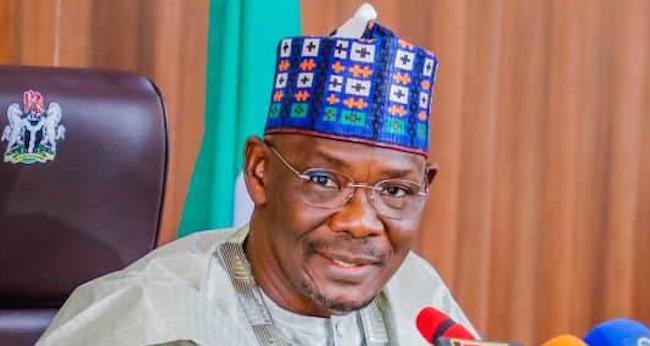
Nasarawa State Governor, Abdullahi Sule, has been commended for what has been described as transparent and prudent management of the state’s resources, particularly his disclosure of the increase in monthly revenue accruing to the state following the removal of fuel subsidy.
The commendation was contained in a statement signed by Sani Ahmad Zangina, ANIPR, who said the governor’s explanation of how the additional revenue was being deployed to infrastructure, industrial development and governance demonstrated a commitment to accountability and purposeful leadership.
According to the statement, Nasarawa State received between N3.8 billion and N4.5 billion monthly before the removal of fuel subsidy, while its monthly revenue has since risen to an average of between N14 billion and N16 billion.
Zangina said despite the significant increase in the state’s revenue, the Sule administration had embarked on major development projects without resorting to borrowing.
He identified infrastructure as one of the major areas of investment by the administration, saying projects valued at more than N90 billion had been undertaken across the state.
He said the projects included road construction aimed at opening up rural communities, improving connectivity and enhancing access to Lafia, the state capital.
According to him, the infrastructure investments are expected to stimulate economic activities, improve movement of goods and people and enhance the living conditions of residents across the state.
The statement also highlighted the administration’s efforts to position Nasarawa as an emerging industrial hub through investments in agriculture, agro-processing and value-chain development.
A major component of the initiative is the proposed N30 billion Cassava Industrial City in Kokona Local Government Area of the state.
Zangina said the project was expected to promote value addition in cassava production, create employment opportunities and generate additional income for farmers and other residents involved in the agricultural value chain.
He added that the state government had established four rice processing mills and one cassava processing centre, while efforts were ongoing to attract private-sector investments into cassava farming and sugar production.
He said the initiatives were particularly significant given Nasarawa’s agricultural potential, arguing that the development of processing facilities could help move the state’s agricultural sector beyond subsistence farming and make it a major driver of industrialisation and economic growth.
The statement further cited the construction of the new Nasarawa State Secretariat as another major project of the Sule administration.
The secretariat, according to Zangina, accommodates about 11 ministries under one roof and is powered by a one-megawatt solar power plant.
He said the facility was designed to provide a more modern and efficient working environment for public servants while also promoting the use of renewable energy in government operations.
Zangina also commended the Secretary to the Nasarawa State Government, Labaran Shuaibu Magaji, SAN, for his role in supporting the administration’s programmes and coordinating government activities.
He recalled that Magaji previously served as the state’s Attorney-General and Commissioner for Justice, where he was involved in legal and institutional reforms before his appointment as Secretary to the State Government.
According to him, Magaji’s experience and administrative capacity had contributed to the implementation and coordination of government policies under the Sule administration.
“Behind every successful administration is a team capable of translating the vision of the leader into practical results,” he said.
Zangina urged other state governments to draw lessons from Nasarawa’s approach to revenue management, infrastructure development, industrialisation and public administration.