
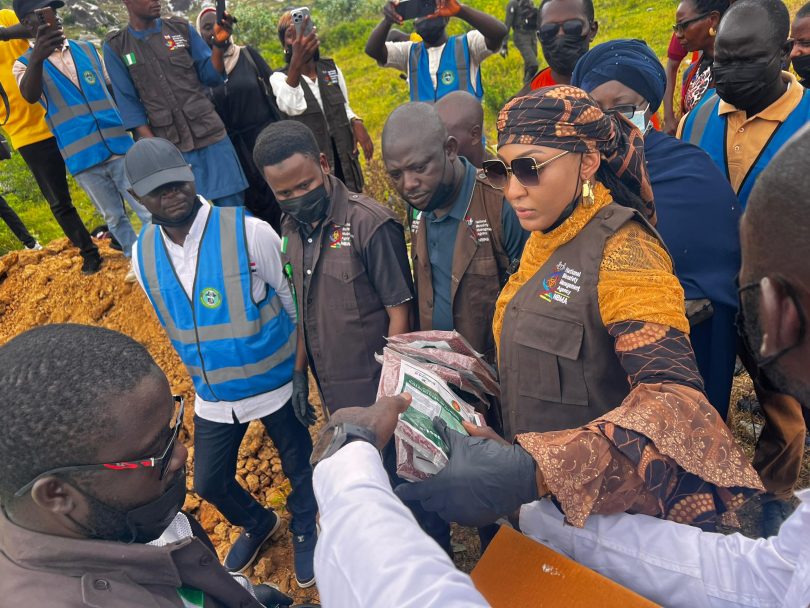
The National Biosafety Management Agency (NBMA) says it has destroyed 950 kilograms of genetically modified cotton seeds introduced into Nigeria without regulatory approval, describing the case as a compliance breach rather than a safety incident.
The National Biosafety Management Agency (NBMA) says it has disposed of 57 cartons of unapproved transgenic hybrid cotton seeds weighing approximately 950 kilograms as part of efforts to enforce Nigeria’s biosafety regulations.
The agency disclosed this in a statement issued on Friday, saying the disposal was carried out in line with its statutory mandate to ensure compliance with Nigeria’s biosafety laws, regulations and approved procedures governing modern biotechnology activities.
“The National Biosafety Management Agency (NBMA) has carried out the regulatory disposal of 57 cartons of transgenic hybrid cotton seeds weighing approximately 950 kilograms, in line with its statutory mandate to ensure compliance with Nigeria’s biosafety laws, regulations, and approved procedures governing modern biotechnology activities,” the statement said.
Speaking during the exercise, the Director-General and Chief Executive Officer of the NBMA, Fatima Suleiman-Zuntu, said the action followed intelligence gathering, surveillance, compliance monitoring and a comprehensive investigation by the agency.
According to her, investigations established that the transgenic hybrid cotton seeds, traced to Fiyah Global Concept Limited, were introduced and handled without the regulatory approvals and oversight required under the National Biosafety Management Act and regulations governing genetically modified organisms (GMOs) in Nigeria.
The disposal comes about four months after the NBMA suspended the introduction of four new genetically modified cotton varieties into the country.
In March, PREMIUM TIMES reported that the agency ordered the immediate suspension of four GM cotton varieties: MIC 561 BGII, MIC 563 BGII, BIOSEED-FIYAH CH1001, and BIOSEED-FIYAH CH1002.
The suspension followed allegations that the National Committee on Naming, Registration and Release of Crop Varieties registered the cotton varieties without obtaining the requisite approvals from the NBMA.
The agency also said the confined field trials and related research activities for the varieties were conducted without the mandatory regulatory oversight and inspections.
In Nigeria, the adoption of GM crops has remained contentious. While proponents argue that the technology can boost food production and enhance food security, critics have raised concerns about environmental and health risks, weak regulatory enforcement, and inadequate labelling.
According to the International Service for the Acquisition of Agri-biotech Applications (ISAAA), more than 30 major food crops have been genetically modified globally.
Nigeria has approved four crops—maize, cowpea, cotton, and soybean—for commercialisation and is among six African countries leading in biotech crop adoption.
In 2024, the government approved four varieties of Tela maize, further intensifying debates over GM crop safety and transparency.
Concerns also persist over farmers’ limited knowledge of GM seed characteristics, potential dependence on seed companies, and the broader impact on traditional farming systems.
An investigation by PREMIUM TIMES and international partners in 2024 revealed how the US government, through the now-defunct USAID, funded pesticide and GM-related advocacy campaigns in Nigeria, including efforts that profiled critics of GMOs.
As debates continue, the suspension of the new cotton varieties underscores ongoing challenges around biosafety compliance and regulatory oversight in Nigeria’s biotechnology sector.
In Friday’s statement, Mrs Suleiman-Zuntu emphasised that the matter was a regulatory compliance breach rather than a biosafety or public health incident.
“At no point did the unauthorised activities pose a threat to human health, animal health, or the environment. Nevertheless, compliance with established regulatory procedures remains a fundamental requirement for maintaining the integrity, credibility, and effectiveness of Nigeria’s biosafety system,” the statement said.
The agency added that, beyond disposing of the seeds, it had imposed administrative sanctions on Fiyah Global Concept Limited in accordance with the provisions of the law.
Mrs Suleiman-Zuntu said the agency’s actions were guided solely by its statutory responsibility to protect Nigerians, safeguard biodiversity and the environment, and preserve public confidence in the regulation of modern biotechnology.
“This exercise sends a clear signal that no individual, institution, or organisation is above the law. Regulatory compliance is not optional. The National Biosafety Management Agency will continue to enforce the law without fear or favour whenever violations of biosafety regulations, guidelines, permit conditions, or approval requirements are identified,” she said.
She added:.“NBMA exists to serve and protect Nigerians. Every action taken by the Agency is guided by one overriding objective: the safety, health, wellbeing, and environmental security of our people. We will not compromise these responsibilities for any individual, institution, or commercial interest.”
While reaffirming the agency’s support for research, innovation and technological advancement in modern biotechnology, Mrs Suleiman-Zuntu stressed that such activities must be conducted within the framework of the law.
She urged researchers, seed companies, institutions, developers and other operators involved in biotechnology to obtain all necessary approvals before undertaking activities involving genetically modified organisms in Nigeria.
The NBMA also acknowledged the media’s role in promoting public understanding of biosafety issues and urged journalists to report biotechnology-related matters accurately and based on verified facts, noting that responsible reporting is essential to maintaining public confidence and preventing misinformation.
The agency said it remains committed to ensuring that biotechnology activities in Nigeria meet the highest standards of safety, accountability, transparency and public interest.
It also commended the Environmental Health Council of Nigeria (EHCON) and the Nasarawa State Waste Management and Sanitation Authority (NASWAMSA) for supporting the disposal exercise, saying it would continue to work with relevant institutions to strengthen Nigeria’s biosafety regulatory system.