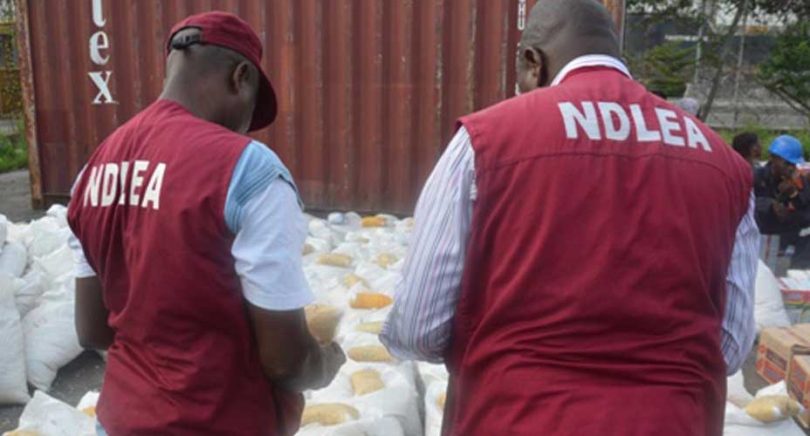
The Federal Government has pledged to intensify efforts to dismantle drug trafficking cartels, curb substance abuse and expand access to treatment and rehabilitation, as the National Drug Law Enforcement Agency (NDLEA) disclosed that it seized illicit drugs worth more than N1.5 trillion and secured over 5,200 convictions in the last 18 months.
The commitment was made on Wednesday at the opening of the National Drug Use Summit in Abuja, where top government officials, development partners and security agencies gathered to develop a coordinated response to Nigeria’s growing drug abuse and trafficking crisis.
Speaking on behalf of President Bola Tinubu, Secretary to the Government of the Federation, Senator George Akume, said the Federal Government would continue to support initiatives aimed at dismantling trafficking networks and protecting Nigerians from the dangers of illicit drugs.
Represented by the Permanent Secretary, General Services Office, Dr. Adamu Ibrahim Kana, Akume said no country could achieve sustainable development if its youth population was overwhelmed by drug addiction.
“On behalf of the Federal Government of Nigeria and President Bola Ahmed Tinubu, I reaffirm our unwavering commitment to every initiative aimed at preventing illicit drug use, dismantling trafficking networks, expanding access to treatment and rehabilitation, and promoting the wellbeing of all Nigerians,” he said.
According to him, criminal organisations involved in drug trafficking continue to undermine national institutions and exploit vulnerable communities, making a coordinated national response imperative.
He said the Tinubu administration, under its Renewed Hope Agenda, remained committed to strengthening mental health services, empowering young people and building resilient communities capable of resisting substance abuse.
At the summit, NDLEA Chairman and Chief Executive Officer, Brigadier General Mohamed Buba Marwa (retd.), unveiled fresh statistics on the agency’s operations, revealing that between January 2025 and June 2026, operatives arrested 29,262 suspects, confiscated 5,305,484.88 kilograms of assorted illicit drugs valued at over N1.5 trillion, and secured the conviction of 5,225 offenders.
Marwa said the figures reflected the scale of the drug problem facing Nigeria but stressed that enforcement alone would not solve the crisis.
He argued that the challenge required a “whole-of-government and whole-of-society” approach involving government institutions, communities, families, religious leaders, civil society organisations, development partners, the private sector and the media.
According to him, the summit was convened to lay the foundation for a coordinated National Action Plan that would strengthen prevention, treatment, rehabilitation, policy implementation, data collection and community resilience.
Marwa also highlighted the agency’s drug demand reduction efforts, saying the NDLEA conducted 6,645 drug prevention and awareness programmes across schools, worship centres, markets, motor parks, workplaces, correctional facilities and communities within the same 18-month period.
He said the campaigns reached nearly five million Nigerians, while 13,508 people battling drug dependence received counselling, treatment and rehabilitation across the agency’s 31 rehabilitation centres nationwide.
The NDLEA boss further disclosed that the agency had launched an Alternative Development Initiative to help cannabis farmers transition from illegal cultivation to legitimate agricultural ventures and other sustainable livelihoods.
Minister of Health and Social Welfare, Professor Ali Pate, warned against reducing the summit to another policy discussion without concrete outcomes.
“The measure of this summit will not be the communique. It will be the number of young people who choose not to start drugs. It will be the number of patients who sleep without pain. It will be the number of families restored,” he said.
Pate pledged that the Federal Ministry of Health would continue to coordinate efforts aimed at tackling substance use disorders and improving access to treatment.
Also speaking, the United Nations Office on Drugs and Crime (UNODC) Country Representative, Cheikh Toure, represented by Dr. Akanidomo Ibanga, urged Nigerian authorities to translate policy commitments into measurable action.
He noted that the emergence of new psychoactive substances and changing drug use patterns demanded urgent, coordinated and evidence-based interventions.
According to the UNODC, the summit should serve as a platform for aligning stakeholders behind the National Drug Control Master Plan and accelerating practical actions capable of reducing the country’s drug burden.
The National Drug Use Summit was jointly organised by the NDLEA, the Federal Ministry of Health and Social Welfare, and the UNODC, with participation from ministries, security agencies, development partners, civil society organisations and other stakeholders.