The National Economic Council has approved N83.2 billion for proactive interventions to mitigate flooding and other climate-related disasters across Nigeria, as authorities warn of severe flooding risks in 33 states and the FCT this year.
The National Economic Council (NEC) has approved N83.2 billion for interventions to mitigate the impact of anticipated flooding and other climate-related emergencies across Nigeria.
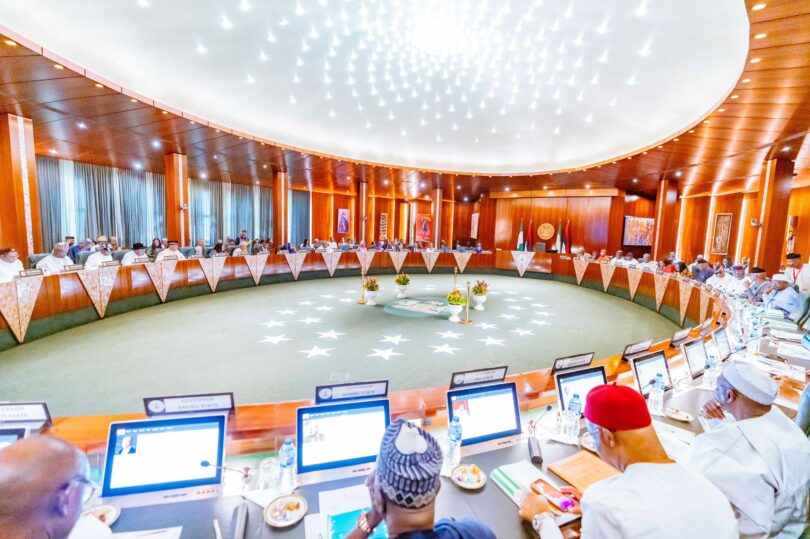
The approval was granted on Thursday during the 158th NEC meeting chaired by Vice President Kashim Shettima.
According to a statement issued by Stanley Nkwocha, Senior Special Assistant to the President on Media and Communications (Office of the Vice President), the funds will support interventions by the Anticipatory Action Task Force (AATF) to address flooding and related disasters before they occur.
The approval followed a presentation by the Minister of State for Budget and Economic Planning, Doris Uzoka-Anite, who highlighted the need for proactive measures to address recurring flood incidents across the country, particularly during the rainy season.
The intervention comes amid warnings by government agencies of severe flooding in many parts of Nigeria this year.
Nigeria’s 2026 Seasonal Climate Prediction (SCP), released by the Nigerian Meteorological Agency (NiMet), forecasts early-to-normal rainfall onset in the South and Middle Belt, above-normal temperatures nationwide and a prolonged August break lasting between 28 and 40 days in parts of the South-west.
Similarly, the 2026 Annual Flood Outlook (AFO), published by the Nigeria Hydrological Services Agency (NIHSA) in April, identified 14,118 communities across 33 states and the Federal Capital Territory (FCT) as high-risk flood zones.
Nigeria has experienced devastating flood disasters in recent years. Over the past five years, flood disasters in the country have killed over 1,500 people, displaced more than 1.4 million people, and destroyed thousands of homes, submerged farmlands, and damaged critical infrastructure across several states.
On Thursday, NEC said the intervention reflects a commitment to proactive disaster management rather than the traditional response after emergencies occur.
The council noted the importance of the AATF in strengthening preparedness and reducing the devastating effects of disasters nationwide.
It stressed that disaster management efforts should focus on anticipation and prevention rather than reaction.
Shettima calls for tangible results
Addressing the meeting, Mr Shettima said President Bola Tinubu’s reform agenda must begin to deliver visible benefits to Nigerians.
He said the council’s performance would ultimately be measured by improvements in the lives of ordinary citizens, particularly farmers, manufacturers, vulnerable groups, unemployed youths and future generations.
“When this Council last met, I called our economy a workshop. A place of measurement and correction. A place where plans are turned into systems, and systems into institutions, before any of it becomes prosperity.
“A workshop is judged by one thing, not by the plans pinned to its walls, but by what comes off the bench. We return to that bench today. Not to admire the image, but to ask the question that honours it. Is the work taking shape?” he said.
The vice president said Nigeria is moving from economic stabilisation to production-driven growth and from policy formulation to implementation.
“The assignment has not changed. We remain a federation moving from stabilisation to production, from aspiration to implementation, from isolated interventions to coordinated national growth. What has changed, I hope, is our proximity to delivery,” he said.
He added that government policies must ensure that vulnerable citizens are not left behind.
“A federation does not earn its prosperity by leaving its most vulnerable behind and hoping they catch up. The dignity of the citizen with the least is the floor beneath which we have resolved that no Nigerian shall fall,” he said.
Mr Shettima also urged state governments to collaborate with the federal government in addressing logistical and regulatory obstacles affecting agricultural exports.
He said Nigeria must move away from exporting raw materials while importing finished products.
“We cannot continue to export raw materials and import finished prosperity,” he said.
According to him, Nigeria’s economic transformation depends on building an integrated value chain that connects farms to factories, factories to standards, standards to ports and ports to international markets.
The vice president said the government would address bottlenecks at the nation’s ports and improve compliance with international export standards to enhance the competitiveness of Nigerian products.
“A nation that cannot move its goods has imprisoned its own farmers. Meeting international standards is not submission to foreign demand. It is the price of the markets that will reward our labour,” he added.
More details here…