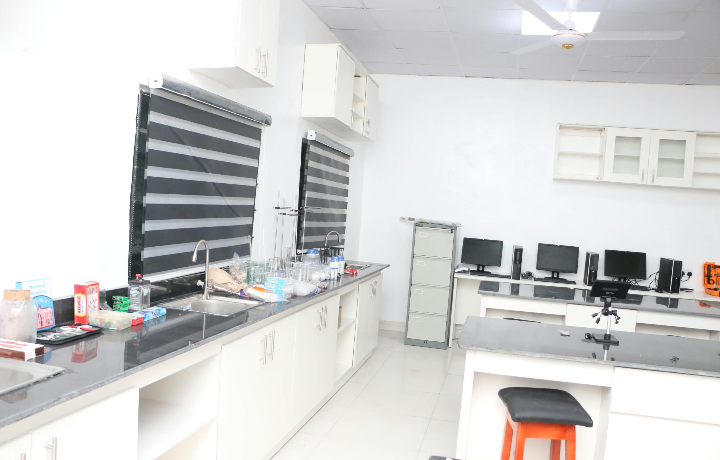
The News Agency of Nigeria reports that the laboratories were established at Zappa Basic Secondary School and Asagba Mixed Secondary School, Asaba.
The NNPC Exploration and Production Ltd (NEPL) and Seplat Energy Joint Venture (JV) have established two Science, Technology, Engineering, Arts and Mathematics (STEAM) laboratories in two public schools in Oshimili South Local Government Area of Delta State.
Esther Icha, the General Manager, Corporate Social Investment & Social Performance, Seplat Energy Plc, represented Mrs Afe.
The News Agency of Nigeria reports that the laboratories were established at Zappa Basic Secondary School and Asagba Mixed Secondary School, Asaba.
Mrs Afe said the initiative aimed to expand students’ access to practical learning and equip them with the skills in science, technology, innovation, and problem-solving needed for future development.
She said the laboratories represented a strong investment in students, schools and communities, adding that the project was the seventh STEAM laboratory established by the company in the state.
“This moment represents more than just the commissioning of a room filled with equipment.
“It represents a strong investment in the future of our students, our schools and our state,” she said.
Mrs Afe said STEAM education had become fundamental to innovation, problem-solving, creativity and sustainable development in the modern world.
She said the laboratories would enable students to move beyond theoretical learning to practical experimentation, designing and testing ideas while building confidence to solve real-life problems.
Mrs Afe said each laboratory represented a step toward expanding access to practical, hands-on learning and preparing young people for opportunities in the 21st century.
The official urged the beneficiaries to utilise and properly maintain the facilities and to integrate them fully into teaching and learning.
She expressed optimism that the laboratories would produce innovators, engineers, scientists, creators, entrepreneurs and leaders, who would make Delta and Nigeria proud.
Also speaking, the Delta State Commissioner for Higher Education, Kingsley Ashibogwu, urged the students to see the laboratories as opportunities to experiment, innovate and develop solutions to real-life challenges.
Mr Ashibogwu said students should not be discouraged by failure while experimenting, stressing that repeated attempts remain essential to achieving breakthroughs.
“Most great inventors you see today have attempted many times, failed many times, but succeeded once,” he said.
He urged the students to make practical attempts in the laboratories, saying such efforts would prepare them to become leaders and innovators.
“Through practical attempts, we will succeed and become leaders of not just tomorrow but leaders of today,” Mr Ashibogwu said.
The commissioner assured the schools and communities that the state government would protect the facilities to ensure their sustainability and continued use by students.
He disclosed that security measures, including closed-circuit television, had been installed around the laboratories to protect the equipment from theft and vandalism.
Mr Ashibogwu commended the NNPC-Seplat JV for investing in education and supporting efforts to ensure that students did not lag in technological advancement and productivity.
Also, Bridget Anyafulu, member, representing Oshimili South Constituency in the Delta State House of Assembly, described the establishment of the two laboratories as a significant investment in the local government area.
Mrs Anyafulu, who is a member of the House Committee on Education, commended the NNPC-Seplat JV for bringing practical science education closer to students in public schools.
“Today, Seplat has come to Oshimili South, Delta State, to donate these two labs to two schools in Oshimili South. That’s huge,” she said.
The lawmaker said the project would encourage students to pursue science-related disciplines while strengthening teachers’ capacity to provide practical instruction.
She commended public-school teachers for their dedication to training children, noting that many people often underestimate the quality of teachers and students in public schools.
“Our public schools have the best teachers, not just in Delta; I’m sure across the country, and many people look down on public schools,” she said.
Mrs Anyafulu said investment in education has the capacity to transform communities, stressing that the laboratories’ impact would extend beyond Oshimili South to Delta State and Nigeria.
“When you give education to a child, you have prepared that community,” she said.
She expressed optimism that the laboratories would help produce medical doctors, scientists, pharmacists, and other professionals who would contribute to national development.