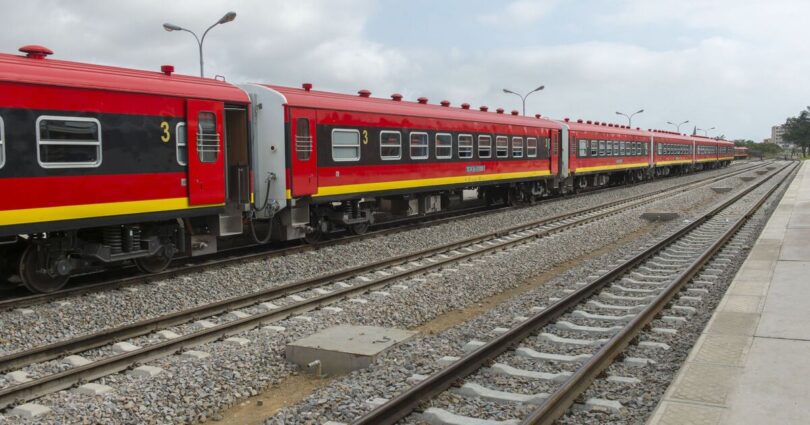
Construction of a major new £1billion train line linking three African countries is set to get underway this year. The new Lobito Corridor, will link the ports at Lobito in Angola to the Democratic Republic of Congo, through Zambia.
The new route is set to open African trade to the global markets, with Lobito a key port on the Atlantic Ocean coast, aiding direct shipping to Europe and the USA. Part of the rail project involves the construction of around 350 miles of new line in Zambia, connecting to a wider 800-mile route.
The new rails will connect the northwest region of Zambia to the southern part of the Democratic Republic of Congo, granting Zambia access to the Atlantic Ocean. The project will also see renovations on the existing Benguela railway, while hundreds of miles of feeder roads along the corridor will also be put into place.
Director general of the Benguela Railway, Antonio Manuel Carbal has backed the new project.
He said: “It will boost economic infrastructure across various sectors, this corridor open both to the world and the local markets will encompass virtually any type of trade imaginable from agriculture and logistics to the iron and steel sectors.”
The European Commission has explained that the new Corridor will be the “first open-access transcontinental rail link in Africa”. They stressed the new project has the potential to “unlock the region’s enormous economic potential” and increase export opportunities.
The new route is expected to help facilitate the transport of minerals like cobalt and copper. However, the new project has come under fire for supporting Western nations over African development.
The new Lobito Corridor project is being supported by the United States’ G7 Partnership for Global Infrastructure and Investment (PGI) and the European Union’s Global Gateway initiative.
Dady Saleh, a Congolese economic analyst, is among those claiming that the new project was opening up Africa’s economic market to “modern plunderers”.
He said: “This project is an organised sell-off of the region’s natural resources in a capitalist system.”