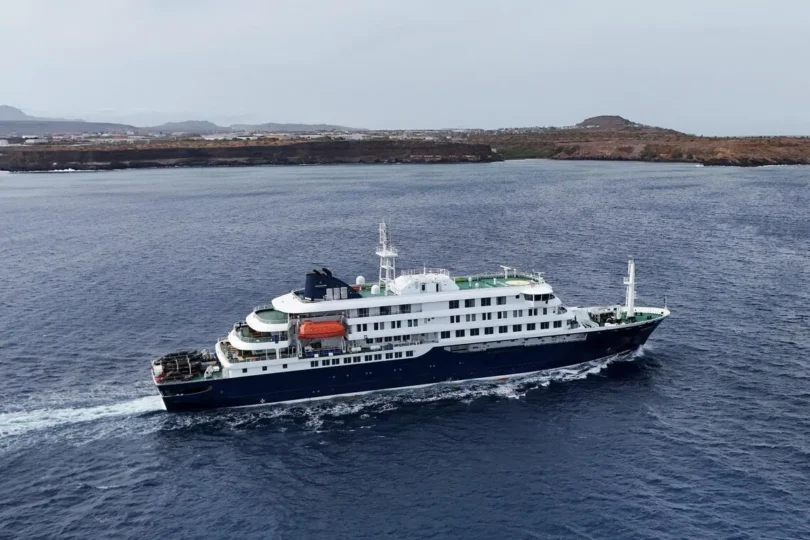
AMSTERDAM – A new suspected case of hantavirus has been identified in a British man who was a passenger on the virus-hit luxury cruise ship MV Hondius and is now on the remote South Atlantic island of Tristan da Cunha, the health authorities said on May 8.
The British Health Security Agency did not disclose further details of the new suspected case on the British overseas territory where the cruise ship made a stop on April 15.
Tristan da Cunha, home to only around 200 people, is halfway between South Africa and South America and the world’s remotest inhabited island, more than 2400km and a six-day boat ride from St Helena, its nearest inhabited neighbour.
An islander had been hospitalised and his wife was self-isolating, the British Minister for the Overseas Territories Stephen Doughty said in a statement posted on Tristan da Cunha’s local government website.
Four islanders took a lift on the Dutch-flagged vessel to St Helena, he added. Tristan da Cunha administrator Philip Kendall said these had been advised to self-isolate there as a precaution.
While the new case remained suspected, the announcements of precautions will fuel concerns about the Andes strain of hantavirus found on the ship that in rare cases can spread from human to human.
Three people – a Dutch couple and a German national – died following the outbreak on the MV Hondius.
Four others confirmed to be infected, two Britons, a Dutch and a Swiss national, are being treated in hospitals in the Netherlands, South Africa and Switzerland, and a fifth case is suspected, according to the World Health Organization (WHO).
Those figures do not include the suspected case on Tristan da Cunha. The WHO said it would provide an update later on May 8.
The US Centers for Disease Control and Prevention has classified the hantavirus outbreak as a ‘level 3’ emergency response, the lowest level of emergency activation.
Other experts have also stressed the low probability of a widespread contagion, but the outbreak has put authorities on high alert as they urge all who have been in contact with passengers who left the Hondius to watch out for possible symptoms.
Several US states have said they are monitoring asymptomatic residents who had returned home after disembarking from the cruise ship.
Singapore on May 7 isolated and tested two residents who had been aboard the ship.
Three people who had been close to the Dutch woman before she was taken off a plane in Johannesburg on April 25, had now tested negative for the virus, the Dutch health authorities said on May 8.
Among them was a flight attendant who had been admitted to a hospital in Amsterdam with symptoms of a possible infection, the WHO said.
WHO spokesman Christian Lindmeier told reporters in Geneva that the flight attendant had been in close contact with the passenger who died but had tested negative all the same.
“That should convince nearly everybody now that this is a dangerous virus but only to the person who’s really infected, and the risk for the general population remains absolutely low,” he said.
Cruise operator Oceanwide on May 7 said that there were no people with symptoms of a possible infection remaining on board the ship, which was expected to dock in Tenerife in the Canary Islands early on May 10.
The WHO has said it was working on step-by-step guidance for when the dozens of passengers remaining on the ship disembark and travel home.
The Dutch government said on May 8 that it was still working on plans to repatriate the 10 Dutch nationals onboard and it was too early to share details.
Foreign Affairs Minister Tom Berendsen said the Netherlands was responsible only for the Dutch passengers on the ship, sailing under Dutch flag, though it also felt a responsibility to ensure that all the ship’s passengers got home safely. REUTERS