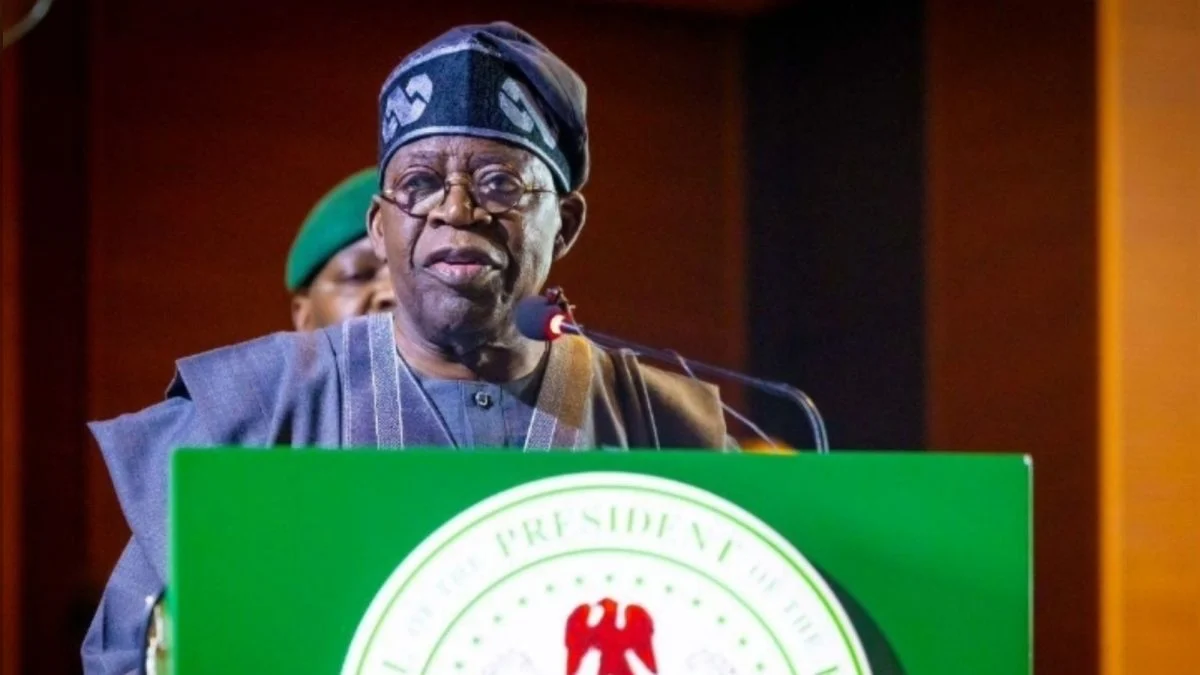
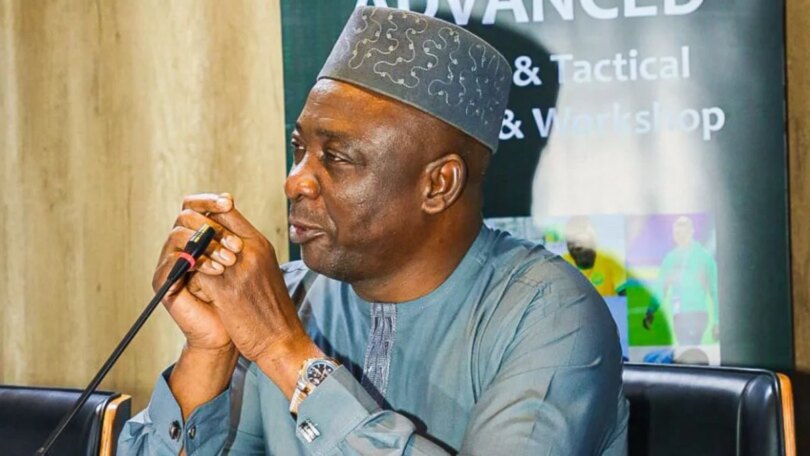
The president of the Nigeria Football Federation (NFF) Ibrahim Gusau and several members of the federation’s executive committee have resigned.
The development follows mounting criticism over the management of the national teams and growing scrutiny from security agencies over issues surrounding the federation.
Gusau, who has headed the NFF since September 2022, is reported to have stepped down alongside other board members after weeks of increasing pressure on the leadership.
The reported resignations have further weakened the NFF executive committee, with eight of its 13 members said to have either resigned or quit their positions.
With the situation, the federation’s planned elective congress, scheduled to hold on September 27 in Lafia, Nasarawa State may be affected. A new board is scheduled to be elected at the event.
The resignations come as the Department of State Services (DSS) intensifies its scrutiny of the federation.
Security officials are examining the utilisation of a N17 billion intervention fund approved by President Bola Tinubu in 2024 to settle outstanding wages, bonuses and other payments owed to members of Nigeria’s national teams.
A source familiar with the investigation said the DSS had requested documents relating to the money released to the NFF.
“It’s a normal thing for DSS to go through all documents relating to the funds released them,” the source said, dismissing suggestions that the exercise was intended to witch-hunt NFF officials.
The financial investigation is coming alongside a separate intelligence inquiry involving the DSS and National Intelligence Agency (NIA), which is reportedly examining allegations concerning contacts between some NFF officials and foreign nationals.
A security source previously said the intelligence agencies were investigating communications allegedly exchanged between certain federation officials and foreign interests.
The source described the alleged communications as “highly disturbing” and said the matter had implications beyond the administration of football.
According to the source, the N17 billion intervention fund is a separate issue from the intelligence investigation and falls primarily within the remit of financial crime investigators.
“It is true that President Bola Tinubu in 2024 approved N17 billion as a special intervention fund to help NFF clear outstanding payments owed to Nigeria’s national teams. However, that falls within the purview of the EFCC, not the DSS and NIA,” the source said.
The source added that the involvement of both the DSS and NIA indicated that authorities were examining issues they considered to have wider national security implications.
Super Falcons’ World Cup Failure Deepens Crisis
The leadership crisis has also followed a major setback for Nigerian football, particularly the women’s national team.
The Super Falcons, who had featured at every edition of the FIFA Women’s World Cup since the tournament began in 1991, failed to secure a place at the 2027 tournament in Brazil.
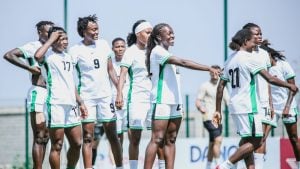
Nigeria’s hopes suffered a major blow after the Falcons were defeated 1-0 by Cameroon in the quarter-final of the 2026 Women’s Africa Cup of Nations.
The defeat ended their title defence and forced the team into the World Cup qualification playoff route.
The Falcons subsequently lost 2-1 to South Africa’s Banyana Banyana in the playoff, bringing an end to Nigeria’s unbroken appearance at the women’s World Cup.
The development intensified criticism of the NFF leadership, particularly against the backdrop of the Super Eagles’ failure to qualify for consecutive editions of the men’s FIFA World Cup.
Stakeholders have increasingly questioned the direction of the federation and its handling of Nigeria’s national teams.
Resignations Put NFF Election in Doubt
The departure of a majority of the executive committee members has raised questions about the immediate future of the federation and the possibility of proceeding with the September election as planned.
Eight of the 13 members of the NFF board are reportedly no longer in office, leaving the federation facing a major leadership vacuum at a time when its activities are already under scrutiny.
An insider linked the resignations to concerns surrounding the ongoing intelligence investigations and warned that the development could affect the proposed election in Lafia.
“That at least half of NFF executive have or are contemplating resignation, may not be unconnected with the fear of DSS and NIA probe, fuelling fears on the possibility of holding the NFF board election scheduled for September 27 in Lafia, Nasarawa State,” the insider said.
Gusau was elected NFF president at the federation’s elective congress in Benin City, Edo State, in September 2022.
Calls for Accountability and Reform
The crisis has generated competing views on whether removing the current leadership would solve the problems confronting Nigerian football.
Former aide to ex-President Muhammadu Buhari, Bashir Ahmad, recently warned against what he described as an intensified campaign to force Gusau out of office.
“There appears to be a growing campaign by some individuals to force the President of the Nigeria Football Federation, NFF, Mallam Ibrahim Gusau, out of office,” Ahmad wrote on X.
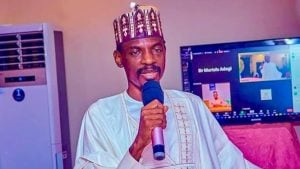
He said criticism of the NFF was legitimate but questioned whether the push against Gusau was motivated by a genuine desire to reform Nigerian football.
“I believe that while criticism and accountability are necessary, the apparent intensity of the campaign against the NFF leadership raises questions about its motives,” he said.
Ahmad argued that the difficulties facing Nigerian football did not begin with Gusau’s administration and would require broader reforms covering funding, administration, grassroots development, player welfare, coaching and infrastructure.
He asked, “So, the question we should now ask is are we trying to fix Nigerian football or are we simply trying to remove individuals from positions of responsibility?”
He nevertheless said officials should face consequences where they fail to perform their responsibilities.
“If there are areas where the NFF has failed, those responsible should be held accountable,” Ahmad said.
“But removing an elected football administrator should not become an objective in itself, particularly when there are ongoing efforts to reform the system.”
He further warned that constant leadership changes could make it more difficult to address the structural problems within Nigerian football.
“Constant attempts to remove football administrators before they have the opportunity to implement meaningful reforms can further weaken the institution and distract from the real issues affecting the game,” he said.
Ahmad maintained that the federation should prioritise the interests of Nigerian football rather than those of individuals or groups.
“The NFF belongs to Nigerian football, not to any individual or interest group,” he said.
“What should ultimately matter is the development of the sport, the welfare of our players, the growth of grassroots football and the return of Nigerian football to where it belongs.”