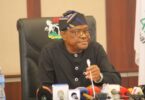
Nigeria and Bangladesh have reaffirmed their commitment to strengthening bilateral relations, with both countries identifying agriculture and trade as key areas for expanded cooperation.
The position was highlighted on Thursday during the 55th Independence Anniversary and National Day celebration of Bangladesh in Abuja, where officials from both nations outlined opportunities for deeper engagement.
Nigeria’s Minister of Foreign Affairs, Yusuf Tuggar, said the relationship between both countries has continued to grow across multiple sectors, including trade, agriculture, education and defence.
“Nigeria and Bangladesh have continued to grow their partnership in trade, agriculture, education and defence cooperation,” he said.
Represented by Bukar Hamman, Tuggar also encouraged stronger private sector collaboration, noting that Nigeria remains open to increased Bangladeshi investment.
“We welcome the expanding presence of Bangladesh business in Nigeria and encourage even deeper engagement between our private sectors,” he said.
“There is vast potential for collaboration in textile, pharmaceuticals, ICT, and renewable energy sectors, where Bangladesh has developed notable expertise.”
Earlier, Bangladesh’s High Commissioner to Nigeria, Miah Md. Mainul Kabir, stressed the need to unlock the full economic potential of both countries through strategic partnerships.
“Bilateral trade between Bangladesh and Nigeria is growing steadily, yet we firmly believe that we have many things to achieve further,” he said.
Kabir noted that despite existing progress, both countries are yet to fully maximise opportunities in trade and investment.
“We believe we are yet to achieve the true potential of our relationship in terms of trade and investment. Bangladesh offers competitive priced, high-quality products in textiles and garments, pharmaceuticals, ceramics, processed foods, and ICT services,” he added.
He identified agriculture as a major area for collaboration, particularly through contract farming.
“Bangladesh’s expertise in high-yield, climate-adaptive cultivation combined with Nigeria’s vast arable land and expanding agro-processing sector creates a mutually beneficial foundation,” Kabir said.
The envoy further explained that Bangladesh is looking to deepen its engagement with African countries, especially Nigeria, which he described as a key economic partner.
He also pointed to other areas of cooperation beyond trade.
“We believe that beyond trade, there is a considerable scope for cooperation in education and skills development, digital innovation, technology transfer, defence, and particularly professional military training and peacekeeping operations,” he said.
Both countries emphasised that stronger ties would not only benefit their economies but also contribute to wider South-South cooperation and global development efforts.