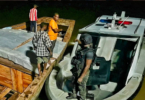
The two nations sign a defense agreement to boost intelligence sharing and joint operations as Boko Haram and ISWAP fighters move freely across the rugged frontier.
By Mike Odeh James and Izhi Bitrus Adamu
YOLA — Captain Agbo Adoba and his platoon reached the Mambilla Plateau, the rugged highlands straddling Nigeria’s border with Cameroon, with orders to hunt down remaining Boko Haram and Islamic State West Africa Province (ISWAP) fighters.
Their mandate was clear: pursue the enemy into the mountains, cross into Cameroon if necessary, and neutralize the jihadists. Adoba noted that Cameroonian troops did not challenge the Nigerian soldiers as they crossed—a quiet sign of how far military cooperation has evolved.
That collaboration is deepening. In June 2026, Nigeria and Cameroon signed a defense agreement that officials say will expand intelligence sharing, strengthen military coordination, and improve security along land and maritime borders.
What the New Agreement Means
The pact aims to strengthen security along the shared border and improve efforts against terrorism, kidnapping, smuggling, and other cross-border crimes. Signed in Yaoundé by senior military officials from both countries, it is designed to deepen collaboration where the two nations face common threats.
According to David Onyilokwu Idah of the Human Rights Commission in Abuja, the deal means Nigeria and Cameroon will share intelligence, coordinate operations, and conduct joint military training. Security agencies will exchange information on terrorist movements, criminal networks, arms trafficking, and other cross-border threats.
The agreement is particularly important because both countries share a long border exploited by terrorist groups, smugglers, and kidnappers. Better cooperation could enable faster, more effective responses to threats that move between the two nations. The treaty also includes maritime security cooperation in the Gulf of Guinea, where piracy, illegal fishing, and trafficking are challenges.
However, the agreement does not create a NATO-style military alliance. It does not require either country to automatically go to war for the other. Instead, it provides a framework for coordination. For Nigeria, the pact reflects a broader strategy of working with neighbors to tackle security challenges that extend beyond national borders.
Pact Must Deliver Results, Says Scott Morgan
Washington-based security consultant Scott Morgan says the agreement has potential to address real security gaps along the border, where militants have long crossed with relative ease. According to Morgan, the pact complements existing regional efforts but also targets weaknesses insurgents continue to exploit. However, he argues lasting success will require cooperation among all four Lake Chad Basin countries, not just Nigeria and Cameroon.
“The MOU can be seen as doing both,” Morgan said. “For best results all four need to work together.”
Morgan cautioned that defense agreements should be judged by implementation, not announcements. He noted different countries define success differently, making results hard to measure. The key, he said, is identifying partners that are serious and willing to provide effective tools and resources.
He also highlighted practical obstacles language differences and delays in intelligence analysis—which can disrupt joint operations and limit real-time information sharing. On maritime security, Morgan said piracy remains a concern but should not overshadow the land-based insurgent threat. Nigeria’s primary focus, he believes, should remain on combating militants.
Morgan added that the agreement aligns with U.S. strategic interests, citing reports of increased American military activity in northern Cameroon. To measure success over the next year, he recommends watching for two indicators: increased joint military operations and improved trade between Nigeria and Cameroon—both signaling greater stability.
Residents Express Cautious Optimism
For residents along the frontier, the jihadist threat is a daily reality. In Gembu, on the Mambilla Plateau, villagers say armed fighters exploit rugged terrain and the porous border to evade security after attacking farming communities.
“They come at night, take what they want, and disappear into the mountains where soldiers cannot easily follow,” said Habila Monday, a farmer who lost two relatives in an attack last year. “If soldiers from both countries truly work together, maybe we can sleep again.”
Magida Markus, a resident of a neighboring village, said Boko Haram and ISWAP fighters have terrorized communities on both sides for years. “These terrorists do not recognize national boundaries,” Markus said. “If Nigeria and Cameroon genuinely cooperate and share intelligence, it will make life harder for them and safer for ordinary people.”
Caution from Analysts
While Nigeria has signed military agreements with several countries—including Pakistan, Jordan, and Turkey, most Muslim-majority nations that have faced their own insurgencies—the government should be cautious in evaluating their effectiveness, said security analyst Adakole Adamson of Adakson Security Consultancy, Takum.
“Many of these agreements have produced limited measurable results on the ground,” Adamson told TruthNigeria. He argued that the most significant recent external contribution came from the United States under President Donald Trump, citing U.S. operations that targeted terrorist networks in northwestern and northeastern Nigeria.
“As Nigeria continues to sign new defence agreements, the military must focus on taking the fight directly to armed groups responsible for violence in Taraba, Benue, Nasarawa, Plateau, and Adamawa states,” Adamson said. He added that any security partnership’s ultimate measure is its ability to improve civilian safety and reduce attacks.
While many residents welcome the new pact, they say success will ultimately be measured by whether it brings lasting security to communities that have endured years of violence and fear.
Mike Odeh James and Izighe Bitrus Adamu are conflict reporters and they write for TruthNigeria.