Viewing centres, betting firms, broadcasters and informal traders profited from football’s biggest tournament despite the Super Eagles’ absence
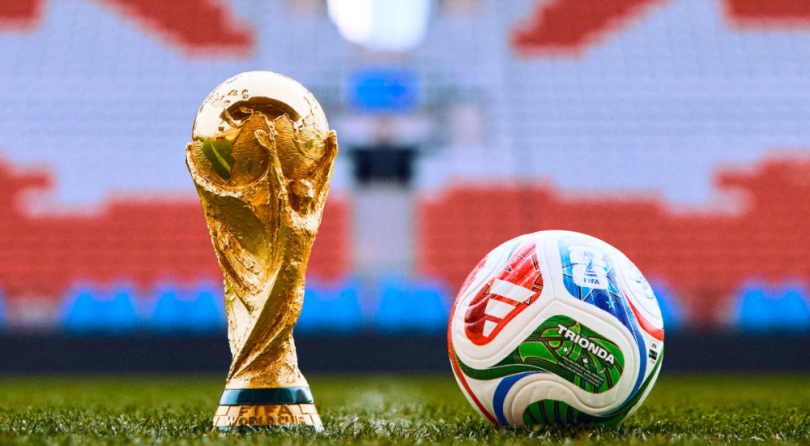
Nigeria did not qualify for the 2026 FIFA World Cup. The Super Eagles stayed home while 48 nations competed across stadiums in the United States, Canada and Mexico.
Yet for 39 days, billions of naira still changed hands across the country.
The money flowed through viewing centres, betting platforms, television subscriptions, sports bars, roadside food vendors and traders selling replica jerseys. Much of it passed through Nigeria’s vast informal economy, leaving little trace in any official record.
Globally, FIFA estimates the tournament generated about $40bn in economic activity, with billions flowing through broadcasting rights, sponsorships, tourism and betting.
Nigeria missed out on prize money, commercial opportunities and the economic boost that comes with qualifying for football’s biggest tournament. But the World Cup still created business at home.
Exactly how much is difficult to determine.
The money did not pass through a single industry or government agency. It spread across betting companies, broadcasters, neighbourhood viewing centres, market traders, payment platforms and thousands of small businesses that earned from football fans throughout the tournament.
They include suya stalls, betting apps, Alaba market stalls, DSTV decoder bundles and Flutterwave transfers. Others are viewing centers running generators and burning fuel at N1,100 per litre so they could show a match.
The money moved quietly, informally, in the way Nigerian commerce has always moved.
Benson Eze has owned a viewing centre at White House Bus Stop in Lagos for 11 years. He can tell you without checking a notebook how many plastic chairs he has, 94, and what he charges on a regular match night, N200. What he cannot tell you is whether the World Cup of 2026 was kind to him or cruel. It was both.
Government bodies and industry reports estimate there are more than 3,000 registered viewing centres in Lagos State alone, with thousands to tens of thousands more operating informally in neighbourhoods across the country’s 36 states.
During a World Cup, these low-cost, communally organised spaces become something harder to define. Part sports venue. Part open-air cinema. Part informal town square. During a qualifying year, with the Super Eagles in the tournament, they become something else entirely. They become economic engines.
This was not a qualifying year.
On a full-house night during a popular group-stage fixture, a viewing centre operator in Lagos clears between N15,000 and N25,000 at the gate before generator fuel, cable subscriptions, and maintenance costs take their share.
That figure sounds modest. Multiply it across 104 matches over 39 days, across 3,000 registered venues in Lagos alone, and a rough aggregate begins to emerge. The potential gross revenue from gate fees alone across Lagos’s formal viewing centre sector over the tournament period could sit somewhere above N5 billion, before running costs.
But this World Cup was different, and not in a good way for the small operators. In Kwara State, viewing centre operators were speaking to journalists in the second week of the tournament about low patronage.
One of them had spent heavily on DStv subscriptions without getting the expected returns. Another told the News Agency of Nigeria that fans had simply stayed home because the Super Eagles were not there.
This is the central tension in the viewing centre economy of 2026. The World Cup was happening. The matches were good. But the emotional attachment that drives Nigerian fans to leave their houses, pay an entry fee, buy a bottle of Coke and a stick of suya, and sit in a plastic chair for two hours- that attachment is tribal. It is tied to the green and white jersey. Without it, the World Cup becomes just another football tournament on a screen.
The operators who won this World Cup were not in Ilorin. They were in Lagos and Abuja, in the upmarket lounges and hotel venues that understood that the audience for a World Cup without Nigeria is not the mass audience of previous tournaments.
It is the football purist. Continental Hotels activated what they described as Nigeria’s largest outdoor viewing arena at their Abuja property, with a 10-metre by 6-metre outdoor LED screen at the pool bar. The entry point for that experience is not N200.
MultiChoice launched a special World Cup bundle in June, offering new DStv customers an HD decoder, dish kit and a one-month Jolli subscription for N15,000, and new GOtv customers the same package at the same price.
SportyTV secured rights to broadcast 34 matches. StarTimes covered all 104. The platform competition was fierce, which meant more Nigerians had access to the tournament on more devices at lower cost than any previous edition.
The market bifurcated. The premium venues ate. The neighbourhood operators went hungry. That story has not yet been told with data.
Let us be clear about the scale of the business before we get to what happened during the tournament.
Nigeria’s sports betting market generated an estimated $590 million in revenue in 2025, according to Statista.
H2 Gambling Capital put the gross win across all gambling verticals closer to $1.6 billion. Bet9ja alone, with an estimated net worth of $2 billion and a 39 percent market share, processes 14 million daily bets from over 60 million active users. There are an estimated 18.8 million active bettors in Nigeria placing stakes regularly. Football drives 75 to 85 percent of all wagers.
When the World Cup started, with 104 matches across 39 days, none of that slowed down. It accelerated. Globally, the 2026 World Cup was expected to generate approximately $50 billion in sports wagers, according to Barron’s.
Nigeria’s share of that global wagering activity, across platforms local and foreign, is not a figure that has been published in any official place. But it is not small. It is never small.
The operators who benefited most visibly were the ones you already know. Bet9ja. SportyBet. BetKing, backed by MultiChoice’s parent company. 1xBet. All of them spent the month of June running World Cup promotions, accumulator boosts, and early payout offers. SportyTV, which holds broadcast rights to 34 matches in Nigeria, is a product of Sportech, the parent company of SportyBet.
The alignment between a broadcasting asset and a betting platform feeding off the same content is not accidental. It is a business model.
But here is what the industry does not like to discuss openly. Nigeria’s Supreme Court, on 22 November 2024, nullified the National Lottery Act of 2005, which had established the NLRC and granted it national regulatory authority.
The court held that gambling regulation falls exclusively under state jurisdiction, not federal. This ended a 16-year legal battle initiated by Lagos State. The regulatory implication has not resolved itself. Some operators now need state-by-state licensing. Some are in a grey zone. And in a grey zone, tax compliance becomes a grey area too.
The African sports betting market is worth roughly $17.6 billion a year and growing at about 17 percent annually, faster than any other region on earth. During a World Cup, tax should flow to governments the same way bets flow to operators.
The question of how much World Cup betting revenue the Nigerian government captured in tax during June and July 2026 is one that the National Revenue Service has not yet publicly answered.