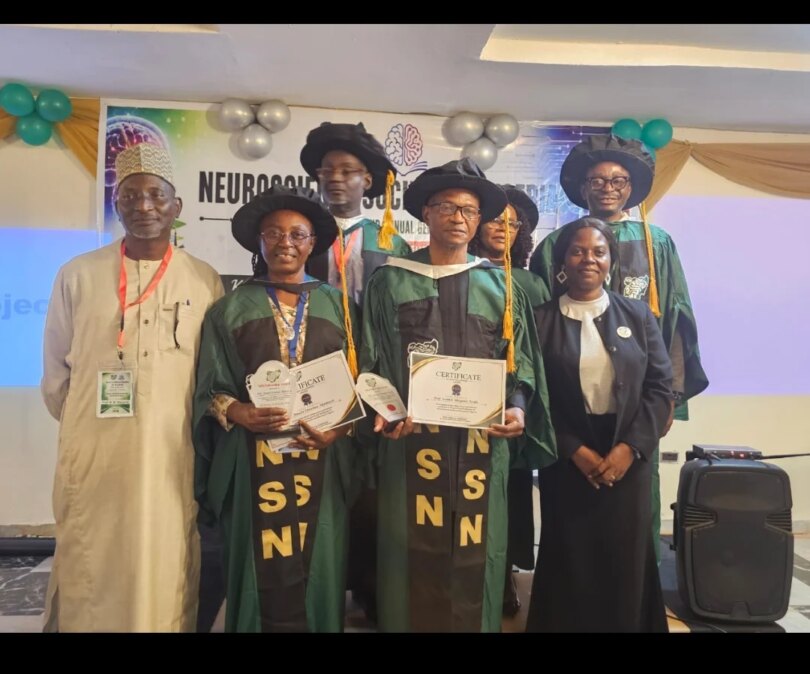
The President of the Neuroscience Society of Nigeria, NSN, Dr Angela Danborno, has said Nigeria should break away from dependence on foreign neuroscience research and build a research system capable of producing solutions to the country’s own health and social challenges.
Danborno made the call while declaring open the 23rd Scientific Conference and Annual General Meeting of the society in Abuja, with the theme, ‘Neuroeducation and Neurotechnology’.
She said rapid advances in artificial intelligence, neurotechnology, neuroimaging, computational neuroscience, neurogenetics, brain-machine interfaces and precision medicine were reshaping the understanding of the brain and opening new opportunities for Nigerian researchers.
According to her, “For Nigeria, this presents both challenges and enormous opportunities, hence the need for the country to take a more active role in shaping the future of neuroscience”
“We must ensure Nigerian neuroscience does not remain merely a consumer of knowledge generated elsewhere, but becomes an active contributor, generating knowledge that addresses our own populations and the unique realities of Africa.”
Danborno also explained that the NSN conference was designed to strengthen scientific exchange, research collaboration, mentorship and professional networks among neuroscientists, while creating opportunities for emerging researchers to advance their careers.
She said developing the next generation of scientists had remained a major priority of her tenure, with increased travel awards introduced to enable more researchers to participate in scientific engagements beyond Nigeria.
“The future of neuroscience in Nigeria will be determined not only by what we accomplish today, but by the scientists we develop for tomorrow,” the president stated.
Beyond research institutions, Danborno further noted that neuroscience must become more accessible to the wider Nigerian public, particularly young people who could form the next generation of scientists.
She announced that the society was strengthening its brain-awareness activities and introducing neuroscience to secondary school students through the Nigerian Brain B competition.
According to her, greater public engagement would help demystify neuroscience, stimulate scientific curiosity and encourage young Nigerians to consider careers in brain research.
“Our greatest achievement will ultimately be measured not by conferences organised or awards given, but by the knowledge we generate, the scientists we inspire, and the lives we improve through better understanding of the human brain,” Danborno said.
The NSN president also disclosed improvements in conference registration and compliance with membership dues, while acknowledging institutions and organisations supporting the society’s activities.