
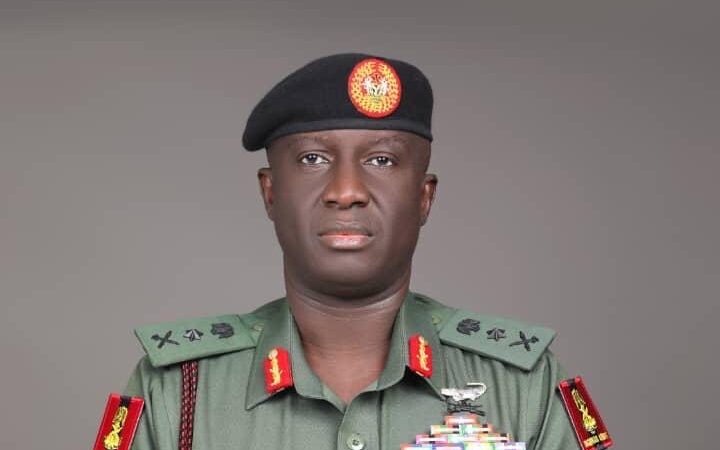
The organisations lauded the COAS’s visionary approach, which has demonstrably boosted military performance, eradicated past issues of desertion and premature retirements, and instilled a new era of professionalism and combat effectiveness within the Nigerian Army
A coalition of civil society organisations (CSOs), spearheaded by the Nigeria Integrity Watch (NIW) and led by National Convener Dr John Samuel Nangi, has issued a strong commendation for the transformative leadership of the Nigerian Chief of Army Staff (COAS), Lieutenant General Waidi Shaibu. In a statement released to the international press, the groups lauded the COAS’s visionary approach, which has demonstrably boosted military performance, eradicated past issues of desertion and premature retirements, and instilled a new era of professionalism and combat effectiveness within the Nigerian Army.
“The intelligence brief… affirms that our operating environment is increasingly becoming more complex,” was quoted from the COAS, underscoring the grave challenges the nation faces. The civil society coalition emphasised that the era of relying solely on soldiers at roadblocks is over. General Shaibu’s strategic foresight correctly identifies the need to enhance capabilities in intelligence, surveillance, target acquisition, and reconnaissance (ISTAR), alongside crucial advancements in cyber operations. The modern battlefield, as envisioned by the COAS, is now defined by advanced technologies such as drones, satellite intelligence, and the capacity to counter cyber threats.
Central to General Shaibu’s reform agenda is the establishment of “PROSE,” a robust administrative and operational framework. PROSE stands for Professional Excellence, Robust Administration, Operational Readiness, Strategic Cooperation, and Exemplary Leadership. These five pillars, according to Dr Nangi, form the bedrock of the new military culture being cultivated within the Nigerian Army.
Furthermore, the coalition enthusiastically praised the COAS’s innovative “Soldier-First Culture.” This doctrine signifies a profound shift in how the welfare and efficacy of soldiers are prioritised. In a nation where soldiers have historically been viewed as expendable, this “Soldier-First Culture” is not merely a policy but a solemn pledge to ensure that troops are well-equipped, well-trained, and motivated. The group recognised that the nation’s security is intrinsically linked to the well-being and morale of its soldiers. General Shaibu’s assertion that “Effective leadership… must be anchored in character, courage, and genuine concern for personnel” encapsulates this philosophy. Victory, he articulated, is to be measured not only by battlefield successes but also by the attainment of public trust, the strengthening of civil-military relations, and an unwavering commitment to the rule of law.
The coalition specifically commended the COAS for his proactive approach in addressing internal army issues, including the past problems of officers absconding from duty and mass retirements. These have now reportedly become a thing of the past, thanks to his disciplinary stance and commitment to duty.
The members and women of the Nigerian military were also acknowledged for their unwavering gallantry and sacrifices in combating insecurity across the nation. The civil society groups urged Nigerians of goodwill to cooperate with the military and to volunteer essential information that will aid their mission.
The tangible outcomes of the Army’s transformation, the coalition stated, will be evident in safer streets, reclaimed farmlands, and a revitalised sense of national security. General Shaibu’s pledge of loyalty to President Bola Ahmed Tinubu, coupled with his advocacy for the necessary support for the Army’s modernization, was also positively noted.
Finally, the group expressed appreciation for the harmonious and cooperative spirit demonstrated by the military hierarchy, including the Chief of Defence Staff (CDS), the COAS himself, the Chief of Naval Staff (CNA), and the Chief of Airforce. This collaborative effort, the civil society organisations concluded, is the driving force behind recent achievements and a critical element for securing the nation’s interests.