Mr Oyetola said the incentive is expected to create no fewer than 30,000 jobs in the maritime sector, boost local capacity, and reduce foreign dominance in coastal shipping.
President Bola Tinubu has approved the disbursement of the Capital Reserve Financing Fund to Nigerian shipowners, enabling them to acquire vessels and expand their operations.
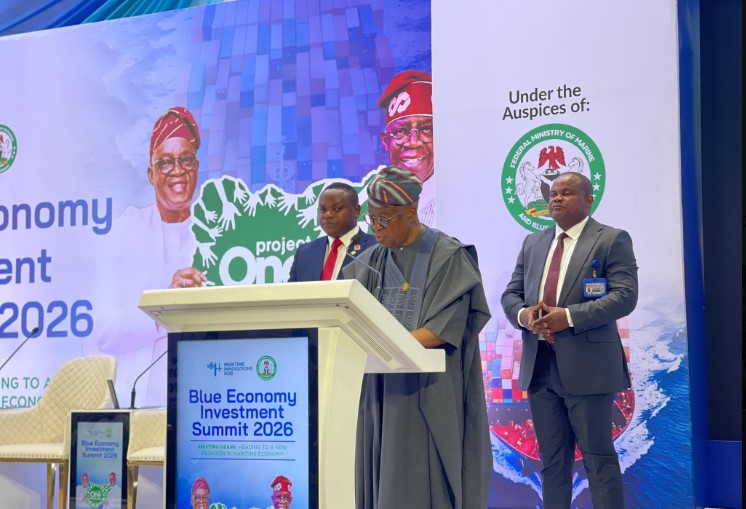
The summit, themed “Shifting Gears: Heading to a New Frontier in the Maritime Economy,” brought together government officials, investors, and industry stakeholders to chart a new direction for Nigeria’s marine and blue economy.
Mr Oyetola, a former governor of Osun State, said the incentive is expected to create no fewer than 30,000 jobs in the maritime sector, boost local capacity, and reduce foreign dominance in coastal shipping.
“Mr President has approved the disbursement of the Capital Reserve Financing Fund to Nigerian shipowners, enabling them to acquire vessels and expand their operations.
“This initiative is expected to create at least 30,000 jobs, cement local capacity, and significantly reduce capital flights associated with foreign dominance of our coastal shipping,” he said.
The Capital Reserve Financing Fund (CRFF) is part of Nigeria’s effort to strengthen indigenous participation in the maritime sector, which has long been dominated by foreign shipping companies.
For decades, Nigerian shipowners have struggled with limited access to affordable financing, high capital requirements for vessel acquisition, and stiff competition from well-funded international operators. This has constrained the growth of local capacity in coastal and international shipping, despite Nigeria’s strategic position as a major maritime hub in West Africa.
The CRFF could help boost local ownership of vessels, enhance competitiveness, and deepening Nigeria’s participation in global shipping. However, past funding interventions in the sector have faced concerns around transparency, accessibility, and sustainability.
Mr Oyetola also spoke on the government’s plan to establish a national shipping carrier as part of efforts to develop the maritime sector.
He said the government has already secured the interest of international partners collaborating to bring the project to fruition.
The minister explained that the proposed shipping line will not only enhance Nigeria’s participation in global shipping but also strengthen the country’s economic sovereignty and competitiveness.
“We are also making significant progress toward the re-floating of a national shipping carrier. We have secured the interest of reputable international partners, including AD Ports Group, who are collaborating with us to bring this vision to Fruition.
“This initiative will not only enhance Nigerian participation in global shipping, but also strengthen our economic sovereignty and global competitiveness,” he added.
Mr Oyetola also highlighted the ministry’s efforts in improving food security, noting that recent reforms have yielded positive results.
He said Nigeria recorded an increase in fish production, rising from 1.1 million tonnes to 1.4 million tonnes in 2025.
“In the area of food security and livelihoods, we have recorded a notable increase in fish production, rising from 1.1 million tons to 1.4 million tons last year.
“This growth reflects our sustained commitment to strengthening the fisheries and agricultural value chain, enhancing productivity, and supporting millions of Nigerians whose livelihoods depend on these resources,” he said.
He added that there are significant investment opportunities across the value chain, including aquaculture, production systems, logistics, food processing, and export-oriented market development.
Mr Oyetola noted that these areas offer strong potential for private sector participation, job creation, and increased contributions to national food security and economic growth.
“There are also substantial investment opportunities across the entire value chain, including agriculture, production systems, arteries, and food manufacturing, modern fishing fleets, as well as physical infrastructure, such as the fishing harbours, landing sites, and jetties.
“Opportunities exist in coaching logistics, solid facilities, food processing, and packaging, and
export-oriented market development. Together, these areas present an attractive platform for private sector participation, job creation, and increased contribution to national food security and economic growth. Equally significant is the remarkable improvement in revenue generation by agencies under the ministry,” he stated.
Earlier, the Chief Executive Officer of the Maritime Innovation Hub, Ronke Kosoko, said the summit aimed to connect investors with opportunities while promoting innovation and youth participation in the sector.
She emphasised the need for collaboration and modern financing models to unlock investment, noting that technology has expanded participation beyond physical attendance.