
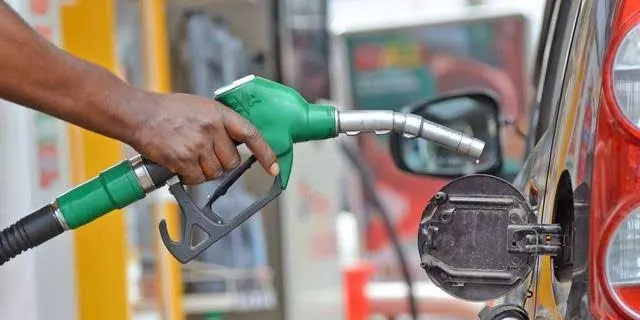
Many Nigerians clamoured that petrol prices should return to the pre-war level.
Nigerians hoping for a significant reduction in petrol prices may have to wait longer as renewed tensions in the Middle East gradually reverse the recent decline in global crude oil prices.
Crude prices rose this week after the US reimposed a naval blockade on Iranian ports and President Donald Trump threatened a 20 per cent cargo charge on vessels passing through the Strait of Hormuz. The US, he believes, deserved to be “reimbursed” for being a “guardian of the strait” — one of his many bullish rhetorics retracted hours later.
Brent crude, the international benchmark for oil prices, jumped to $87 per barrel on Wednesday, the first time it has traded at that level since June. The US West Texas Intermediate (WTI) also rose to $80 per barrel, while the stock market dipped significantly.
The renewed tension between the US and Iran is disrupting the relief many hoped the gradual return to pre-war oil prices would bring.
This comes amid growing pressure for the adjustment of petrol retail cost to reflect the decline in crude oil prices that followed the signing of the Memorandum of Understanding (MoU) in June between the US and Iran. In Nigeria, where the global crisis had compounded existing high energy costs and inflation, demand for a petrol price cut was high.
The week before the breakdown of the ceasefire between Washington and Tehran, Nigerians had been questioning why the 40 per cent crude oil price decline had yet to translate to lower pump prices. Many Nigerians criticised the Dangote refinery, which supplies over half of locally consumed petrol, and petrol importers. The Federal Competition and Consumer Protection Commission, in an official statement, warned against exploitative pricing and other anti-competitive practices in the deregulated downstream market, while declaring that it would not hesitate to impose sanctions on violators.
Authorities had also announced engagements with sector operators to placate the public. Then came Mr Trump’s statement that “the ceasefire is over”, which shot up oil prices by 5.2 per cent from $78 to $80, and the renewed strikes that sustained mobility.
PREMIUM TIMES reported that the war had begun with Israel and the US launching an unprovoked attack on Tehran in the middle of negotiations.
The Trump administration initially justified the strikes by claiming Iran posed an imminent threat to US interests, but later shifted its public rationale to emphasise destroying Iran’s nuclear capabilities. Iran, in response, targeted US military bases and closed down the Strait of Hormuz.
Dangote refinery petrol prices fluctuated significantly during the war. From a pre-war price of below N900 a litre, it moved from N1,075 per litre to 1,175 within the first week of March. By mid-March, it climbed to N1,245 per litre, and fell to N1,200 at the end of the month. The changes remained within this range throughout April before briefly peaking at N1350 in early May. After the MoU, the price fell to N1,175 per litre and then to N1,075 per litre in July.
Mirroring these changes, pump prices rose from about ₦ 870 pre-war to as high as ₦1500 in May. This paper reported that this increase made transportation less affordable in Nigeria, with many citizens abandoning their private cars for public buses and some others opting to walk to their destination.
When the tension eased and the MoU was signed, many Nigerians looked forward to a decline in petrol prices. However, prices remained above N1,000 in many parts of the country. This was despite the global crude oil price falling to about $73 per barrel, close to the pre-war price.
Analysts who spoke to PREMIUM TIMES said retail prices did not reflect this change because petrol prices are determined not only by crude oil prices but also by exchange rates, shipping and insurance costs, refining margins, import costs, and local distribution expenses.
According to Razaq Fatai, a trade analyst and economist, businesses are typically quicker to increase prices when costs rise but slower to reduce them when prices fall because of the need for capital management.
Mr Fatai, who is head of Advisory and Research at Vestance, explained that many businesses in the oil and gas sector finance their inventory purchases through loans and other credit arrangements. So, when prices decline, they may be reluctant to immediately reduce selling prices because they still have existing stock purchased at higher costs and must meet repayment obligations.
“If businesses adjust prices too quickly, they may struggle with cash flow and may find it difficult to restock,” he said.
“Full adjustment in retail prices would occur gradually as businesses absorb previous costs and new, lower-priced supplies enter the market,” Demola Adigun, another energy expert, said.
But with the renewed strikes and the growing tensions around Hormuz worsening instability in the Gulf, Nigerians may have to wait even longer before they begin to see lower petrol prices to the pre-war level.
Recently, Dangote refinery announced that it began pricing fuel products for the local market in US dollars.
The refinery attributed this to difficulties securing sufficient crude under the government’s naira-for-crude programme and rising global oil prices. Independent petroleum marketers are kicking against this due to its potential implications on the downstream sector.
This development, analysts tell PREMIUM TIMES, will increase the volatility in the downstream petroleum market, as fuel prices may become more exposed to movements in the foreign exchange market.
It could increase demand for dollars among petroleum marketers and further add pressure to the naira, making domestic fuel prices more sensitive to exchange rate fluctuations.
“Nigerians need to brace up for a long ride,” Mr Fatai said. “It is only temporary, but it might also take a while. We find ourselves in an unpredictable situation.”
He further noted that the impact of the renewed US-Iran strikes on fuel prices is likely to be minimal, unlike the first 70 days of the war.
Dan Kunle, an energy analyst, pointed out that Nigeria’s limited crude oil production capacity has made it vulnerable to sudden changes in the global market.
He said that Nigeria, despite being an oil-producing country, cannot meet domestic demand or take advantage of export opportunities, leaving its oil sector import-dependent.
“Nigeria is a developing country that lacks adequate infrastructure and does not possess a comparative or competitive advantage in the hydrocarbon sector.
“This is why Nigerians will struggle to get a stable oil price,” he said.
To address this, he noted, Nigerians must invest in technical capacity, financial strength, and the robust infrastructure required to compete.