The Nigerian Meteorological Agency (NiMet) and the International Livestock Research Institute (ILRI) have begun a 10-day Training of Trainers workshop on Climate Risk Management in Agricultural Extension (CRMAE) to help extension providers deliver climate information that supports resilient, sustainable farming across Nigeria….
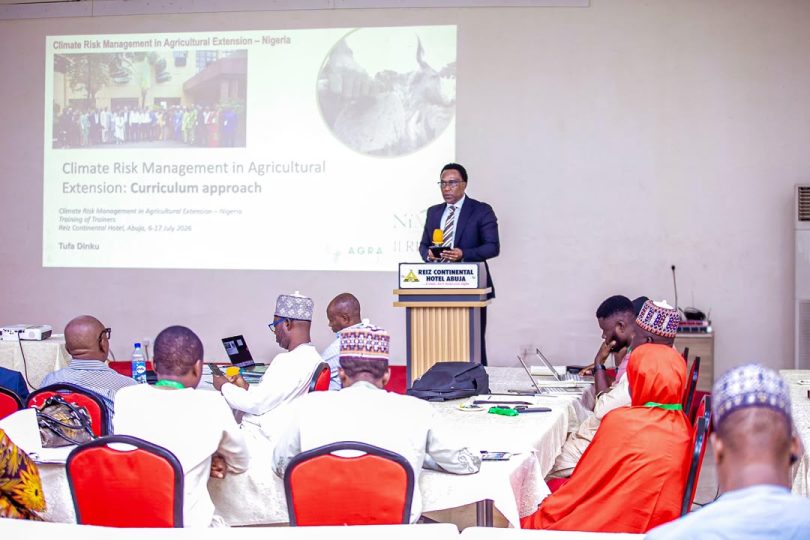
The Nigerian Meteorological Agency (NiMet) and the International Livestock Research Institute (ILRI) have begun a 10-day Training of Trainers workshop on Climate Risk Management in Agricultural Extension (CRMAE) to help extension providers deliver climate information that supports resilient, sustainable farming across Nigeria.
The July 6–17 workshop in Abuja is part of an AGRA target-countries project to strengthen digital climate advisory services and build resilient agricultural systems across Africa.
In his goodwill message, Dr Kelvi Shikuku of ILRI commended NiMet’s DG/CEO for hosting the workshop and praised the agency’s achievements in strengthening climate services in Nigeria.
The lead facilitator from the Stockholm Environmental Institute, Dr Tufa Dinku, also underscored the importance of the Climate Risk Management in Agricultural Extension curriculum, noting that NiMet, under the leadership of Prof. Charles Anosike, would lead its full implementation in Nigeria.
READ ALSO: Nimet DG Advocates Urgent Investment In Weather Observation Systems
Speaking at the opening ceremony, NiMet DG/CEO Prof. Charles Anosike said climate variability and extreme weather continue to threaten agricultural productivity, food security and rural livelihoods, making it vital to support those working directly with farmers.
He said farmers face irregular rainfall, dry spells, heat stress, flooding, pests and other climate shocks, underscoring the need to turn climate information into practical advice.
Prof. Anosike said NiMet remains committed to weather and climate services that support planning, early warning and decision-making in weather-sensitive sectors.
He described extension officers as the link between climate science and farm-level decisions on planting, crops, water and soil management, inputs and hazard preparedness.
“Training trainers will multiply the quality, reach and impact of climate services across Nigeria’s agricultural landscape,” he said.
The DG said the Nigeria-adapted CRMAE curriculum will equip extension and advisory service providers to integrate climate services into support for smallholder farmers.
He urged participants to share experiences, build networks and pass the knowledge on to extension platforms, farmer groups, cooperatives and rural communities nationwide.
Prof. Anosike thanked partners, facilitators and participating institutions for supporting climate-resilient agriculture, food security and sustainable development in Nigeria.