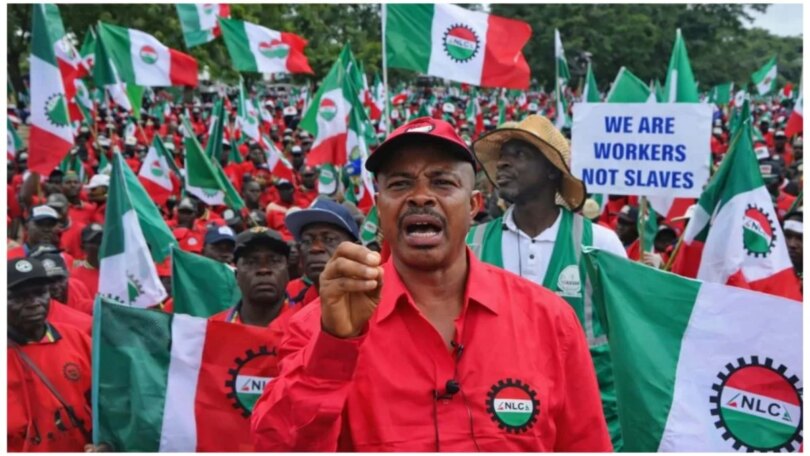
The Nigeria Labour Congress, NLC, has called on President Bola Ahmed Tinubu’s administration to urgently intervene as the price of petrol continues to rise across the country.
The labour union said the latest increase, which has pushed petrol to about N1,430 per litre in major cities and even higher in some less accessible areas.
According to the labour union, the increase is placing additional pressure on workers and households already struggling with the rising cost of living.
NLC President, Joe Ajaero, made the demand in a statement issued on Wednesday as Nigerians continued to face higher transportation costs and increases in the prices of essential goods and services.
The statement, titled “Save the Situation Now”, urged the Federal Government to introduce immediate measures that would reduce the impact of the latest petrol price increase on citizens.
Ajaero specifically called for reasonable wage awards for workers, sufficient crude oil supply to local refineries through naira transactions and an expansion of Nigeria’s petroleum storage capacity.
According to the labour leader, the increase in petrol prices would not remain limited to the filling stations.
He said the effect would spread across different areas of the economy because higher fuel costs directly affect transportation and the movement of goods and people.
“It is an established fact that when transportation costs go up, everything else follows, including school fees, rents, tariffs, food stuffs, etc.”
The NLC president said the latest development had further reduced the purchasing power of Nigerian workers.
He also warned that the situation could deepen poverty among households that are already dealing with high food prices, rent, electricity expenses, school costs and other basic needs.
“These new costs continue to inflict or deepen poverty among the populace, stressing the quality of life to the limits,” he said.
The latest petrol price increase comes amid renewed volatility in the international oil market.
The NLC linked the current pressure partly to the resurgence of conflict in the Gulf, but argued that Nigeria should have some form of protection against external energy shocks because of its position as an oil-producing country.
Ajaero said Nigeria also had growing local refining capacity, particularly with the expansion of private-sector refining, and should therefore be able to create a buffer for consumers whenever international developments cause sudden increases in energy prices.
“Yet, even as this new wave of costs is caused by the resurgence of the conflict in the Gulf, our situation needs not be this bleak.”
He further said Nigeria’s huge oil resources should provide the country with room to protect its citizens from sudden international disruptions.
“Coupled with the fact that we are an oil-producing country, we have sufficient local refining capacity, even as this substantially resides with the private sector.
“As a nation, and as a people endowed with enormous fossil resources, we are deserving of a certain level of protection or buffer against the gales from the Gulf, and indeed, other gales,” he said.
The labour union therefore wants the Federal Government to use available resources to provide temporary relief for workers and vulnerable households.
Ajaero said wage awards would provide some immediate support for workers whose earnings are being affected by rising transportation and living costs.
He also asked the government to make more crude oil available to domestic refineries in naira.
The NLC believes that adequate crude supply to local refineries would strengthen domestic refining and reduce Nigeria’s exposure to international supply disruptions.
“As part of the process of creating this buffer, we urge the government to immediately give reasonable wage awards to workers; sell sufficient crude in Naira to our local refineries; expand our national storage capacity in pursuance of meeting energy emergencies and security,” Ajaero said.
The union said the measures could also contribute to job creation, economic activity and improved energy security.
It further argued that government intervention should not automatically be ruled out because of the deregulation policy in the downstream petroleum sector.
Ajaero said emergency support could be justified when Nigerians are confronted with sudden and severe increases in the cost of basic necessities.
“There is nothing wrong with government subsidising the needs of citizens, especially in emergency situations like this,” he said.
The NLC president added that other oil-producing countries had introduced different interventions to protect their citizens from the effects of the global energy crisis.
The union also drew attention to the additional revenue accruing to the Federal Government from the rise in international crude prices.
According to Ajaero, the government was receiving between $35 and $40 per barrel above the crude price used as the benchmark in the national budget.
“These measures are all the more necessary and urgent because the government is making extra money in the international spot market (of between USD35 and 40 per barrel above the budgeted figure). This translates to trillions of naira a month.
“Government ought to be satisfied with this as it is a windfall.”
The labour body argued that part of the additional revenue could be used to protect citizens from the effects of the current energy shock.
The NLC also raised concerns about the continued importation of crude by some local refineries.
The union questioned why refineries operating in an oil-producing country would have to source crude from outside the country when Nigeria is already seeking to expand domestic refining capacity.
“On a long-term basis, we are equally concerned that local refineries are importing crude. This is unreasonable and unacceptable and defeats the logic and purpose of local capacity.”
The NLC said workers should not be left to carry the entire burden of the latest increase through their existing wages.
The union also warned the Tinubu administration against allowing petroleum marketers to continue passing the full impact of market changes to consumers under the deregulation policy.
The labour body said the political timing of the development also made government intervention necessary, with the 2027 general election approaching.
“We are of the view that a government that seeks re-election in the next few months cannot afford to stand and watch marketers inflict suffering on the citizenry in the name of deregulation,” Ajaero said.
The NLC maintained that organised labour would continue to raise concerns over policies and developments that affect workers and ordinary Nigerians.
“Labour has an obligation to speak out or act accordingly.”