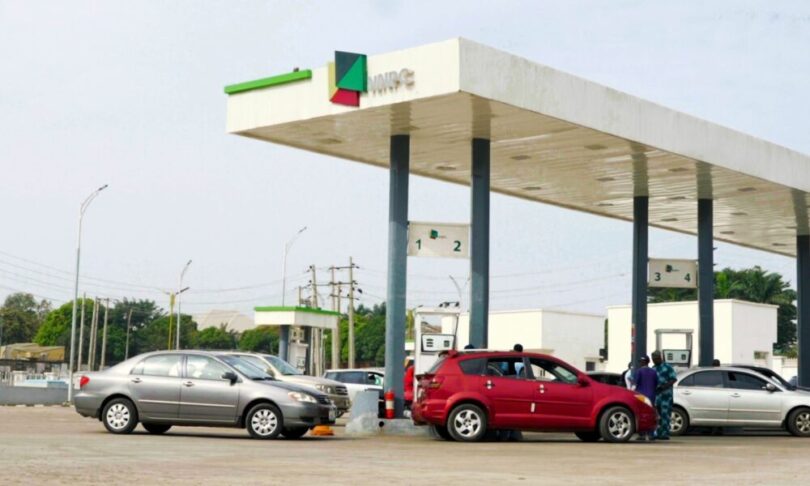
The latest decision to have NNPC Retail sell petrol at landing cost has also generated debate over whether the arrangement amounts to a return to fuel subsidy.
The Federal Government has announced that the Nigerian National Petroleum Company Limited (NNPC) has agreed to forgo its petrol retail profit margin and sell the product at cost as part of broader efforts to cushion the impact of global oil price shocks on Nigerians, particularly vulnerable households.
“This means if NNPC’s landing cost is N1,300, it will sell fuel to Nigerians, especially commercial vehicles, at the same price,” the statement said.
The Presidency said the discount, backed by President Tinubu, was among several measures earlier announced by the Minister of Finance and Coordinating Minister of the Economy, Taiwo Oyedele, to mitigate the effects of rising international crude oil and refined petroleum product prices.
It added that NNPC Retail, which the government described as already selling petrol at the lowest price in the market, was expected to provide temporary relief to consumers through the arrangement.
PREMIUM TIMES had earlier reported that Mr Oyedele said the Federal Government was negotiating a ceiling of ₦1,350 per litre on the ex-gantry or landing cost of petrol to limit price volatility.
The minister also rejected calls for the reinstatement of petrol subsidy, warning that restoring petrol prices to pre-reform levels could cost the government more than ₦20 trillion annually.
According to him, such a move could exert further pressure on the naira, potentially pushing the exchange rate towards ₦3,000 to the dollar and petrol prices to at least ₦2,000 per litre.
The proposed interventions come amid a sharp increase in global crude oil and refined petroleum product prices following the conflict involving the United States, Israel and Iran.
Disruptions to oil supplies through the Strait of Hormuz have heightened concerns about global energy security and contributed to higher crude oil prices, with Brent crude rising above $100 per barrel.
The impact has been felt in Nigeria despite its status as a major oil producer, as international crude prices, shipping costs and refined-product prices influence domestic fuel prices.
Although higher crude oil prices could boost government revenue, increases in petrol, diesel and aviation fuel prices have raised transportation, production and logistics costs for households and businesses.
The pressure has compounded the cost-of-living crisis following the removal of petrol subsidy in 2023 and renewed calls for the government to introduce measures to protect consumers from further price increases.
Opposition parties have repeatedly criticised the Tinubu administration over the hardship associated with subsidy removal and the absence of adequate measures to cushion its immediate impact when the policy was announced during the president’s inauguration in May 2023.
The latest decision to have NNPC Retail sell petrol at landing cost has also generated debate over whether the arrangement amounts to a return to fuel subsidy.
The Presidency has rejected that interpretation, maintaining that the measure is a temporary intervention intended to moderate the effects of global price volatility rather than reverse the deregulation of the downstream petroleum sector.
The move has also attracted political scrutiny amid public dissatisfaction over the cost of living and preparations for the 2027 general elections, with some observers questioning whether the intervention could serve as a strategy to improve the administration’s standing with voters.
The Presidency said it hoped other petroleum marketers would follow NNPC’s example, noting that the sharp increase in crude oil and petrol prices was not expected to persist indefinitely.
It reiterated that the temporary discount should not be interpreted as a restoration of petrol subsidy, which the government says ended on 29 May 2023.
The government also announced plans to sell crude oil to domestic refineries through forward-sale arrangements as part of efforts to reduce the impact of international market fluctuations on domestic fuel prices.
“As production rises and previously committed crude is freed up, this is expected to shield pump prices from global market volatility,” the statement said.
Mr Oyedele said the government was negotiating a ceiling of ₦1,350 per litre on the ex-gantry or landing cost of petrol to moderate price increases.
Under the proposed arrangement, where costs exceed the ceiling, refiners and importers would initially bear the shortfall and recover it later when crude oil prices or the exchange rate improve, without exceeding the stipulated ceiling.
“This is neither a subsidy nor a price control: it is designed to smooth prices over time rather than suppressing them,” the minister said.
He explained that maintaining relatively stable prices would provide greater certainty for consumers and businesses than allowing sharp increases followed by subsequent reductions.
The proposed ceiling would be reviewed monthly and adjusted according to prevailing costs, with the government publishing the relevant figures to promote transparency, he added.
The government outlined additional interventions aimed at reducing transportation costs, supporting vulnerable households and limiting the effects of higher energy prices on businesses.
Under the 2025 tax reform laws, Mr Oyedele said the Federal Government was working with state governments and security agencies to curb the collection of road taxes and levies that increase transport fares and logistics costs.
The government also plans to increase funding for cash transfers to vulnerable households and expand access to subsidised credit for small businesses and consumers.
The government said it was accelerating the deployment of compressed natural gas (CNG) in collaboration with state governments.