
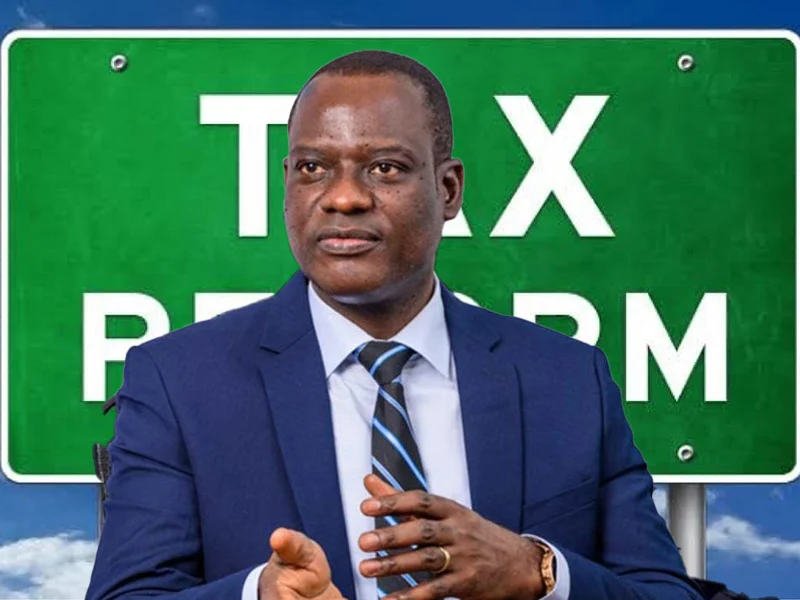
The Minister of Finance, Taiwo Oyedele, has made five key clarifications regarding the recent announcement of a fuel price discount at Nigerian National Petroleum Company Limited, NNPCL, filling stations.
In a statement he personally signed on Friday, Oyedele said the discounted petrol price of N1,350 per litre at NNPCL filling stations does not amount to a return of fuel subsidy.
According to him, no public funds would be used to cover the discount at NNPCL filling stations.
See the full statement below:
Since October 1, 2026, motorists have been paying less for petrol at NNPC Retail Limited stations following a discount on the company’s retail margin. We welcome the relief this brings to households, commuters and transporters.
Some commentators have described the discount as a return of fuel subsidy. That is not correct. Here, plainly, is what the discount is and what it is not.
1. A Margin Discount and a Subsidy Are Not the Same
Every marketer adds a margin to the price it pays for the fuel it sells. A margin discount means the retailer chooses to take a smaller margin, or no margin at all for a period, and passes the savings on to the customer. The cost of the discount is borne by the retailer alone.
A subsidy is different. It is when the government pays part of the price the consumer would otherwise pay. That money comes from public revenue — funds that would otherwise go to salaries, schools, hospitals and infrastructure. That is the regime this administration ended in 2023, and it is not coming back.
2. No Public Money Pays for the Discount
The discount is not funded by the federal budget or the Federation Account. NNPC Retail buys petrol from the Dangote Refinery and other suppliers at market prices and on commercial terms, then adds its retail margin to determine the pump price. The discount comes out of that margin alone, so the discounted pump price remains market-reflective.
This is quite different from crude oil owned by the Federation. Selling the nation’s crude below market price would amount to a subsidy because the shortfall would be borne by public revenue.
3. NNPC Retail Is Doing What It Was Set Up to Do
NNPC Retail Limited, a wholly owned subsidiary of NNPC Limited, began operations over 20 years ago as a petroleum marketing and retail company. It was established to ensure the nationwide availability, distribution and affordability of refined petroleum products.
Its purpose, in other words, is to keep products available across the country and moderate retail prices, not necessarily to maximise retail profit. It has historically sold fuel at prices below those of other marketers. The current discount continues that role, and it is a commercial decision that any retailer is free to make.
4. The Discount Is Not Expected to Reduce Federation Dividends
Some have asked whether a lower margin means lower profits for NNPCL and, consequently, lower dividends to the Federation. It need not. A smaller margin or a temporary zero margin on each litre can be more than offset by selling more litres over time. A discount can also build customer loyalty that lasts well beyond the discount period itself.
Together, these factors can increase NNPC Retail’s profits and the dividends paid to the Federation — a win-win for consumers and the government. Margin discounts are a routine commercial strategy used by retailers around the world.
5. The Discount Will Not Distort the Market or Encourage Smuggling
The retail margin on petrol is less than 5 per cent of the pump price. A discount within that margin cannot meaningfully widen the gap between prices in Nigeria and those in neighbouring countries, where petrol already costs 20 to 40 per cent more.
It therefore creates no new incentive for smuggling and causes no distortion of the kind that subsidy regimes produced in the past.
The Bottom Line
A subsidy uses public money to lower the price of fuel. The NNPC Retail discount lowers the price without spending public money, and it can strengthen NNPC Retail’s business at the same time.
We recognise that fuel prices continue to weigh on households and businesses. The discount is one of several measures the government is pursuing to ease that burden, alongside the expansion of CNG transport, the waiver of taxes and duties on petrol, and the removal of illegal levies that inflate transport costs.
Each measure is designed to bring relief without returning Nigeria to a subsidy regime that the country can no longer afford.
Taiwo Oyedele
Honourable Minister of Finance and Coordinating Minister of the Economy