
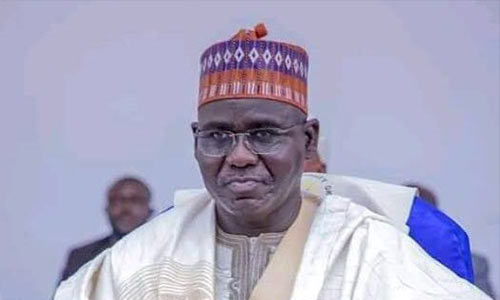
Former Chief of Army Staff, Lt.-Gen. Tukur Buratai (retd.), has warned that Nigeria’s worsening insecurity could soon expose senior government officials, including ministers, senators and state governors, to direct attacks if urgent and decisive action is not taken.
Buratai gave the warning on Sunday while reacting to reports that retired Major General Abubakar Rabe was killed by bandits.
He described the killing of a senior military officer as a dangerous signal that criminal groups are becoming more daring, better organised and increasingly confident in their operations.
According to him, if the trend continues unchecked, the threat will no longer be limited to soldiers and civilians.
“If this trend continues unchecked, the next targets may not be soldiers or civilians alone. They could include ministers, senators, and even state governors. No leader will be immune,” Buratai said.
The former army chief said the killing should serve as a wake-up call to the country, noting that insecurity has continued to deteriorate despite repeated warnings by security experts.
He recalled that he had warned in 2021 that insurgency and banditry could persist for many years if the country failed to take decisive action.
“Today, our nation is witnessing the grim unfolding of that prediction. The capture, torture and eventual killing of a senior military officer, Major General Rabe Abubakar, is not merely a tragedy; it marks a dangerous threshold,” he stated.
Buratai said armed groups now operate with improved intelligence, more sophisticated weapons and growing boldness, making them a serious threat to national security.
He criticised what he described as a reactive security approach, especially the payment of ransoms and negotiations with criminal groups, warning that such practices only strengthen bandits and terrorists.
“The current reactive strategy, paying ransoms and negotiating with criminals, must end. It is time for a full-scale, coordinated military and intelligence offensive,” he said.
Buratai called on the Federal Government to establish a unified security command with direct authority over all security agencies operating in states facing serious security threats.
According to him, such a structure would help eliminate bureaucratic delays and ensure quicker, coordinated responses to attacks.
“The Federal Government should establish a unified command with direct authority over all security agencies operating in high-risk states, eliminating bureaucratic delays,” he advised.
He also urged the authorities to go after individuals and networks that sustain criminal groups, including those involved in illegal mining, ransom negotiation and local collaboration.
Buratai said bandits do not survive only on weapons but also depend on support systems that must be dismantled.
“Bandits do not survive on AK-47s alone. They rely on networks of corrupt middlemen, illegal miners, ransom negotiators and local collaborators. These individuals must be identified, arrested and prosecuted. The cost of supporting terrorism should be made unbearable,” he said.
The former army chief stressed that only a coordinated national response involving military, intelligence and law enforcement agencies can prevent further deterioration of the security situation and restore public confidence.
He warned that failure to act decisively would embolden criminal groups and deepen the threat to both citizens and leaders across the country.