
Nigeria’s non-interest banking sector has recorded total assets of N4.389tn and financing and advances of N1.433tn, the Central Bank of Nigeria (CBN) has disclosed.
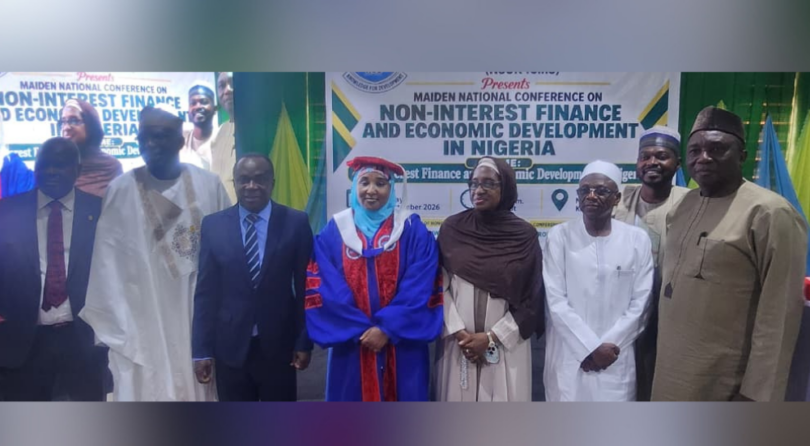
The Deputy Governor, Financial System Stability, CBN, Malam Lamido Yuguda, disclosed this on Monday at the maiden National Conference on Non-Interest Finance and Economic Development in Nigeria, organised by the Institute of Capital Market Studies (ICMS), Nasarawa State University, Keffi, in Abuja.
Yuguda said the sector had recorded steady growth since the introduction of non-interest banking in Nigeria, evolving from one full-fledged bank in 2012 to five non-interest banks and one non-interest banking window.
He said the growth underscored the increasing relevance of non-interest finance to Nigeria’s financial system and its potential to support inclusive growth, financial deepening and sustainable economic development.
According to him, non-interest finance presents an opportunity to mobilise dormant savings, attract ethical investments, support real-sector activities and broaden access to financial services for segments of the population that may be excluded or underserved by conventional financial products.
He said the need for innovative financing solutions had become more important as Nigeria seeks to accelerate economic growth, reduce poverty, bridge infrastructure gaps and expand financial access.
“Beyond serving as an alternative financing model, non-interest finance has developed into a broad ecosystem that mobilises long-term capital, supports productive sectors of the economy, and strengthens financial system resilience,” Yuguda said.
He identified asset-backed financing, risk sharing, ethical investments, transparency and financial discipline as key principles of non-interest banking.
According to him, the principles align with sustainable finance and responsible banking, while linking financing directly to productive economic activities could facilitate investments in agriculture, manufacturing, commerce, housing, infrastructure and small businesses.
Yuguda also identified the development of Nigeria’s Sukuk market as one of the major successes of non-interest finance.
He said that since the Federal Government’s inaugural sovereign Sukuk issuance in 2017, seven sovereign issuances between 2017 and 2025 had raised a cumulative N1.492tn.
The funds, he said, had financed the construction, rehabilitation and dualisation of more than 124 roads and bridges covering over 6,000 kilometres across the six geopolitical zones.
He said Sukuk had therefore contributed to efforts to close the infrastructure gap while supporting economic growth.
The CBN deputy governor said adoption of Sukuk had expanded beyond the Federal Government to sub-national governments and private-sector institutions.
He said Osun and Lagos states had raised N11.4bn and N20bn respectively to finance educational and transport infrastructure projects.
Similarly, TAJBank Limited had raised N67.03bn through two Mudarabah Sukuk issuances to strengthen its Tier-1 capital base, while Family Homes Funds Limited had raised N30bn through two Sukuk issuances to finance affordable housing projects.
Yuguda said the asset-backed structure of Sukuk, which links investors to tangible assets, promoted transparency and accountability in the deployment of funds.
He added that the consistent oversubscription of sovereign, sub-national and corporate Sukuk issuances reflected strong investor confidence and the growing role of the instrument in diversifying funding sources and deepening the capital market.
On Takaful, Yuguda said five operators were in the Nigerian market at the end of 2025, with a combined capital base of N4.74bn and total assets of N96.28bn.
He said Takaful provided an ethical and cooperative risk-sharing model that enabled participants to pool resources and mutually support one another during adverse events.
According to him, the model could contribute to financial inclusion, household resilience, agricultural risk management, business continuity and overall economic stability.
Yuguda further disclosed that the non-interest finance ecosystem had expanded into the pension industry through the introduction of Retirement Savings Account Fund VI by the National Pension Commission in 2021.
He said the fund provided contributors and retirees with a Shariah-compliant investment option, allowing pension assets to be invested in sovereign and corporate Sukuk, infrastructure Sukuk, non-interest money market instruments and Shariah-compliant equities.
As of July 31, 2026, he said Fund VI had grown to a combined net asset value of approximately N475.9bn, comprising N446.14bn in the Active Fund and N29.76bn in the Retiree Fund.
Yuguda said the growth demonstrated increasing acceptance of ethical and non-interest financial products within Nigeria’s pension system.
He, however, stressed the need for robust regulatory oversight as the industry expands, saying innovation must be supported by sound governance, effective regulation and strong consumer protection.
He said the Financial Services Regulation Coordinating Committee had a critical role in fostering collaboration among financial regulators, ensuring regulatory harmonisation, effective supervision and mitigation of systemic risks.
The CBN official also said efforts to integrate the standards of the Accounting and Auditing Organisation for Islamic Financial Institutions into the financial reporting practices of non-interest financial institutions would strengthen transparency, accountability and comparability.
He urged stakeholders to adopt global best practices in governance, risk management, technology-driven service delivery, customer-focused innovation, public awareness and professional development.
Yuguda said further opportunities existed to expand non-interest finance through financial technology, renewable energy, climate-resilience projects, entrepreneurship, job creation, agricultural value-chain financing and increased access to regional and international investors.
Meanwhile, the Vice-Chancellor of Nasarawa State University, Keffi, Prof. Sa’adatu Hassan-Liman, said the growing importance of Islamic finance globally made the conference timely and significant for Nigeria.
Hassan-Liman, who is also a Professor of Islamic Studies, said non-interest finance had moved beyond being a peripheral component of the global financial system and was increasingly attracting interest in both Muslim and non-Muslim economies.
She said instruments such as Sukuk, Takaful and Islamic banking could contribute to financial inclusion, responsible investment, infrastructure financing, risk-sharing and sustainable economic development.
According to her, Nigeria’s challenges in mobilising long-term capital, financing infrastructure, deepening financial inclusion, supporting entrepreneurship and expanding productive investment required exploration of every credible financing avenue.
“We therefore need to explore every credible avenue through which our financial system can become more inclusive, resilient and capable of supporting broad-based economic development,” she said.