Students of Obafemi Awolowo University (OAU), Ile-Ife, on Tuesday blocked major access roads to the institution in protest against the implementation of a new mobility system on campus involving Compressed Natural Gas (CNG) buses. The protesters demanded immediate action on the transport system, insisting on a policy that guarantees affordable,……
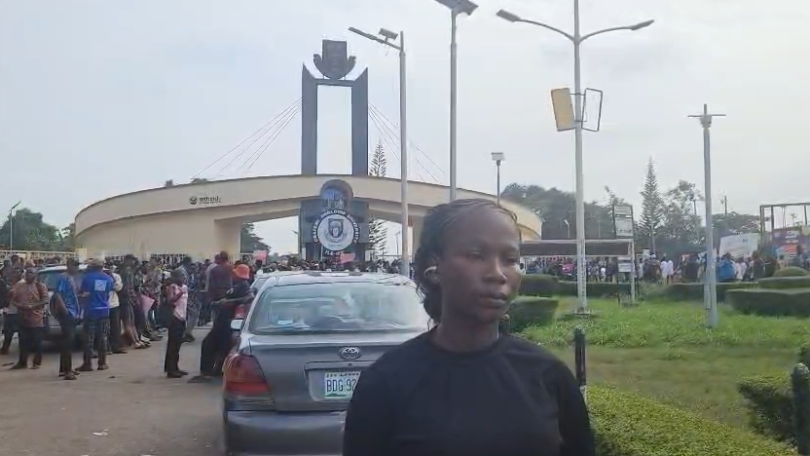
Students of Obafemi Awolowo University (OAU), Ile-Ife, on Tuesday blocked major access roads to the institution in protest against the implementation of a new mobility system on campus involving Compressed Natural Gas (CNG) buses.
The protesters demanded immediate action on the transport system, insisting on a policy that guarantees affordable, reliable, and accessible intra-campus movement.
Vice President of the Students’ Union, Iyanuoluwa Falade, said the protest was based on two key resolutions. She explained that students were opposed to the complete phase-out of the popular campus buses known as “tangoro” following the introduction of Compressed Natural Gas (CNG) buses.
READ ALSO: NiDCOM Issues Safety Alert as Anti-Foreigner Protests Escalate in South Africa
According to her, the available CNG buses are insufficient to meet students’ needs, stressing that petrol-powered buses should not be entirely scrapped. She said that a 10-minute wait time was now stretching to 40 minutes to an hour.
Falade also faulted the eviction of students from ‘Awo Hall’ for renovation without providing alternative accommodation, describing the move as unacceptable.
“We are only demanding for our welfare. Ensure that the transport system that is working on our campus is serving us well. Introduce the ‘tangoro’ back, while you bring more of the CNG buses to help us. And don’t evict students from ‘Awo’ hall without an alternative,” she said.
The students further called for full consultation with the Students’ Union before any major changes are made to campus transportation.
They vowed to keep the protest peaceful but maintained they would not back down until their demands were addressed.
The protest follows an earlier lecture boycott by students over what they described as an unfriendly transport system within the university.
As of the time of filing this report, no vehicles were allowed in or out of the campus, resulting in heavy traffic congestion and long queues around the institution.