The Apex Igbo sociocultural organisation, Ohanaeze Ndigbo Worldwide, has commended President Bola Tinubu for approving major road infrastructure projects in the Southeast, describing the move as a significant step toward addressing decades of infrastructural neglect in the region.
In a statement jointly signed by the Deputy President-General, Mazi Okechukwu Isiguzoro, and the Deputy Secretary-General, Prof. Chibuikeya Achoakawa, the group said the approvals granted at the June 30, 2026, Federal Executive Council meeting represent a historic opportunity to accelerate development and improve regional connectivity.
Among the projects highlighted by the organisation are the ₦116 billion, 21-kilometre Abakaliki–Afikpo Road and the ₦86 billion reconstruction of the Enugu–Abakaliki Road, which includes the construction of a flyover interchange.
Ohanaeze described the projects as strategic, transformative and long overdue, noting that they would help address critical transportation challenges across the Southeast.
The organisation said the region has continued to grapple with inadequate federal infrastructure since the end of the Nigeria–Biafra Civil War in 1970, adding that the current wave of road reconstruction should be viewed as part of efforts to correct longstanding developmental imbalances.
It also praised the Federal Government’s adoption of modern engineering methods, including cement-stabilised road construction, which it said would improve the durability and sustainability of federal highways.
Reaffirming its position on regional development, Ohanaeze stated that the collective interest of the Igbo people is centred on quality infrastructure, economic integration and equitable federal presence across the Southeast.
The group stressed that governance should be judged by tangible developmental outcomes rather than partisan politics, insisting that infrastructure delivery must take precedence over political narratives.
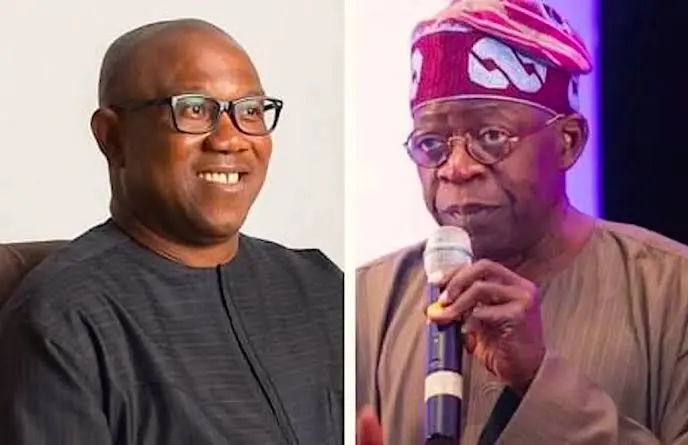
Commenting on recent remarks by Labour Party presidential candidate regarding federal infrastructure priorities, the organisation acknowledged his constitutional right to express his views but maintained that infrastructure debates should be guided by technical assessments, historical realities and measurable results.
It further stated that the opinions of individual politicians should not be interpreted as representing the collective position of Ndigbo.
Ohanaeze also applauded the Minister of Works, , for what it described as visible progress in road construction and improved coordination of federal infrastructure projects nationwide.
According to the organisation, Nigeria experienced persistent challenges in road construction, maintenance and project completion between 1999 and 2023, resulting in widespread infrastructural decay and economic constraints. It said the current administration should therefore be assessed within the context of correcting those longstanding deficiencies.
Reiterating its position, Ohanaeze declared that its support is driven by developmental interests rather than political considerations.
“The truth of infrastructural progress must be acknowledged without distortion, and developmental gains must not be subordinated to electoral ambition or political rivalry,” the statement read.
The organisation urged political leaders and stakeholders to remain focused on project execution, continuity and national unity, warning against narratives capable of undermining public confidence in ongoing infrastructure reforms.
Ohanaeze concluded by reaffirming its commitment to infrastructural justice, national cohesion and the correction of historical regional imbalances, describing the ongoing federal road projects in the Southeast as a vital opportunity for economic growth and post-war infrastructural renewal.