
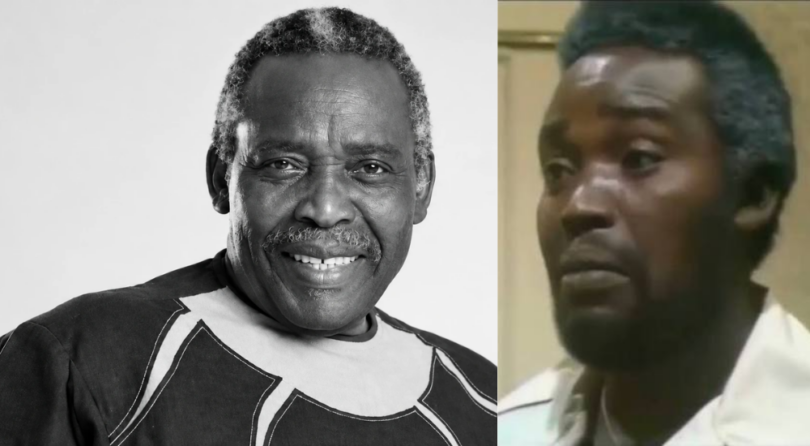
Long before Olu Jacobs became one of the most recognisable faces of Nollywood, he had already built a career on British television, international film and the London stage.
From watching Hubert Ogunde’s stage performances as a young boy in Kano to training at the Royal Academy of Dramatic Art (RADA) in London, Jacobs’ journey took him from Nigeria to Britain and eventually back home, where he became one of the defining actors of Nigerian cinema.
Born Oludotun Baiyewu Jacobs on July 11, 1942, Jacobs spent much of his childhood in Kano and attended Holy Trinity School, where he participated in debating and drama societies.
His interest in acting was strengthened after he watched one of Hubert Ogunde’s annual concert performances at the Colonial Hotel in Kano. The experience would eventually lead him to pursue acting professionally.
Jacobs later travelled to Britain, where he trained at RADA and began building his professional career on stage. One of his early stage appearances came in 1972 at Sheffield’s Crucible Theatre, before he moved into British television and theatre productions.
During the 1970s and 1980s, he appeared in several British television programmes, including The Goodies, Till Death Us Do Part, Barlow at Large, The Venturers, Angels, 1990, The Tomorrow People and The Professionals.
His theatre credits also included a 1977 production of Julius Caesar at the Royal National Theatre and Tom Stoppard’s Night and Day in 1978.
Jacobs also moved beyond British television into international cinema.
He appeared in films including The Dogs of War, Baby: Secret of the Lost Legend and Roman Polanski’s Pirates, placing him alongside established international actors and directors before the Nigerian home-video industry had developed into the global cultural force now known as Nollywood.
In 1990, Jacobs returned to Nigeria and took on the role of Inspector Best Idafa in the NTA television series The Third Eye, which ran from 1990 to 1993.
That return marked a new chapter in his career.
As Nigeria’s video-film industry expanded, Jacobs became a familiar face on Nigerian screens, appearing in more than 100 productions and taking on roles that ranged from traditional rulers and wealthy patriarchs to politicians, professionals and authority figures.
His experience abroad, however, was not left behind.
Jacobs and his wife, veteran actress Joke Silva, built a professional partnership that extended beyond acting. The couple founded the Lufodo Group, which includes Lufodo Productions, Lufodo Distribution and the Lufodo Academy of Performing Arts.
The group became part of their broader contribution to theatre, film production, distribution and the training of performers. Lufodo describes Jacobs as an actor, writer, stage director and producer whose career has spanned stage, film and radio.
Jacobs and Silva married in 1989 and have three children, Olusoji, Olugbenga and Dayo. Their daughter, Dayo, died as a child.
Over a career spanning decades, Jacobs accumulated major honours, including the Africa Movie Academy Award for Best Actor in a Leading Role in 2007.
He was conferred with the national honour of Member of the Order of the Federal Republic (MFR) in 2011 and received the Industry Merit Award for outstanding achievement in acting at the 2013 Africa Magic Viewers’ Choice Awards. He also received a lifetime achievement honour at the 2016 MAA Awards.
His career effectively connected several generations of African acting — from the era of British television and classical theatre to Nigeria’s home-video boom and the emergence of modern Nollywood.
But his later years brought a major change.
In 2021, Silva publicly disclosed that Jacobs had been living with dementia with Lewy bodies for several years. She explained that the condition had contributed to his withdrawal from the screen and had affected both the actor and his family.
His absence from public life subsequently fuelled repeated false reports of his death.
In June 2024, his family again debunked reports that he had died, with his son, Olusoji Jacobs, sharing a video showing the veteran actor alive.
The rumours have not erased the larger story of Jacobs’ career.
From the stages of Britain to international cinema and eventually the Nigerian screen, Olu Jacobs built a body of work that crossed borders, generations and eras of African entertainment.