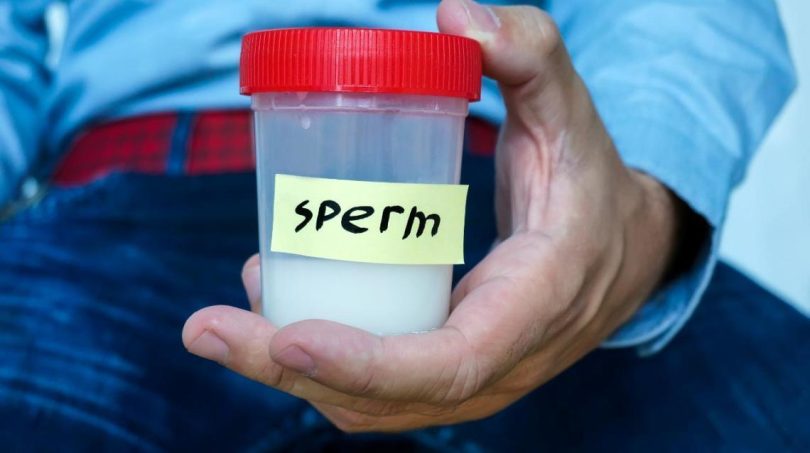
A fertility specialist has said only one in four men has optimal semen quality for natural conception, warning that declining sperm quality is increasingly contributing to infertility worldwide.
A Consultant Gynaecologist and Chief Executive Officer of Nordica Fertility Centre, Victor Ajayi, has said only one in four men currently has optimal semen quality, citing research that points to a steady decline in male fertility over recent decades.
Mr Ajayi made the remark during a webinar organised by the fertility centre on Saturday. The webinar was themed “The Forgotten Men: Conversation on Infertility.”
The News Agency of Nigeria (NAN) reports that the fertility specialist cited a 2012 study which found that only about 25 per cent of men had semen quality considered optimal for natural conception.
He said periodic studies by the World Health Organisation (WHO) have also shown a global decline in male reproductive potential, with sperm counts falling by more than 50 per cent over the past five decades.
According to him, only a small proportion of men now produce the minimum sperm concentration considered adequate for natural conception, compared to the much higher sperm counts commonly recorded decades ago.
Mr Ajayi warned that if the trend continues, it could have serious implications for human reproduction.
Causes of declining sperm quality
He attributed the decline to obesity, unhealthy lifestyles, sperm DNA fragmentation, prolonged exposure of the testes to heat, psychological factors and other underlying medical conditions.
The fertility specialist also challenged the widespread belief that infertility is primarily a woman’s problem.
He said that infertility had been culturally and socially framed as a female problem, leaving women to bear stigma, undergo investigations and shoulder emotional burdens.
He noted that male infertility remained largely overlooked in spite of evidence showing that men contributed significantly to infertility cases.
“It is time to bring men into the conversation about reproductive health, not as bystanders, but as equal participants whose fertility matters,” he said.
The fertility specialist said many of the factors affecting sperm quality were preventable and could be addressed through sustained lifestyle changes.
He called for increased public awareness, early intervention and proper counselling to address male infertility and encourage shared responsibility in reproductive health.
Also speaking, Pilot Gbolahan, Clinical Psychologist at Nordica Fertility Centre, said men rarely displayed their emotional problems.
Mr Gbolahan noted that many men were emotionally distant while suffering from depression caused by infertility and equally avoided therapy.
“Infertility is a medical condition not a reflection of masculinity or strength.
“Male factors contribute to 50 per cent of infertility cases, yet many men delay in seeking fertility evaluation.
“Breaking the silence is the first step towards finding a solution”, he said.
The psychologist said early assessment could make a significant difference. He advocated for routine psychological services within fertility clinics and reproductive healthcare settings across Nigeria.
Jesse Atongo, Consultant Gynecologist, Nordica Fertility Centre, added that many men equated sexual function to reproductive capacity.
Mr Atongo stated that infertility could be diagnosed through medical history, physical examination and semen analysis.
The gynaecologist noted that male infertility treatment was individualised based on the identified etiology, severity of sperm impairment and the couple’s overall fertility profile.
According to him, infertility could be managed through medications, surgery and assisted reproduction. He encouraged men to eschew illicit substances, excessive heat, alongside alcohol, and maintain a healthy weight and safe sex.
(NAN)