
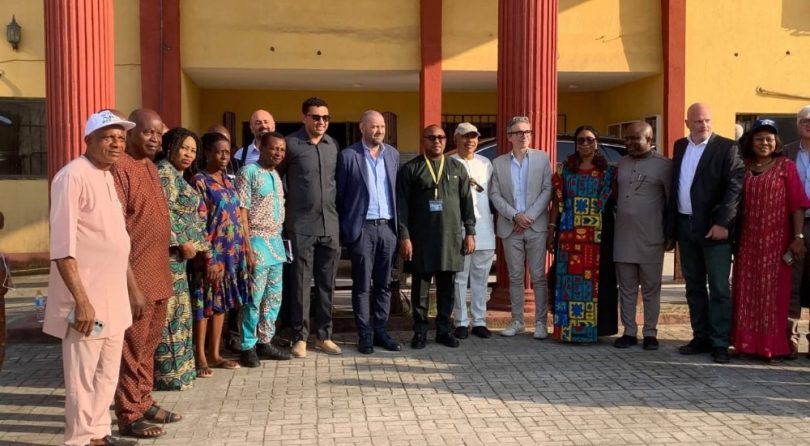
Ogbonnaya Onu Polytechnic, Aba, Abia State, has hosted a delegation of the Italian National Association of Manufacturers of Footwear, Leathergoods and Tanning Technologies (Assomac), to explore opportunities for modernising Aba’s leather industry through technology transfer, technical training and access to international markets.
The engagement brought together representatives of the Italian association, the Abia State Government and local leather manufacturers to discuss possible areas of collaboration aimed at strengthening the footwear and leather goods sector.
The delegation was led by the Abia State Commissioner for Trade and Commerce, Dr. Salome Nkemakolam Obiukwu.
Discussions at the meeting focused on plans for a proposed workshop for leather and footwear manufacturers in Aba, where participants would be exposed to international production standards, modern manufacturing techniques and advanced leather-processing technologies.
Other areas explored included machinery support, possible grants for interested shoemakers, technology transfer and opportunities for local manufacturers to access international markets.
The meeting also featured discussions on the possibility of establishing a state-of-the-art leather production hub in Abia State, an initiative that could strengthen local manufacturing capacity and improve the competitiveness of Aba-made leather products.
Assomac represents 136 Italian companies operating in the footwear, leather goods and tanning technology sectors. Its international reach and experience in manufacturing equipment and technology could provide opportunities for knowledge exchange and technical advancement within Aba’s leather industry.
Receiving the delegation, the Rector of Ogbonnaya Onu Polytechnic, Engr. Dr. Christopher Okoro Kalu, welcomed the proposed collaboration, describing it as an opportunity for the institution to contribute to the development of technical skills and industrial production.
He said the Polytechnic, guided by its motto, Towards Excellence in Technology, was committed to meeting international standards in technical education and skills development.
The Rector also emphasised the importance of involving the institution in initiatives aimed at improving leather production and manufacturing, particularly through practical training and technological advancement.
He welcomed the delegation on behalf of the Governing Council, Management, staff and students of the institution.
In her remarks, the Commissioner for Trade and Commerce commended the Abia State Government for creating an environment she said was favourable to foreign investment and development across different sectors.
She also appreciated the Italian Government for the trade mission and its interest in exploring investment opportunities in Abia.
“Thank you for choosing Abia for this special investment and engagement,” Obiukwu said.
Similarly, the President of the Leather Products Manufacturers Association of Abia State (LEPMAAS), Mazi Okechukwu Williams, welcomed the proposed partnership, describing it as an opportunity to combine the manufacturing experience of local artisans with advanced Italian technology.
Williams expressed optimism that the collaboration could help position Aba’s leather industry for greater international competitiveness.
He assured the visiting delegation of the association’s readiness to support the initiative and contribute to its successful implementation.
“We promise to do our best to ensure we’re not only God’s Own State here but God’s Own State in Africa,” he said.
Aba has long been recognised for its footwear, leather goods and garment manufacturing activities, with numerous small-scale producers and artisans contributing to the city’s commercial identity.
However, improved access to modern machinery, technical expertise, quality production standards and wider markets remains important to strengthening the sector’s competitiveness.
The proposed engagement between Assomac, the Abia State Government, Ogbonnaya Onu Polytechnic and local manufacturers could provide a platform for addressing some of these challenges.
If translated into concrete programmes, the collaboration could also create opportunities for technical training, improved product quality and stronger links between vocational education and industrial production in Abia State.