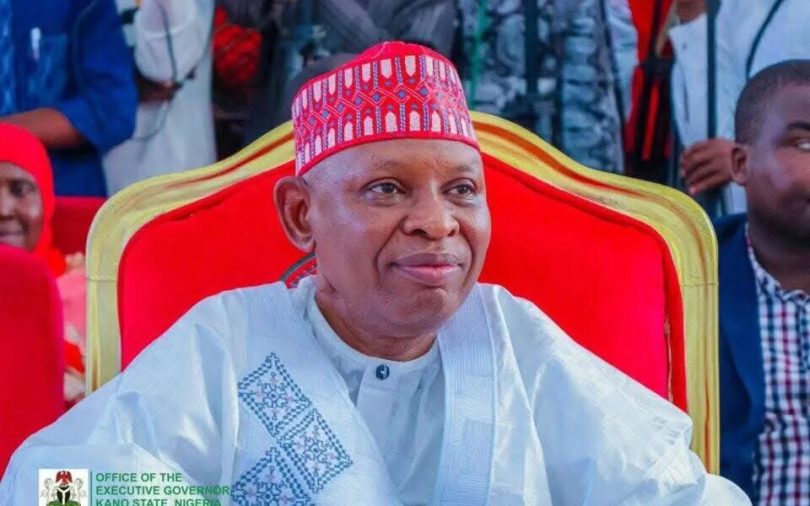
For years, a running tap in Kano was a matter of luck; Households across the old city and the newer layouts rationed water, paid vendors and waited for pumps that failed or were not certain, the system behind those taps had been run down for a long time, Plants worked below their designed capacity, and pumping stations and mains sat idle or in disrepair. Pipes that went unused deteriorated further. When Governor Abba Kabir Yusuf took office in May 2023, much of that infrastructure needed rehabilitation or restoration before it could carry a drop of treated water.
The Ministry of Water Resources’ own list of works shows how deep the neglect ran; The raw-water pump station at Tamburawa had to be restored, the main pipeline to Dambatta from the Thomas Water Treatment Plant needed rehabilitation, as did the Kusalla Regional Water Supply Scheme, the Wudil and Watari schemes. The Bagauda and Tudun Wada dams were in such a state that they had to be rehabilitated, Even the hydrology office complex at Challawa and the water system at Government House needed repair.
The administration’s response was to commit money and materials, not just announcements. It bought 10 new raw-water pumps for Challawa and Tamburawa and installed four new 1,500KVA Caterpillar generators at New Tamburawa. It supplied aluminium sulphate and Superflox polymer, along with other treatment chemicals, to the Challawa, Tamburawa, Watari and Kusalla plants. It provided fuel and AGO on monthly basis to the Kano State Water Board, as well as diesel for treatment plants and regional schemes. It also settled outstanding electricity bills at Challawa, Tamburawa, Watari, Kusalla and Wudil, and at the Board’s headquarters.
On the network, the state laid a 1,000mm ductile-iron main from Tamburawa to Hadejia Road and extended Greater Kano supply to Goron Dutse and Mandawari, it also connected Sheka, Hotoro, Yan Shana, Unguwar Rimi, Naibawa and Unguwar Uku Yan Awaki.
Beyond the pipes, in its quest to provide and supply adequate water, the administration of Gov. Abba Kabir drilled 138 hand-pump boreholes under PEWASH and installed solar-powered boreholes in Kano Municipal, Gaya, Karaye, Kumbotso, Makoda and Minjibir, Ungogo also received a solar borehole with a 2,000-litre overhead tank, The Bagauda and Tudun Wada dams were rehabilitated, and design work and a topographic survey were completed for the proposed Kantama Earth Dam. The Reach-Out Water Supply Project now covers 20 communities.
The result is an installed capacity of 552.34 MLD, or 552,340,000 litres a day, across 22 treatment plants, regional schemes and booster stations. Three plants carry most of it; Challawa produces 220 MLD, Tamburawa 150 MLD and Watari 75 MLD, which together account for about 81 percent of the total – Wudil and Kafinchiri add 20 MLD each, and Kusalla adds 15 MLD, Joda, Guzuguzu, Tiga-Rano and Pada range from 6.4 to 9.6 MLD. Smaller schemes and boosters, from Ghari and Magaga to Bunkure and Falgore, supply the remaining 35.54 MLD.
Capacity, though, is not delivery, the government has acknowledged that test runs at Challawa and Tamburawa exposed weaknesses in the distribution network – reticulation, partly because the pipes had gone unused for so long. Those gaps are now being repaired, finding them was necessary, but fixing them is what residents will judge.
Sustaining the system matters as much as building it – Accordingly, the administration has pledged to establish a durable maintenance framework, ensure predictable operational funding and strengthen technical capacity, so that future governments inherit functional water facilities rather than another cycle of rehabilitation costs. Crucially, these commitments must be institutionalised to endure beyond 2031, Citizens, on their part, also have a responsibility to protect pipelines and boreholes against vandalism and other forms of damages.
Across benefiting communities, dry taps are gradually giving way to running water. The task ahead is to close the remaining distribution gaps, strengthen the reliability of the supply network and make access to safe, dependable water a lasting reality for every Kano resident. Ultimately, this is the promise of a Kano that puts its people first in all its dealings.