
There is something deeply disturbing about what we are witnessing in parts of the Western world.
A mother kills her three children. Another suffocates her baby. Another stabs her nine-year-old son. Another shoots her children before turning the gun on herself. Another sets fire to a vehicle with her children inside.
Then comes the explanation: mental illness.
Of course, mental illness is real. Postpartum psychosis is real. Depression is real. Some psychiatric conditions can distort a person’s perception of reality so severely that she may no longer understand what she is doing. We should never trivialise such conditions.
But somewhere along the line, society must also ask a more uncomfortable question: what exactly is happening to the family and social structures that are supposed to protect both mother and child?
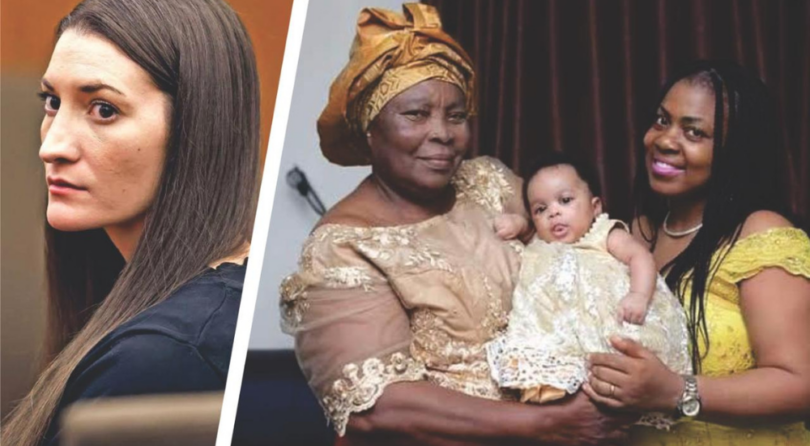
The recent Lindsay Clancy case has brought that question into sharp focus. Clancy, a Massachusetts mother, admitted killing her three children in 2023 but argued that she was suffering from postpartum psychosis and therefore was not criminally responsible.
After weeks of testimony, her jury became deadlocked and the judge declared a mistrial on September 4. Her lawyer is now asking the court to dismiss the case rather than subject her to another trial.
The case has generated an enormous debate about where mental illness ends and criminal responsibility begins.
But there is another debate we should not run away from.
Are modern Western societies becoming too comfortable explaining horrifying behaviour primarily through the language of mental illness?
That question requires care. Mental illness should never be stigmatised. Neither should people experiencing psychiatric emergencies be treated as monsters.
Postpartum psychosis, for instance, is a genuine medical emergency. It affects roughly one to two women in every 1,000 births and can involve hallucinations, delusions, severe mood disturbance and a dangerous break from reality.
Untreated cases can carry a risk of suicide and, in rare circumstances, infanticide.
But an explanation is not necessarily an excuse.
A woman suffering from psychosis may deserve compassion and urgent medical intervention. The child still deserves protection. Both things can be true at the same time.
This is where the conversation becomes uncomfortable.
In Nigeria, we have our own mental-health problems. We should not pretend otherwise. Nigerian studies have documented postpartum psychosis and other forms of postpartum mental distress. So, this is certainly not a Western invention.
What is striking, however, is the social environment surrounding motherhood.
In much of Nigeria, as in most African societies, a woman who has just delivered a baby is rarely expected to carry the entire burden alone.
Her mother may come around. Her mother-in-law may be involved. Sisters, aunties, neighbours and church members may all have some role to play.
And then there is omugwo.
For many Igbo families, omugwo is much more than an old cultural practice. It is a period in which the new mother is deliberately relieved of some of the physical and domestic burden of caring for a newborn.
Her mother, mother-in-law or another close female relative comes to stay, helps with the baby, prepares food, assists with household responsibilities and allows the new mother time to recover. This period of caregiving to the new mother may last up to 3 months.
It may sound ordinary to an outsider.
But perhaps we should not underestimate what is happening there.
The new mother is not simply being helped to care for her baby. She is being cared for too.
Somebody is around to notice that she has not slept properly. Somebody sees that she is unusually withdrawn. Somebody hears the things she says when nobody else is listening. Somebody notices when her behaviour changes.
In a serious situation, that person may be the first to say: Something is wrong with this woman. She needs help.
That is one of the hidden strengths of communal living.
Human surveillance through relationships.
It is not surveillance in the cold, technological sense. It is the kind that comes from people being physically present in one another’s lives.
People notice you.
People notice your children.
People notice when something changes.
That may matter more than we realise.