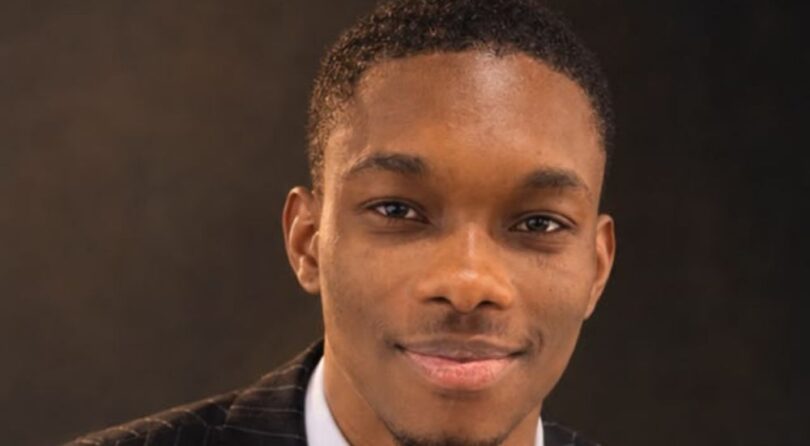
Enyi, my son who was in SS3, came to me and told me that there were two courses he had interest in – medicine and surgery and biomedical engineering. He said he would go for anyone I approved. I didn’t take this for granted.
Contrast this with his younger brother, Kamsi, when he was about to enter the senior secondary school. Kamsi announced to us that he would go into the arts class because he wanted to study law. We were stunned.
Kamsi had been crowned the king of maths in his class when he was a JSS 1 student. He had told me he would read engineering. He even assured me that he would establish an engineering firm to be named after me.
We were shocked at this volte face. We did everything to dissuade him. My wife, an educationist, led the campaign. We told him how the world had changed and how science, technology, engineering, and mathematics had gained grounds above the arts and commercial subjects. Every reason we threw into the argument failed.
Okay, why do you want to read law, I asked. “I want to make a fortune and a name for myself,” Kamsi’s reply was sharp, crisp, and immediate. Which lawyer in Nigeria do you know, I probed further. His reply was not as sharp as the answer to the earlier question. He alluded to Gani Fawehinmi, who had died two years after he was born. When we could not dissuade him, we, like Samuel in the Bible, grudgingly allowed him to enter the arts class, concluding that too much reading of novels had ‘derailed’ him.
So, when Enyi said he would go for any of the two courses that I approved, I didn’t take it for granted. I counted it an honour. Two things made me give him a nod for medicine. One was personal. The second had to do with him. Let me start with number two, which was actually the primary consideration.
Enyi had read Gifted Hands and other books by Ben Carson when he was younger. So, drawing inspiration from Carson, he had wanted to study medicine and surgery. So, I thought the best I could do was to help him to realise his early dream of becoming a medical doctor.
Now, the personal reason: I was also a boy of two dreams. There were two things I felt I could be – a medical doctor or a journalist. I offered both the arts and the sciences in my days in secondary school. In fact, I captured my predicament in a poem I had titled, “The Sci-artist’s Dilemma.” Two things helped me to resolve the dilemma in favour of journalism. When we were about to register for our final exams, our physics and chemistry teacher, Mr. Henry Okechukwu told us that he was no longer going to teach physics, that what he read was chemistry. That was devastating. Eventually, I couldn’t take physics in my West African School Certificate Examination.
However, I pressed forward, preparing to take the subject in the General Certificate of Education Examination since I could still read and understand the subject. However, a career seminar I attended opened my eyes to my dislike for drugs and the hospital environment. In fact, the sight of blood was enough to make me cry. My father could send anyone to slaughter chicken or goat; not me! So, I found that what I loved was the title, not the work.
So, when Enyi wanted to read medicine or biomedical engineering, I felt medicine would be my ‘revenge’. Even though I had acquired a ‘doctor’ title I didn’t need through a doctoral degree, the ultimate ‘compensation’ would be an MBBS after my son’s name. On these two notes, the trip began.
However, as the journey got tougher, I kept asking myself why I didn’t abort the dream when the knife was handed over to me. The financial strain of training a doctor in a private university was obvious for a lower-lower middle-class citizen living in a Nigeria of Buhari/Tinubu era. I am actually afraid or ashamed to say low-income Nigerian. Who revels in poverty? Literally, school fees increased every year; income did not. Sometimes, it diminished even in nominal terms. Definitely, it dwindled every single month in absolute terms. What’s even the economic rationale in spending so much to train a child in a profession whose influence was dwindling?
For Enyi, the medical school was not a walk in the park. One day, he asked me what my greatest fear was when I was his age. I didn’t know the angle the question was coming from. I said, maybe, getting a good job. He said his own fear was examination. I asked myself quietly, “So examinations are still torturing medical students?” I could relate with what he was going through because of my close association with medical students. While I was doing my masters at the University of Nigeria, Enugu Campus, a medical student friend, now Dr. Eric Ihekwoaba, had ‘squatted’ me in his room at Kenneth Dike Hall. So, I knew how gruelling reading for medical examinations could be. In my undergraduate years, two of my very close friends and alies didn’t make it pass the second MB examination. It was painful. In fact, I squatted one of them (at Mbanefo Hall), who had to relocate to Nsukka to pursue a degree in engineering when the medical school asked him to withdraw. Tough guy! After a degree in engineering, he still got another admission to the University of Benin to pursue another degree in medicine and surgery. What stubbornness! What a love for medicine! Or, rather, what stubbornness for an opportunity to care for human lives! It’s insane!
It is very important for our society to appreciate the sacrifices that medical personnel make right from the time of training in order to serve the people. It is true that the services rendered do not often march the need or the desire. This is the reason why reforms in the sector have become inevitable.
As of today, there are many squables in the medical profession and the healthcare sector in general. The squabbles revolve around financial remuneration, structural working conditions, and safety measures aimed at resolving the nation’s severe healthcare brain drain.
Data from the Medical and Dental Council of Nigeria showed that while more than 130,000 doctors are registered with the council, only about 58,000 renewed their practising licences in 2023, and as of June 2026, the figure had dropped to about 55,000. The majority of the number may have migrated to jurisdictions where medical services are better appreciated, rewarded, protected, and provided for.
THE WHISTLER, for instance, reported that the United Kingdom may have saved about £3.64bn (about N6.56tn) in medical training costs due to the migration of 15,831 Nigerian-trained doctors into the UK healthcare system.
According to the UK Department of Health and Social Care, training a single medical doctor in the UK costs about £230,000, the report said.
It added that medical education in Nigeria was heavily subsidised by the government through public university tuitions and teaching hospital budgets, with government estimates putting the training cost per doctor at over $21,000 (or under N5m for a six-year pprogramme in public universities.
The resultant effect is that while Nigeria bears the initial public cost of educating these medical professionals, the country faces a massive human resource and financial loss as they relocate to Western nations.
Ironically, while Nigerian medical migrate abroad for greener pastures, politicians also embark on medical tourism because they do not trust the local healthcare system.
According to the Central Bank of Nigeria, the country loses more than $500m per annum in medical tourism. These are only tracked officially allocated foreign exchange.
The African Export-Import Bank puts Nigeria’s capital flight to medical tourism at more than $1bn per annum, while some other sources put the capital flight above $2bn per annum.
It is instructive that the top destination of Nigerian medical tourists is India, a nation that has taken advantage of its huge population and STEM education to dramatically advance its economy. The lesson from countries like India and Singapore is that the lot of nations is much more dependent on visionary leadership and ethos. When a system is broken, hardly do you find a fully functional part.
To Enyi and the medical fraternity, I urge you to keep to the oath you have taken while we repair our broken system. Everything doesn’t have to be in place before you offer your best to your fatherland in particular and mankind in general. The care of the sick is a service to God, and He rewards in dimensions you may never imagine.
It is fitting now for me to conclude in the words of Prof. Oche Ochai Agbaji, the professional medical elder who spoke at the induction of 54 medical doctors at the Bingham University Medical School on Thursday, October 22, 2026, “Skill without compassion is very dangerous.”
It is also fitting to thank everyone who contributed to the making of Dr. EnyiChukwu Amaefule. In Igbo cosmology, a man does not raise a child. It is the responsibility of the community. Here, the community transcends geographical contiguity and includes everyone who has played a role in his upbringing and everyone who will still play a role in his career progression. May the Lord bless you beyond measure. May your dreams also come true no matter how difficult the path may be.