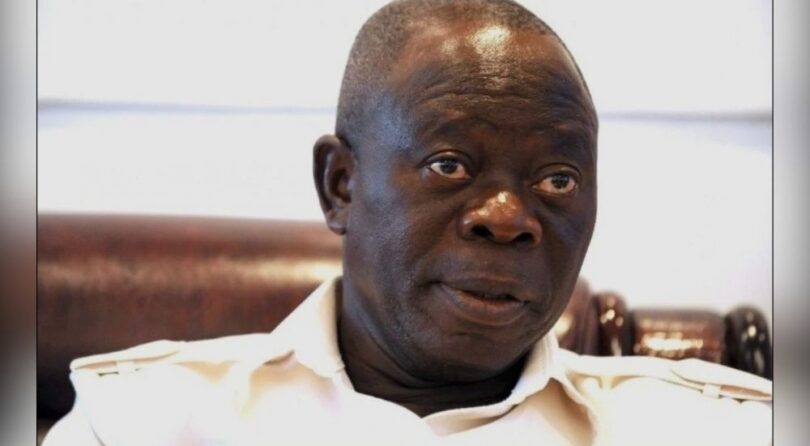
Senator Adams Oshiomhole is one of Nigeria’s most recognisable political figures. As a former labour leader, governor, national party chairman and now senator, his words carry enormous weight. That is why his recent assertion that the Nigerian National Petroleum Company Limited (NNPCL) is “filled with rogues” deserves serious scrutiny.
No institution should be immune from public scrutiny. Where there is evidence of corruption, abuse of office or misconduct, those responsible must be identified, investigated and punished.
Accountability is essential to good governance.
However, there is a fundamental difference between demanding accountability and condemning an entire institution with one sweeping statement.
NNPCL is not a handful of executives. It is a national institution employing thousands of Nigerians, including engineers, geologists, accountants, economists, lawyers, technicians, project managers and other professionals who work daily to sustain the country’s most strategic industry. To describe the organisation as being “filled with rogues” is to cast a shadow over every one of these hardworking Nigerians, regardless of their individual records or integrity.
Such rhetoric may generate headlines, but it comes at a significant cost.
First, it undermines investor confidence.
Nigeria is competing aggressively for investment in the global energy market.
International investors, lenders and strategic partners closely monitor public statements made by senior political leaders. When a prominent senator publicly portrays Nigeria’s flagship energy company as an organisation populated by criminals, it sends a damaging signal to potential investors.
Investors do not hear nuance. They hear the risk.
At a time when President Bola Tinubu’s administration is working tirelessly to attract billions of dollars in investment into Nigeria’s energy sector, such statements are deeply counterproductive.
Over the past two years, the Federal Government has committed enormous resources, diplomatic capital, time and energy to rebuilding confidence in Nigeria’s oil and gas industry.
Senior government officials have travelled across the world, engaging investors, development finance institutions, energy companies and strategic partners. Regulatory reforms have been introduced.
Investment roadshows have been organised. Bilateral engagements have been pursued. The goal has been clear: to convince the world that Nigeria is open for business and remains one of the most attractive energy destinations on the African continent.
These efforts are not theoretical. They are real, deliberate and ongoing.
As someone who has personally participated in efforts to build international partnerships for both the organisation and Nigeria’s energy sector, I understand the painstaking work involved in restoring investor confidence.
Relationships are built over months and years. Confidence is earned through consistency, professionalism and credibility.
Just two weeks ago, I was part of a team that engaged senior officials of the United States Government on strengthening energy cooperation with Nigeria. Those discussions focused on expanding collaboration, encouraging investment, supporting energy security and creating new opportunities within Nigeria’s oil and gas sector.
The message from America was encouraging. There was a clear willingness to deepen cooperation, explore new partnerships and support investment opportunities in Nigeria’s energy industry. There was even a readiness to commit resources towards initiatives that would strengthen collaboration and unlock opportunities in the sector. Such engagements represent the type of strategic international cooperation that can unlock billions of dollars in investment, create jobs and strengthen Nigeria’s economy.
It therefore becomes troubling when a senior Nigerian leader publicly characterises the country’s flagship energy company as being “filled with rogues.” Statements like these undermine the very work that government officials, diplomats, regulators and industry stakeholders are undertaking to attract investment and strengthen international confidence in Nigeria.
Equally troubling is the promotion of the allegation that NNPCL has N210 trillion in unaccounted funds.
Every allegation deserves investigation. Every public institution must be accountable.
However, allegations of such magnitude must also be tested against facts and financial realities.
The N210 trillion figure is mathematically difficult to reconcile with NNPCL’s publicly reported financial records for the period under review.
According to the company’s financial statements, total revenue for the period was approximately N54.5 trillion. It therefore raises legitimate questions as to how an alleged unaccounted amount of N210 trillion, nearly four times the reported revenue, could exist within the same financial framework.
This is not an argument against transparency. It is an argument for accuracy.
When figures that appear inconsistent with financial realities are repeated without proper context or verification, they create damaging narratives that travel far beyond Nigeria’s borders. International investors, financial institutions, credit agencies, development partners and foreign governments rarely follow the intricate details of Nigeria’s domestic political debates. What they often see are sensational headlines suggesting that hundreds of trillions of naira have disappeared from the nation’s most strategic economic institution.
The potential damage to Nigeria’s image is enormous.
Investors may postpone decisions. Strategic partners may reassess risks.
Financial institutions may become more cautious. International media organisations may reinforce long-standing negative stereotypes about Nigeria. Years of painstaking effort to improve the country’s reputation can be undermined by a few careless statements that are not grounded in verifiable facts.
Political theatre may generate applause. It does not generate investment.
Second, it damages Nigeria’s international reputation.
Nigeria already battles negative perceptions abroad. Unfortunately, stories about corruption often travel faster than stories about reform, innovation and progress. When a senior lawmaker publicly characterises one of the country’s most important institutions as being “filled with rogues,” the statement quickly becomes international ammunition for those who already view Nigeria through a lens of dysfunction.
The consequence is reputational damage that affects not only NNPCL, but the entire country.
At a time when Nigeria is actively seeking foreign investment, negotiating strategic partnerships and promoting itself as a reliable destination for global capital, national leaders should be conscious of the signals they send to the world. Public statements that unnecessarily undermine confidence in key national institutions can have consequences far beyond domestic politics.
Third, it weakens public institutions.