
EBERE UZOUKWA, PhD
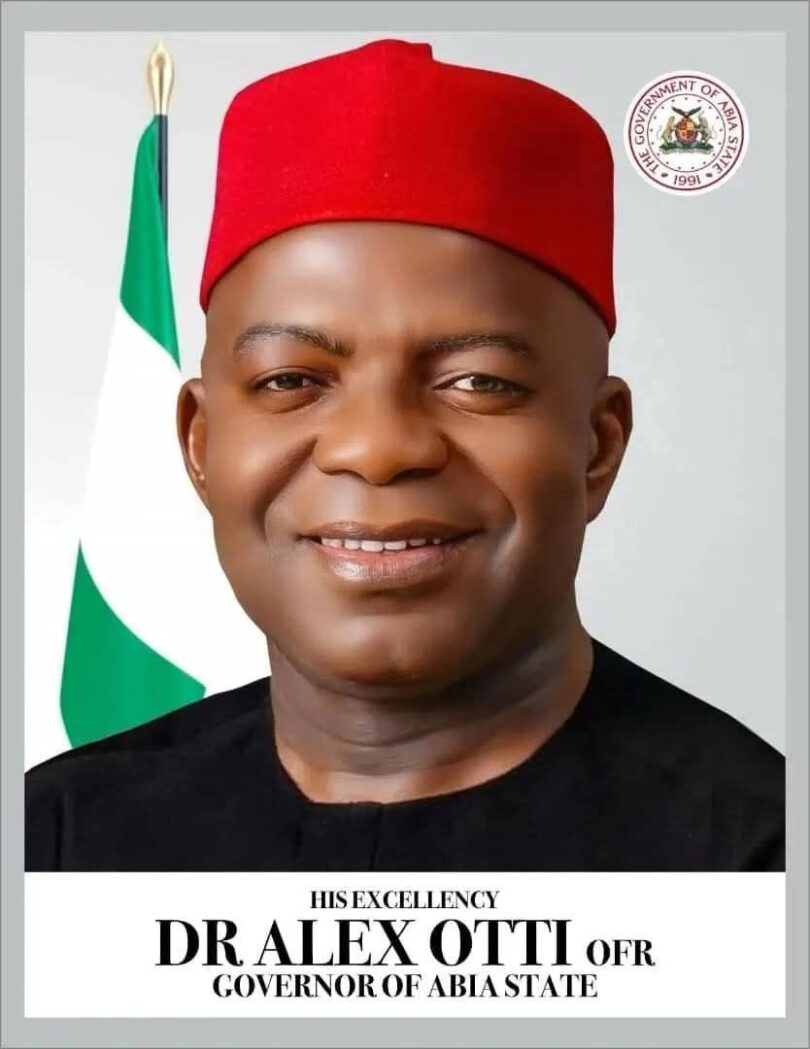
Governor Alex Chioma Otti’s decision to approve a N1 billion special allowance for teachers on the 2026 Teachers’ Day may have been the headline-grabbing moment, but the bigger story lies in what the gesture says about the place of education in his administration’s development strategy. In one announcement, Governor Otti combined immediate financial recognition with commitments to resolve salary and promotion issues, expand professional training, deploy technology to classrooms and improve the physical condition of public schools. Taken together, these measures point to something larger than a Teachers’ Day reward. They suggest the emergence of a new social contract between the Abia Government and its education workforce, built around the belief that a State cannot secure a better future without investing in those who shape the minds of its children.
The Governor’s appreciation of the profession goes beyond its conventional responsibility of imparting knowledge. Describing teaching as an act of faith, patriotism and a labour of love, Otti acknowledged the enormous responsibility carried by those entrusted with shaping young minds. He recognised that their influence extends beyond academic instruction to the values, character, aspirations and understanding of society acquired by successive generations. This deeper appreciation appears to underpin the administration’s approach to the sector and explains the growing sense of partnership between government and the classroom workforce.
That commitment is also reflected in the priority accorded education in budgetary planning. For three consecutive budget cycles, about one-fifth of the annual budgetary allocation has been committed to the sector. This demonstrates that education is not being treated as a ceremonial policy statement but as a practical development priority. From the recruitment of 9,469 new educators to the expansion of infrastructure, smart schools, school fencing and improved learning environments, the administration is addressing the sector from multiple dimensions. The objective is to create conditions in which education professionals can work effectively and pupils can learn in environments that inspire excellence.
The N1 billion Teachers’ Appreciation Allowance announced on Monday further deepened this relationship. Beyond its financial value, the gesture carries considerable symbolism. By approving a special allowance and directing that it be paid directly to beneficiaries, the Governor sent a clear message that those carrying the responsibility of educating the next generation deserve recognition. More importantly, his address did not end with the financial incentive. He addressed outstanding salary issues, payment irregularities, promotions and the extension of the retirement age to 65. These interventions suggest a broader understanding of welfare in which appreciation is accompanied by institutional attention to legitimate workplace concerns.
Equally significant is the administration’s emphasis on capacity development. Governor Otti announced plans for continuous training and retraining, providing opportunities for diligent practitioners to acquire new approaches to pedagogy and exchange ideas with colleagues. The proposed acquisition of smart tablets, laptops and other IT devices further indicates an intention to prepare the education workforce for an increasingly digital and globally competitive environment. This is particularly important because those preparing young Abians for the future must themselves have access to the knowledge, technology and tools required to navigate a changing world.
There is, therefore, a reciprocal dimension to the emerging partnership. While the government is committing resources, improving infrastructure, expanding the workforce and prioritising welfare, it is equally demanding professionalism, discipline, integrity and excellence from those entrusted with educating the young. The Governor’s warning against examination malpractice, abuse of trust and extortion demonstrates that the relationship is not built on incentives alone. It is a social contract in which improved welfare must produce greater responsibility, while greater responsibility should attract better recognition and reward. The message is consequently both appreciative and demanding. The State values the profession, but expects those in it to uphold its dignity.
Ultimately, the significance of Governor Otti’s engagement with Abia’s education community goes beyond the N1 billion allowance or the promises announced at a single celebration. It is the deliberate attempt to reposition education as the foundation of the State’s long-term renewal and to make those who deliver in that mission. With plans to sustain the huge investment in welfare, infrastructure, technology and professional development, also matched by greater dedication and accountability in the classroom, Abia will be building something far more valuable than improved schools. It will translate to building a generation equipped to compete, innovate and lead. That is the real measure of this new deal, and it is where the bond between Otti and the education workforce could ultimately leave its most enduring mark on the New Abia.
Dr. Ebere Uzoukwa is the Senior Special Assistant to the Governor of Abia State on Public Affairs.