EBERE UZOUKWA, PhD
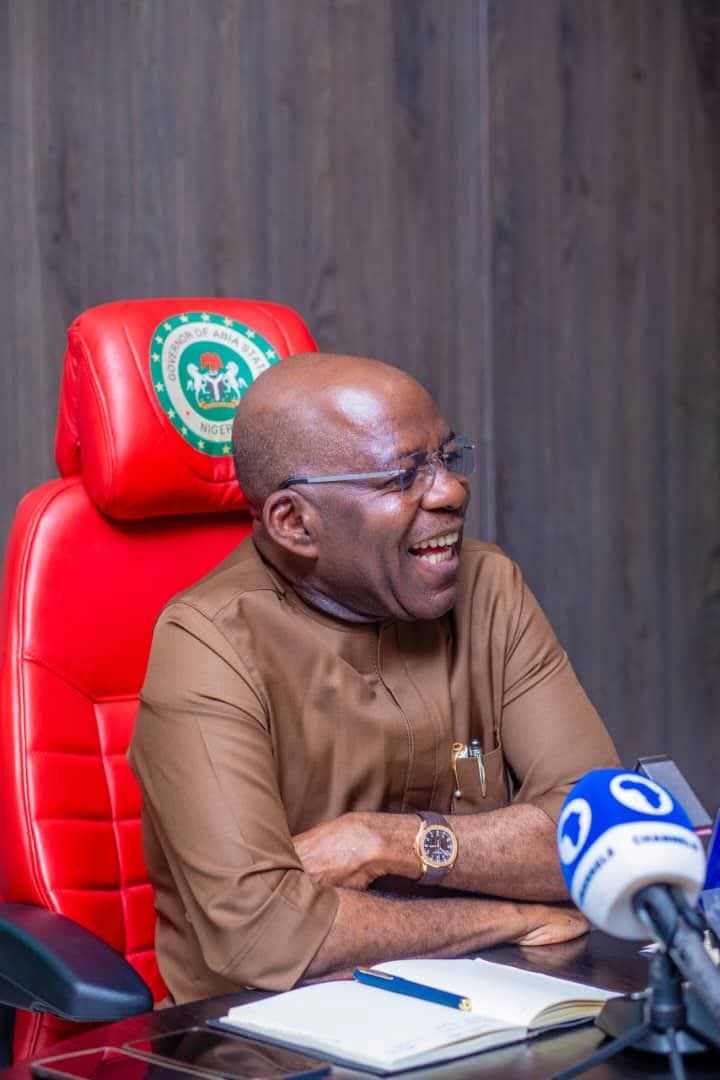
Governor Alex Chioma Otti, OFR, did not inherit an Abia that merely needed routine administration. He inherited a state weighed down by years of infrastructural decay, institutional weakness and socio-economic underdevelopment. Roads had deteriorated, public facilities had suffered prolonged neglect, and critical sectors such as healthcare and education faced serious challenges. In Aba and Umuahia, the consequences of poor infrastructure and environmental neglect were particularly visible. Against this background, the Otti administration was confronted with the far more difficult task of rebuilding a state whose problems had accumulated over decades, not simply managing an existing system.
Since then, the administration has pursued interventions across roads, healthcare, education, transportation, human capital development and institutional reforms. The scale of the road intervention is particularly significant. By May 2026, the government had completed 414 road projects covering more than 800 kilometres, with another 82 projects covering over 200 kilometres nearing completion. Major interventions include the reconstruction of Portharcourt Road and Ohanku Road in Aba, Aguiyi Ironsi Boulevard in Umuahia, the Omenuko Bridge and Umuahia-Uzuakoli-Abiriba-Ohafia corridor.
Healthcare has also received substantial attention. About 200 primary healthcare centres have been retrofitted and functionalised, while nearly 1,000 healthcare professionals have been recruited. In May 2026, the administration commenced the reconstruction of the 100-bed Okpuala-Ngwa General Hospital in Isiala Ngwa North and commissioned a rebuilt, retrofitted and well-equipped cottage hospital at Umuihie in Isiala Ngwa South, as well as the Chima Ubani Memorial Hospital, Mgboko, just to mention a few. These interventions reflect an effort to improve healthcare delivery from the primary to the secondary and tertiary levels.
Education has similarly featured prominently in the administration’s programme. The government recruited 9,394 teachers in 2025 and 2026 following increased enrollment under the free and compulsory basic education policy. The administration has also maintained an annual allocation of 20 percent of the state budget to education and undertaken infrastructure interventions at Abia State University, Uturu, Ogbonnaya Onu Polytechnic, Aba and Arochukwu College of Education (Technical).
Despite these interventions, Abia still has substantial needs. More roads still require reconstruction and maintenance, drainage infrastructure needs attention, and the healthcare, education and economic sectors are still yearning for continued investment. Recent rainfall as witnessed today has also exposed vulnerabilities in some communities. These realities underline the fact that rebuilding Abia cannot be completed with these projects or within a four-year period.
Agreed, citizens are entitled to demand and expect the government to do more. However, the depth of the challenges inherited in 2023 makes it unrealistic to expect decades of infrastructural and institutional deficiencies to be completely reversed within four years. Sustainable development requires not only new projects but also an effective institutions and sector-by-sector transformation. What also matters is that the interventions already undertaken are sustained, completed and built upon.
Four years may be enough to begin a transformation, but not necessarily enough to right all the wrongs of the past. Abia needs to consolidate the foundation that has been laid, complete ongoing projects and deepen reforms across sectors. The ultimate thing is to ensure that progress recorded in this first term is sustained and transformed into lasting development and prosperity for the people of Abia.
The journey of rebuilding Abia, therefore, must be seen as a continuing process rather than a task that can be completed within the tenure of one administration. The foundation laid in the first four years will require sustained attention, continuity and further investment to fully address the state’s longstanding challenges. For Abia, the priority should be to preserve the gains already recorded, complete ongoing projects and build steadily on the progress made, so that the ongoing transformation can ultimately translate into lasting development and a better future for the people.
– Dr Ebere Uzoukwa is the Senior Special Assistant to the Governor of Abia State on Public Affairs.