
EBERE UZOUKWA, PhD
For decades, agriculture remained one of Abia State’s greatest economic assets, sustaining rural communities and providing livelihoods for thousands of families. Yet, despite its enormous potential, the sector suffered from years of inadequate investment, limited access to improved farm inputs, weak support systems and the absence of reliable data on genuine farmers.
Today, that narrative is changing. Under the visionary leadership of Governor Alex Chioma Otti, OFR, agriculture is being repositioned as a strategic pillar for food security, employment generation, wealth creation and sustainable economic growth.
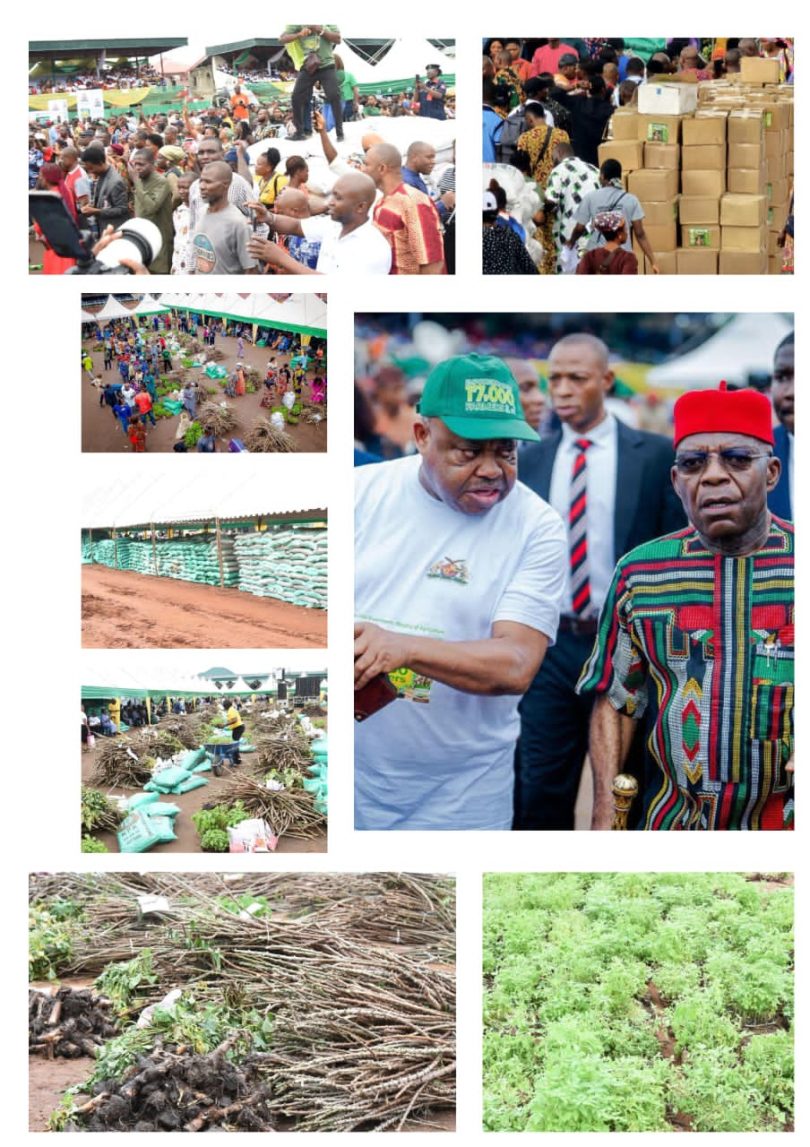
The recent flag-off of the Abia State Farmers Support Programme, designed to empower 18,634 verified farmers across the 17 Local Government Areas of the state, marks a significant milestone in this renewed agricultural transformation. More than the distribution of farm inputs, the programme represents a deliberate shift towards a structured, transparent and data-driven agricultural system that prioritises efficiency, accountability and measurable impact.
One of the most remarkable innovations of the initiative is the identification, verification and authentication of genuine farmers before government support is provided. By creating a comprehensive farmers’ database and mapping beneficiaries to their farmlands, the Otti administration has introduced a modern framework that ensures agricultural interventions reach the right people while guaranteeing transparency, accountability and measurable outcomes.
This approach addresses one of the most persistent challenges in agricultural development, where intervention programmes have often failed because of poor targeting, inadequate monitoring and leakages. Under the new framework, farmers are no longer viewed merely as beneficiaries of government assistance; they are recognised as critical partners in the state’s economic transformation agenda.
Through the distribution of improved varieties of cassava, rice, maize, plantain, sweet potatoes, pepper and tomato, alongside organic fertilisers and free logistics support, the government is strengthening farmers’ productive capacity, boosting agricultural output and enhancing the prospects of higher yields, improved incomes and greater food availability.
Governor Otti’s agricultural vision, however, extends far beyond supporting smallholder farmers. His administration is deliberately laying the foundation for commercial agriculture as a catalyst for large-scale production, agro-industrialisation, job creation and sustainable economic prosperity.
The Governor’s consistent position that agriculture should be treated as a business rather than merely a subsistence activity underscores his commitment to building a modern agricultural economy where production, processing, investment, value addition and market access are seamlessly integrated.
This bold vision is already attracting strategic partnerships and increasing investor confidence. The proposed investment of up to 200 million dollars by a multinational palm oil company in partnership with the Abia State Government is a strong testament to the growing confidence in the state’s agricultural potential and the investment-friendly environment created by the Otti administration.
The broader agricultural agenda is further reinforced by initiatives such as the Abia Rural Integrated and Community Economic Development (ARICE) Programme, which is designed to expand agricultural production, empower rural communities and develop sustainable value chains that move agriculture beyond primary production into processing, packaging, marketing and wealth creation.
The Ministry of Agriculture, under the leadership of Dr. Cliff Agbaeze, working closely with the Special Adviser to the Governor on Agriculture, Christopher Enweremadu, deserves commendation for developing a strategic roadmap that aligns with Governor Otti’s vision of a productive, technology-driven, climate-smart and investment-oriented agricultural sector.
Their commitment to farmer identification, improved agricultural inputs, strategic planning, mechanisation and collaboration with research institutions has laid a solid foundation for the ongoing renewal of agriculture in Abia State.
With the support of institutions such as the National Root Crops Research Institute, Umudike, and Michael Okpara University of Agriculture, Umudike, Abia is strengthening the link between research, innovation and practical farming solutions, thereby ensuring that scientific knowledge is translated into increased productivity and sustainable agricultural practices.
Governor Otti’s agricultural pathway is, therefore, far more than a farmers’ empowerment programme. It is a comprehensive strategy aimed at guaranteeing food security, expanding economic opportunities, attracting private investment, creating jobs and restoring agriculture as a major driver of Abia State’s economic development.
The seeds of transformation have indeed been sown. With sustained investment, effective implementation, robust public-private partnerships and consistent policy support, Abia is steadily advancing towards food sufficiency, agricultural competitiveness and a renaissance that will benefit both present and future generations.
Dr. Ebere Uzoukwa is the Senior Special Assistant to the Governor of Abia State on Public Affairs.