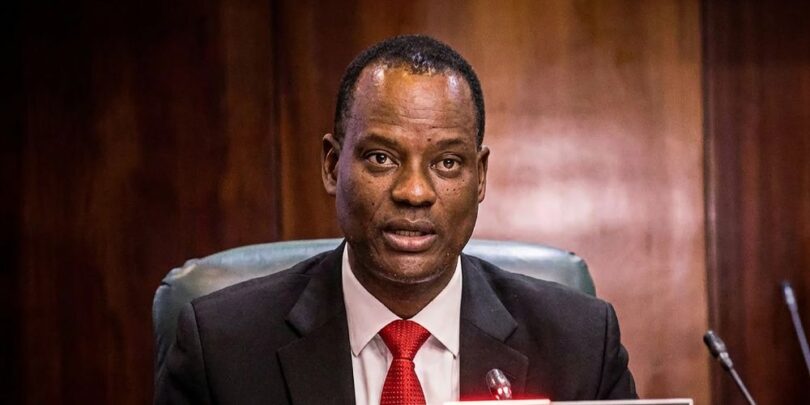
Nigeria’s Minister of Finance and Coordinating Minister of the Economy, Taiwo Oyedele, has reassured the business community that ongoing economic reforms will not be disrupted by policy reversals, urging investors to maintain confidence in the government’s direction.
He made the remarks on Thursday at the launch of the Nigerian Economic Summit Group Private Sector Outlook 2026 in Lagos, where he outlined the next phase of the country’s economic agenda.
Oyedele said Nigeria is entering a new stage of reform focused on translating earlier stabilisation efforts into measurable economic growth, with emphasis on real outcomes such as jobs, productivity, and improved living standards.
According to him, the credibility of economic policy is critical at this stage, warning that uncertainty in government decisions could weaken investor sentiment and slow down progress.
“We are not looking back,” he said, adding that “businesses need to know that today’s decisions will still hold tomorrow.”
He explained that recent macroeconomic adjustments, including exchange rate alignment and improved revenue performance, were early signs of progress but not sufficient on their own to drive broad-based development.
The minister identified policy consistency, predictable fiscal rules, reduced business costs, and expanded access to credit as key pillars for sustaining investment inflows in the next phase.
He also said the government is working to deepen financing channels across the economy, including consumer and industrial credit, with support from institutions such as the Bank of Industry, to stimulate private sector activity.
Oyedele stressed that Nigeria must prioritise growth in real GDP per capita to make a meaningful dent in poverty, noting that aggregate growth figures alone would not be enough given population pressures.
He described the current period as a “decisive execution phase,” where the focus is shifting from announcing reforms to delivering measurable results.
“Our task now is execution,” he said. “This phase demands focus, consistency, and accountability.”
While acknowledging risks such as inflationary pressures, global economic uncertainty, and political tensions ahead of elections, he maintained that the reforms remain on track and require sustained discipline to succeed.
Oyedele also called for stronger collaboration between the government and the private sector, arguing that long-term growth will depend on productivity gains in agriculture, manufacturing, energy, and the digital economy.