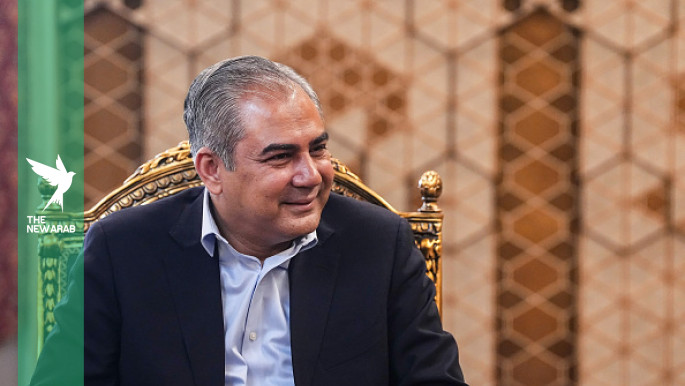
Pakistani Interior Minister Mohsin Naqvi is reportedly in Tehran to revive flagging negotiations between the US and Iran [Getty]
Pakistan’s Interior Minister Mohsin Naqvi arrived in Tehran on Saturday for talks with Iranian officials, as questions mount over whether Islamabad is seeking to revive stalled negotiations between Iran and the US.
Iran’s Students News Agency (ISNA) described the visit as a bilateral trip and noted that Naqvi had already met Iranian Interior Minister Eskandar Momeni twice this week on the sidelines of a meeting of interior ministers from the Shanghai Cooperation Organisation in Bishkek, Kyrgyzstan.
The visit comes after Iran-US negotiations, mediated by Pakistan, entered a period of deadlock in recent weeks following months of diplomatic activity that had brought both sides close to a memorandum of understanding.
Naqvi visited Iran last month and was later followed by Pakistan’s army chief, General Asim Munir. Iranian media reported that those visits helped produce breakthroughs in the negotiations, bringing the two sides close to an agreement before progress was derailed by renewed clashes and escalating tensions in the region.
The Tehran visit has fuelled speculation that Pakistan may be attempting to restore momentum to the talks, although no official details have been released regarding the agenda of Naqvi’s meetings.
Meanwhile, Ali Akbar Velayati, an adviser to Iran’s Supreme Leader on international affairs, signalled Tehran’s continued confidence in its regional position.
In a post on X, Velayati said that “the new architecture of power will not be built on the basis of weakening the resistance”.
He added that “the old nightmare and historic fear among Western theorists of Iran’s rise as a power has become reality, and a new architecture has taken shape”.
Velayati further argued that “Trump’s need for a temporary agreement to reopen the Strait of Hormuz reflects the failure of the doctrine of threatening Iran and the victory of the power of the resistance”.
He also criticised those seeking regional accommodation with the West, saying that “the greatest strategic mistake is being made by those in the region who have become attached to the mirage of settlement”.
“Diplomatic illusions carry a heavy cost,” he said, adding that “lasting peace emerges from a balance of power, not from the mirage of commitments without guarantees”.
Elsewhere, Iranian Foreign Ministry spokesman Esmail Baghaei launched a sharp attack on Lebanese President Joseph Aoun following comments made by the Lebanese leader during an interview with CNN.
In a post on X, Baghaei accused Aoun of betraying his allies, saying that he “sells those who stood by him and buys from those who stand against him”.
He added that Aoun was “abandoning those who supported him and siding with those who placed him in a difficult position”.
Aoun’s remarks were widely described in Lebanese and Iranian media as his strongest criticism yet of Iran and Hezbollah.
They came a day after Hezbollah Secretary-General Naim Qassem rejected the outcome of ongoing negotiations, describing them as “absurd, humiliating and disgraceful” and calling on officials to “stop this farce and humiliation”.
Separately, Iranian authorities said they had thwarted an attempted armed infiltration along the country’s south-eastern border.
According to Iran’s Fars News Agency, Brigadier General Ali Akbar Javidan, commander of Iran’s border guards, said an armed cell attempted to cross into Iran overnight near Zabol in Sistan and Baluchestan province.
Javidan said heavy clashes erupted between border guards and the attackers, resulting in what he described as “heavy losses” among the militants.
He also said that security forces intercepted a large weapons shipment on Friday before it entered the country, seizing more than 50 military and hunting firearms, seven hand grenades and large quantities of ammunition.