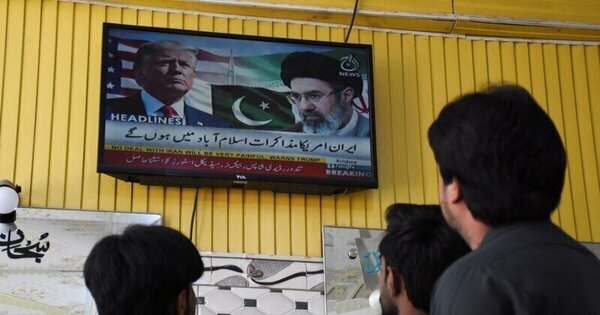
Top US and Iranian officials are preparing to gather in Islamabad for what could be the most consequential diplomatic encounter between the two countries in over four decades, even as disputes over the Strait of Hormuz and Israel’s bombardment of Lebanon continue to cloud prospects for a deal to end the war.
US Vice President JD Vance, special envoy Steve Witkoff, and Jared Kushner are expected to lead the American delegation. Iran has sent Foreign Minister Abbas Araqchi and parliament speakerMohammad Baqer Qalibaf– who has been vociferous in anti-US statements in recent weeks.
It was not immediately clear exactly when the formal negotiations would begin. Pakistani Prime Minister Shebahz Sharif had said the talks would begin on April 10, though the White House has said given a start date of April 11. Either way, the sides are not likely to meet face to face, but instead speak indirectly through Pakistani officials.
SEE ALSO:
Zelenskyy Says Ukraine Shot Down Iranian Drones In Middle East
Pakistan has declared two days of public holidays in the capital ahead of the talks, as authorities often do for major diplomatic events for security reasons and the Serena Hotel in Islamabad’s heavily fortified Red Zone, where over 10,000 police, paramilitary, rangers, and army personnel have been deployed, was cleared of guests on April 8 to host the event.
Visa conditions have been waived for delegates and journalists arriving for the talks.
US President Trump told NBC News on April 9 he was “very optimistic” about a peace deal with Iran and said Israel was “scaling back” strikes in Lebanon.
Trump said in a telephone interview with the broadcaster that Tehran’s leaders were “much more reasonable” in private but added that “if they don’t make a deal, it’s going to be very painful.”
World Energy Crunch
Trump has assailed Tehran for its plan for the crucial Strait of Hormuz, suggesting it was “dishonorable,” even as top US and Iranian officials were due to gather.
“Iran is doing a very poor job, dishonorable some would say, of allowing oil to go through the Strait of Hormuz. That is not the agreement we have!” Trumpwroteon social media.
“There are reports that Iran is charging fees to tankers going through the Hormuz Strait — they better not be and, if they are, they better stop now!” he wrote in a separatepost.
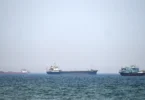
A crucial demand by Trump as part of the two-week cease-fire deal that is allowing the talks in Islamabad to take place is the free flow of shipping through the strait, which Iran has effectively blocked.
Tehran has vowed to reopen shipping, although only with coordination with the Iranian military and through payment of a toll. Ships have never previously been charged to transit the strait, considered an international waterway not under any country’s authority.
SEE ALSO:
Allison Minor: Cease-Fire Or Strategic Pause? Lebanon, Hormuz Test The Iran Truce
The bottleneck of oil and gas tankers created by Iran’s blocking of the strait has led to a worldwide energy crunch and rising prices. The potential for a toll being charged has shocked leaders throughout the globe. The European Union, Britain, Greece, and others denounced Iran’s plan.
Bloomberg reported that shipping companies would be expected to pay up to $2 million per vessel, while the Financial Times said payments to Iranian authorities would be only in cryptocurrency or Chinese yuan.
British Prime Minister Keir Starmer, on a three-day visit to the Persian Gulf, rejected the possibility that Tehran could charge for letting ships use the vital strait.
“Our position is ‘open’ means open for safe navigation,” he told British TV. “That means toll-free navigation and vessels can get through.”
The EU’s top diplomat, Kaja Kallas, said, “We urge all involved to fully respect the ceasefire across the region, cease all military operations, and fully ensure freedom of navigation as well as free and safe passage through the Strait of Hormuz, in line with international law.”
Japanese Prime Minister Sanae Takaichi, whose country receives some 95 percent of its oil supplies from the Middle East, urged in a call with Iranian President Masud Pezeshkian that he calm tensions and ensure the safety of vessels through the strait.
SEE ALSO:
Strait Of Hormuz ‘Toll’ Could Breach Maritime Law, Industry Insiders Say
A statement attributed to Iran’s supreme leader, Ayatollah Mojtaba Khamenei, and read out on state TV on April 9 appeared to underscore Tehran’s intention to control the strait.
The statement said Iran “will definitely bring the management of the Strait of Hormuz to a new stage,” but did not provide details. “Iran is not seeking war but will not forfeit its rights.”
Khamenei has not been seen since the outbreak of war amid speculation about his well-being following February 28 air strikes that killed his father and other several members of his family.
Israel, Lebanon To Talk
Separately, but nearly as important, Israeli and Lebanese representatives will meet in Washington next week, a State Department official told RFE/RL.
Israeli Prime Minister Benjamin Netanyahu has ordered intensified attacks in Lebanon, where a heavy Israeli bombardment targeting Hezbollah militants has shaken the US-Iran ceasefire deal.
Along with condemning the actions of Hezbollah deemed a terrorist organization by the United States and Iran’s attacks throughout the region, many world leaders also assailed Israel for the massive attacks in Lebanon that have killed more than 300 people over the past two days, according to the Lebanese Health Ministry.
SEE ALSO:
Israel And Lebanon To Hold Talks As Strikes Cloud US-Iran Cease-Fire
The United States and Israel insist that Lebanon was not included in the ceasefire agreement with Tehran, while Iranian officials say it was and that further attacks on its Hezbollah allies will likely break thetruce.
The EU’s Kallas on April 9 said that “Israeli actions are putting the US-Iran cease-fire under severe strain. The Iran truce should extend to Lebanon.”
Israeli strikes on Lebanon are “wrong” and “should stop,” Starmer said during his trip to Gulf nations.
With reporting by Reuters and AFP
Pakistan Readies To Host US-Iran Peace Talks As Tenuous Truce Holds
Share
Share
Copy link
Facebook
X (Twitter)
LinkedIn
Email
Share
Share
Copy link
Facebook
X (Twitter)
LinkedIn
Email