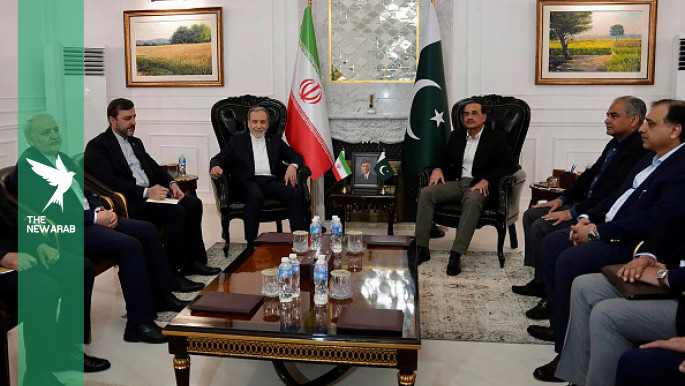
The extension of the ceasefire between the United States and Iran, reached on 8 April 2026 through Pakistani mediation and renewed on 22 April, reflects more than a temporary diplomatic adjustment to include a wider regional shift and points to a gradual redrawing of the strategic map linking South Asia and the Middle East.
This is unfolding against a growing overlap between the two regions, particularly in the security and defence spheres and underscores ongoing reconfiguration of regional roles. At the same time, this process has introduced a degree of strategic fluidity, with uncertainty surrounding the future shape of security architectures in West-South Asia.
Within this evolving landscape, Pakistan’s mediation can be understood as part of a broader effort to reposition itself within regional interaction networks.
The mediating role provides a mechanism for enhancing diplomatic legitimacy while expanding influence over the formation of regional balances. This approach has gained urgency in light of concerns in Islamabad over a possible reconfiguration of power in favour of Israel, with implications that extend beyond the Middle East to include Pakistan’s own strategic environment.
The selection of Pakistan as mediator also reflects a combination of political and security considerations. Its relatively balanced relations with both Washington and Tehran provide an initial basis for this role.
More decisive, however, are issues linked to sovereignty and security. As a neighbouring state, Pakistan offers an environment that reduces the risks associated with the movement and protection of negotiating delegations. This consideration has been reinforced by recent precedents, including the Israeli strike on Qatar in September 2025, which targeted a Hamas delegation in Doha and exposed the vulnerability of traditional mediation arenas.
A further factor relates to the presence of United States military bases across parts of the region. These installations have increasingly become integrated into the dynamics of conflict, rendering their surrounding environments less suitable as neutral venues.
In contrast, the absence of direct US military presence in Pakistan contributes to a perception of structural neutrality, strengthening its position as a viable host for negotiations at this stage.
At the same time, Pakistan’s role reflects a broader trajectory shaped by parallel developments in South Asia and the Middle East. The escalation between India and Pakistan in May 2025, followed by the outbreak of confrontation between Israel and Iran the following month, contributed to a reassessment of threat perceptions across both regions. This was accompanied by deepening India–Israel defence cooperation, including agreements to institutionalise long-term coordination and expand exchanges of strategic and operational expertise.
This convergence has become a central factor in shaping Pakistan’s engagement with the Middle East. Since the second half of 2025, Islamabad has intensified its diplomatic activity, from raising the Israeli strike on Qatar at the United Nations Security Council to participating in international efforts to end the war in Gaza. Its current mediation between Iran and the United States forms part of this broader pattern of engagement.
Parallel to these political developments, defence cooperation across the region has accelerated. Agreements between Pakistan and Saudi Arabia, alongside expanding partnerships linking India with Israel and the United Arab Emirates, reflect a wider trend toward diversified and overlapping security arrangements.
At the same time, proposals for multilateral frameworks—ranging from calls for an “Islamic military alliance” to Israeli-led initiatives indicate an emerging, though still unsettled, orientation toward more formalised blocs.
Despite these developments, a degree of caution persists among key actors. India, in particular, continues to prioritise bilateral cooperation, avoiding formal alignment while expanding its network of defence partnerships. This approach contributes to a more complex and pluralistic structure of security relations, even in the absence of clearly defined alliance systems.
Within this context, mediation operates not only as a mechanism for managing immediate crises but also as a tool for shaping potential future arrangements.
Pakistan’s engagement with Iran is likely to extend beyond formal negotiations to include efforts aimed at preserving Saudi Arabia’s position within the regional balance. Riyadh remains a central node in Pakistan’s strategic calculations, and its insulation from escalation further to Pakistan’s efforts carries broader implications for regional stability.
Pakistan’s deployment of military assets to Saudi Arabia in April 2026 reflects this approach. While grounded in existing defence agreements, the move signals a calibrated form of deterrence rather than preparation for direct involvement. It reinforces Pakistan’s commitments to Riyadh while maintaining the flexibility required for continued engagement with Tehran.
This dual track highlights the underlying objective of Pakistani policy: to manage strategic risk while preserving room for manoeuvre within an increasingly competitive environment. The extent to which such an approach can be sustained will depend on the direction of regional alignments, particularly the trajectory of cooperation between Israel and India.
A further consolidation of that axis would place additional constraints on Pakistan’s position, narrowing its ability to influence emerging balances. In this sense, the outcomes of Pakistani mediation extend beyond the immediate ceasefire. They are likely to carry implications for the future configuration of security and defence arrangements across a region in which Asian and Middle Eastern dynamics are becoming increasingly interconnected.
Article translated from Arabic by Afrah Almatwari and edited by Karim Traboulsi. To read the original, click here.
Manal Allan is a Palestinian researcher in international and Indian affairs.
Have questions or comments? Email us at: editorial-english@newarab.com
Opinions expressed in this article remain those of the author and do not necessarily represent those of The New Arab, its editorial board or staff.