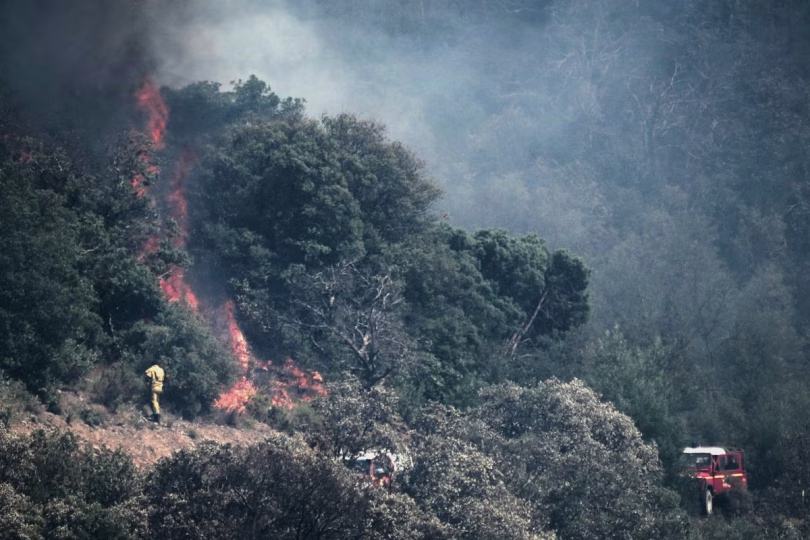
A wildfire swept through towns on France’s Mediterranean coast near Frejus on Sunday, threatening homes and forcing the evacuation of several hamlets as strong winds and drought conditions fuelled its rapid spread, local authorities said.
“The fire spread extremely quickly in the context of this heatwave and extreme drought,” local prefect Simon Babre told BFM TV.
The blaze had scorched about 180 hectares (445 acres) by Sunday evening, the prefect’s office said.
Images showed large flames advancing behind hillside villas typical of the French Riviera, while thick black smoke billowed above pine and cypress trees. Train services between the Mediterranean port of Toulon and Les Arcs were suspended because of the fire.
Elsewhere in Europe, Spain’s weather agency AEMET warned temperatures would start rising again at the weekend, with highs potentially reaching 42-44 C in parts of the Andalusia and La Mancha regions next week. Forecasters also warned of an extreme wildfire risk as hot, dry air from North Africa advances across much of the country.
Firefighters were also tackling wildfires near Madrid and in Guadalajara province, where around 1,500 hectares have burned and a summer camp was evacuated as a precaution. A week ago, one of Spain’s deadliest wildfires on record killed at least 13 people, mostly foreigners, in the southern province of Almeria.
In Greece’s metropolitan area of Athens, authorities went on high alert for wildfire risks, with drones equipped with thermal cameras patrolling over forests and water cannons stationed outside campsites.
The World Meteorological Organization last month warned that the record temperatures that baked Western Europe for over a week in late June would worsen the risk of wildfires, given the outlook for sustained high temperatures, very low humidity and dry vegetation.
According to the Reuters Climate Monitor, the average high in the town of Les Arcs, where the fire was raging, was forecast to be 38 degrees Celsius, which is 11.4 degrees above the normal high for July 19 between 1961 and 1990.
Earlier this month, the World Health Organization warned that Europe could face “more deadly weeks ahead” from new heatwaves forming over the Atlantic. Scientists monitoring so-called excess deaths said there were thousands more fatalities recorded than normal during a heatwave that swept through Europe and Britain at the end of June.
“Nearly 10,000 excess deaths, and the summer is not yet over,” said Dr Hans Henri P. Kluge, WHO Regional Director for Europe, criticising governments for “still treating heat as a weather event rather than a health emergency”, despite existing tools and WHO guidance to prevent most of these deaths.