The United Nations Children’s Fund (UNICEF) has warned that low access to Early Childhood Education (ECE) across Northwest Nigeria is posing a serious threat to education outcomes in the region.
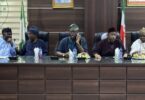
Dr. Karanveer Singh, Officer-in-Charge of UNICEF’s Kano Field Office, disclosed this while speaking at a media dialogue on strengthening early childhood education in Jigawa, Kano, and Katsina, held in Dutse.
He revealed that only about 24 per cent of children in Jigawa State have access to ECE, while Kano has 29 per cent and Katsina 32 per cent.
Dr. Singh described the situation as alarming, saying that the majority of children in the region are missing the critical early learning phase that shapes cognitive, social, and emotional development.
According to him, children who lack access to quality early education are more likely to start primary school behind their peers and struggle to catch up, a factor contributing to the region’s growing out-of-school children crisis.
He further disclosed that foundational literacy levels in some parts of the region remain below 15 per cent, indicating that many children are unable to read at even the most basic level.
He linked this to limited parental awareness, a shortage of trained teachers, poor infrastructure, and inadequate learning materials, which continue to hinder the expansion of early childhood education.
The UNICEF official, however, stressed that the challenges are surmountable with stronger commitment and investment from state governments.
He called on the authorities in Kano, Katsina, and Jigawa to prioritise early childhood education through increased funding, recruitment of qualified caregivers, and the expansion of child-friendly learning spaces.
UNICEF Education Specialist, Mustapha Shehu, said available data from MICS 2022 shows that, in Nigeria, only 37.8 per cent of children between the ages of three and four have access to early childhood education.
“Large inequalities persist, with 75 per cent of children aged 36 to 59 months in the richest wealth quintile attending early childhood education, while only 11 per cent of those in the lowest wealth quintile do,” he said.
Dr. Sunday Jacob, an education consultant, said Nigeria has 18.3 million out-of-school children, with Jigawa, Kano, and Katsina accounting for 30 per cent of the figure.
He said investing in early childhood education is fundamental to reducing the number of out-of-school children, as it contributes to 90 per cent of brain development.
He advised the states to create dedicated budget lines for early childhood education.
Responding, the Commissioners for Basic Education in Kano, Katsina, and Jigawa pledged to ensure adequate budgetary provisions for early childhood education and the timely release of funds for the development of their respective states and the country at large.