
PHILADELPHIA – It seemed to me that I had travelled backwards in time, from summer to spring, as I entered Pennsylvania.
Houston was hotter, drier and browner than Singapore when I began the nearly 2,500km drive at end-March. A week later, cherry trees were showing off their pink and white plumage at street corners in Philadelphia suburbs, helping soften the jolts from pitted roads. And I had to bring out a thin jacket for the morning chill.
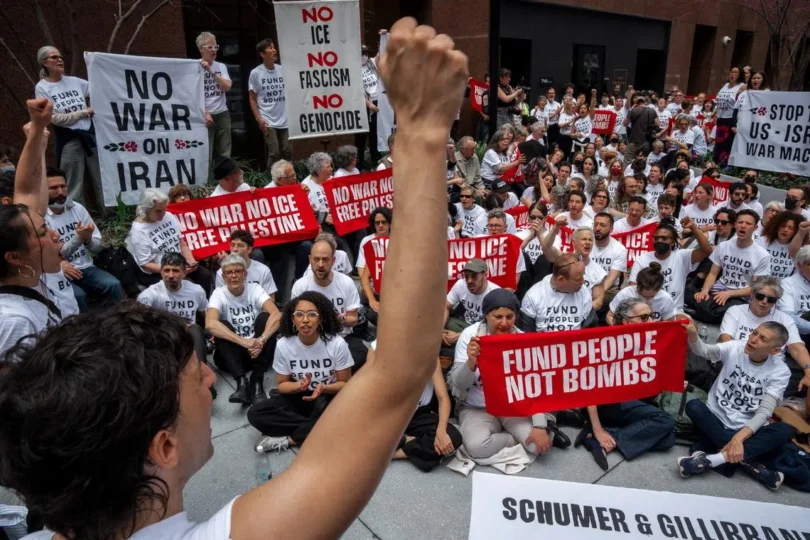
President Donald Trump’s war on Iran had just entered the second month and this, too, was knocking about in the court of public opinion.
I caught flashes of the national mood first-hand as I travelled east from Texas, the epicentre of the country’s freshly assertive energy economy, to Pennsylvania, the durable gusher of American politics.
In Texas, the country’s largest Republican state, centuries-old oil firms were anticipating windfalls from the war. As were the money men. For the Wall Street firms, expanding here to cash in on the state’s low taxes and business-friendly laws, volatility set off by the war has meant a bumper quarter.
But households, farmers and ranchers have been looking on uneasily, feeling the squeeze from a war conducted like a disjointed opera, with flourishes of military display accompanied by self-aggrandising boasts of American might.
In Pennsylvania, which delivered the 2024 election to Mr Trump on a cold November night, the Republican Party is now feeling the weight of the war’s consequence.
In the swingiest of swing states, which makes and breaks political fortunes with its disloyal lurches from red to blue and back again, the war has uncovered fresh evidence that the growing ranks of discontented independents, who had turned out for Mr Trump two years ago, are ready to abandon ship in the Nov 3 midterm congressional elections.
Democrats are on alert, eyeing a flip. If independents bolt amid backlash from the war, it would send a seismic rebuke echoing from Philadelphia, the state capital and birthplace of American democracy, where the Declaration of Independence was signed in 1776 and the US Constitution drafted in 1787.
Louisiana, Mississippi, Alabama, Tennessee and West Virginia, the reliably Republican states on my route, are not usually prone to get sentimental about Washington – but Mr Trump gets the benefit of doubt here. Not so much because they agree with this war but because they expect victory. And because a majority of voters here are reflexively anti-Democrat.
While Mr Trump and his Secretary of War Pete Hegseth invoke scripture to frame the conflict as righteous, most Americans – or at least the ones I met – remain neither swept by fervour nor roused to revolt. They are in the grip of something more difficult to mobilise: doubt.
And that matters, because wars usually become politically powerful when there is a shared story.
After the Sept 11 Al-Qaeda attacks in 2001, Americans bonded over grief and anger over the unprecedented assault on the homeland. During the 2003 Iraq war that followed, there was a sense of urgency and competence before then President George W. Bush’s “weapons of mass destruction” story fell apart.
The Feb 28 war has supplied no glue to hold the country together, and most Americans are just watching and worrying. It is as though the commander-in-chief was the storyteller-in-chief, and the Americans were not buying the story.
But Mr Trump seems to think he can convert anxiety into support – that if he can just keep the war short and distant, they will come around. He is reading the country not so much as anti-war as risk-averse.
There is some logic in that. Polls say most Americans oppose the war. But they are not appalled enough to drive an anti-war movement. Broad support exists for key US goals like halting Iran’s nuclear programme and preventing Iran from funding terrorists, even if there is no great confidence in the war itself.
Mr Trump continues to project resolve, betting that Americans will tolerate force if its exercise is framed as both limited and successful at the same time. Yet, the national drift is unmistakably towards fatigue.
The most telling conversations I had were not with those who oppose Mr Trump tooth and nail but with those who say they are just exhausted from the effort of following the events, tired from the confusing swirl of claims and counterclaims, mistrustful of being told the war is nearly won when they are not even convinced that it should have been waged.
For a dedicated schoolteacher, all the world is a classroom. And Ms Tee Johnson, a quiet woman with a spare frame, would give Mr Trump a failing grade if he were her student.
The 48-year-old, who teaches English at an elementary school in the black-majority city of Meridian in Mississippi, said Mr Trump needed to show improvement in nearly every area a good educator would like to see progress in: language, deportment and impulse control.
“Most of all, impulse control,” she told me as both of us waited to collect our orders for pizza.
“We still don’t know why we had to attack Iran. He did not tell us before he attacked and he has not really clarified afterwards,” she said.
Ms Johnson likes his prose even less. “Randomly capitalised letters and overuse of exclamation points. Is that what we want our children to learn?” she asked.
But she follows him on Truth Social because she believes in being well informed. “Although, now I am always flicking away the notifications that drop on my phone,” she added, with annoyance as Mr Trump’s latest dispatch lit up her screen. “I’m just too exhausted to care.”
The rising cost of living has vindicated her belief that Mr Trump’s leadership is setting America back. “He’s not done one thing to make life better,” she said, adding that she has to spend US$200 (S$254) a month to fill her car – “almost double from a month ago”.
“And I’m worried sick about rising healthcare costs.”
Her issues with the presidency go beyond the war. She is even angrier that the US is in the midst of a measles outbreak. From January 2025 to March 2026, the US has reported more than 3,800 cases, the most since 1991. Experts blame funding and staffing cuts in public health campaigns and mixed messages from federal health officials.
Near Morgan City, a small port city in Louisiana, known for its shrimping fleets and offshore oil and gas industry, I find proof of Mr Trump’s hold, even in an unpopular war.
Morgan City’s claim to fame is its rig museum. A US$12 ticket buys a tour of Mr Charlie, the world’s first mobile offshore drilling rig that drilled hundreds of wells for Shell Oil and other companies in the Gulf of Mexico until it was retired in 1986. Now a national historic landmark, it offers a glimpse into the birthplace of the offshore oil industry which spread globally.
Mr Ron Jenkins, a young lawyer from Tennessee who was visiting the town for a wedding, could not care less for that slice of history. But he believes Mr Trump’s “farsightedness in ensuring energy dominance” is why the US will emerge on the “plus side” after the war.
That slogan emphasises US leadership in global energy markets through maximising domestic production to achieve independence, export power, lower prices, bolster national security, and counter rivals like Russia or China.
“You might think he’s reckless, getting into a war, but that’s guts and leadership. Somebody had to stop the mad mullahs of Iran from getting the nukes,” he said.
He dismissed the idea of the war hurting the economy, quoting Treasury Secretary Scott Bessent, who in recent reports has justified the war as “short-term volatility for long-term gain”.
That argument would not fly past Ms Kathleen Sheehan whom I last met at an anti-Trump protest in October 2025. On a sweltering hot day in Austin, she queued up for a drink at a Texan burger chain, clutching a poster she had made at home. It depicted Mr Trump as a mean muppet.
Ms Sheehan, a 71-year-old mental health worker, is not at all amused by Mr Trump’s politics.
I spoke to her again, after she marched at another “No Kings” protest organised to coincide with the war hitting the one-month mark on March 28. If anything, her conviction has grown after the Iran war.
“The thing that really affected me was a booth that showed photographs of some of the young girls that were killed in Iran in America’s strike on a school,” she said. The missile strike that destroyed a girls’ elementary school in Minab, killing at least 120 students, remains the deadliest civilian incident of the war.
“I was horrified. It’s so wrong. This administration got rid of the people who used to help guard against that kind of mistake,” she said, referring to a civilian protection mission at the Pentagon that was disbanded in 2025.
“The protest did not feel like enough,” she added. “I talked to other people who came, trying to find out why they were there. And they were there just like me, trying to figure out what to do next.
“Some people were talking about how exhausted they felt from listening to the news that they had to stop listening to it.”
The day we spoke, Mr Trump had claimed that the war was approaching an end, that Tehran would reopen the Strait of Hormuz and turn over its “nuclear dust”.
Ms Sheehan was infuriated, not assured. “The last time he attacked Iran in 2025, he said that they got all of Iran’s nuclear stuff, and now he’s saying they have to go back in and get it. Is this lie after lie after lie?
“I don’t trust why we went to war at all. It’s not anything that has legitimately to do with protecting America or respecting the world.”
Mr Trump may see the war as necessary, or even righteous, but the public mood is not rising to meet him. Not only does he confront an adversary abroad, but a country that is uneasy, divided and tired. Certainly not a country that might applaud his choices.
Dr Michael Traugott, political science and research professor emeritus at the Center for Political Studies at the University of Michigan, said Mr Trump’s party would pay for breaking a campaign promise by initiating a conflict with Iran, even if a peace deal ensued.
“Among other things, there will be a discussion of whether the intervention was worth it or produced any of the several explanations that the administration gave as justification.
“I would expect a blue wave outcome in the House,” he said, adding that the Democrats’ chances in the Senate had improved, too.